
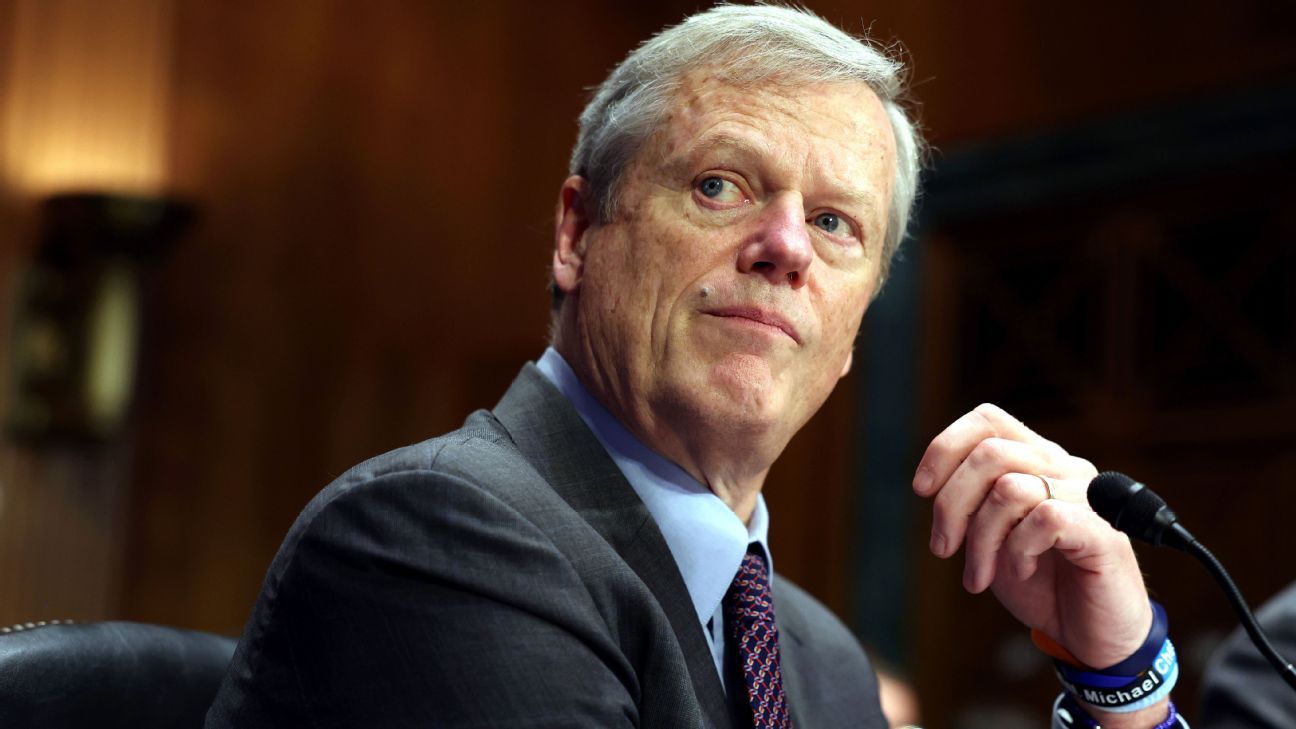
UPDATE: NCAA President Charlie Baker just announced a definitive stance on player eligibility, emphasizing that athletes with NBA contracts will not qualify for college basketball. This statement follows the controversial signing of former NBA draft pick James Nnaji by Baylor University and reports that current NBA player Trentyn Flowers is seeking to play college basketball.
In a statement released on Tuesday, Baker declared, “The NCAA has not and will not grant eligibility to any prospective or returning student-athletes who have signed an NBA contract (including a two-way contract).” This clarification is crucial as the NCAA navigates a landscape increasingly influenced by international players and those with NBA backgrounds.
The urgency of this announcement is underscored by the rising trend of professional basketball players attempting to enter college ranks. Nnaji, who was the 31st pick in the 2023 NBA draft, has faced scrutiny after signing with Baylor on Christmas Eve. Despite his NBA Summer League experience and involvement in an October trade, Nnaji has not played in an official NBA game, spending the past five years with FC Barcelona in the EuroLeague.
With Nnaji now cleared by the NCAA, he could make his debut for the Bears as early as this weekend, highlighting the growing intersection between professional and collegiate basketball. Baker also noted that the NCAA is adjusting its policies to ensure fairness, stating that “as schools are increasingly recruiting individuals with international league experience, the NCAA is exercising discretion in applying the actual and necessary expenses bylaw.”
Prominent college coaches have expressed frustration over the perceived inconsistency in eligibility rules. Arkansas coach John Calipari criticized the current state of college basketball, stating, “Real simple. The rules be the rules, so if you put your name in the [NBA draft], you can’t play college basketball.” Meanwhile, Gonzaga coach Mark Few lamented the lack of clear regulations, claiming, “It’s wild out there right now.”
The ongoing debate over eligibility rules reflects deeper issues within the NCAA’s governance, with potential legal challenges looming. Flowers, a former top-50 high school recruit currently under a two-way contract with the Chicago Bulls, is exploring college eligibility after previously signing a professional contract in Australia. His situation exemplifies the complexities of the NCAA’s eligibility landscape.
As this story develops, all eyes will be on the NCAA’s ability to maintain integrity in college basketball amidst these changing dynamics. The implications of Baker’s announcement could reshape the future of eligibility rules and the balance between professional and collegiate play.
Stay tuned for more updates as this situation evolves, and share your thoughts on the NCAA’s stance and its impact on college basketball.