
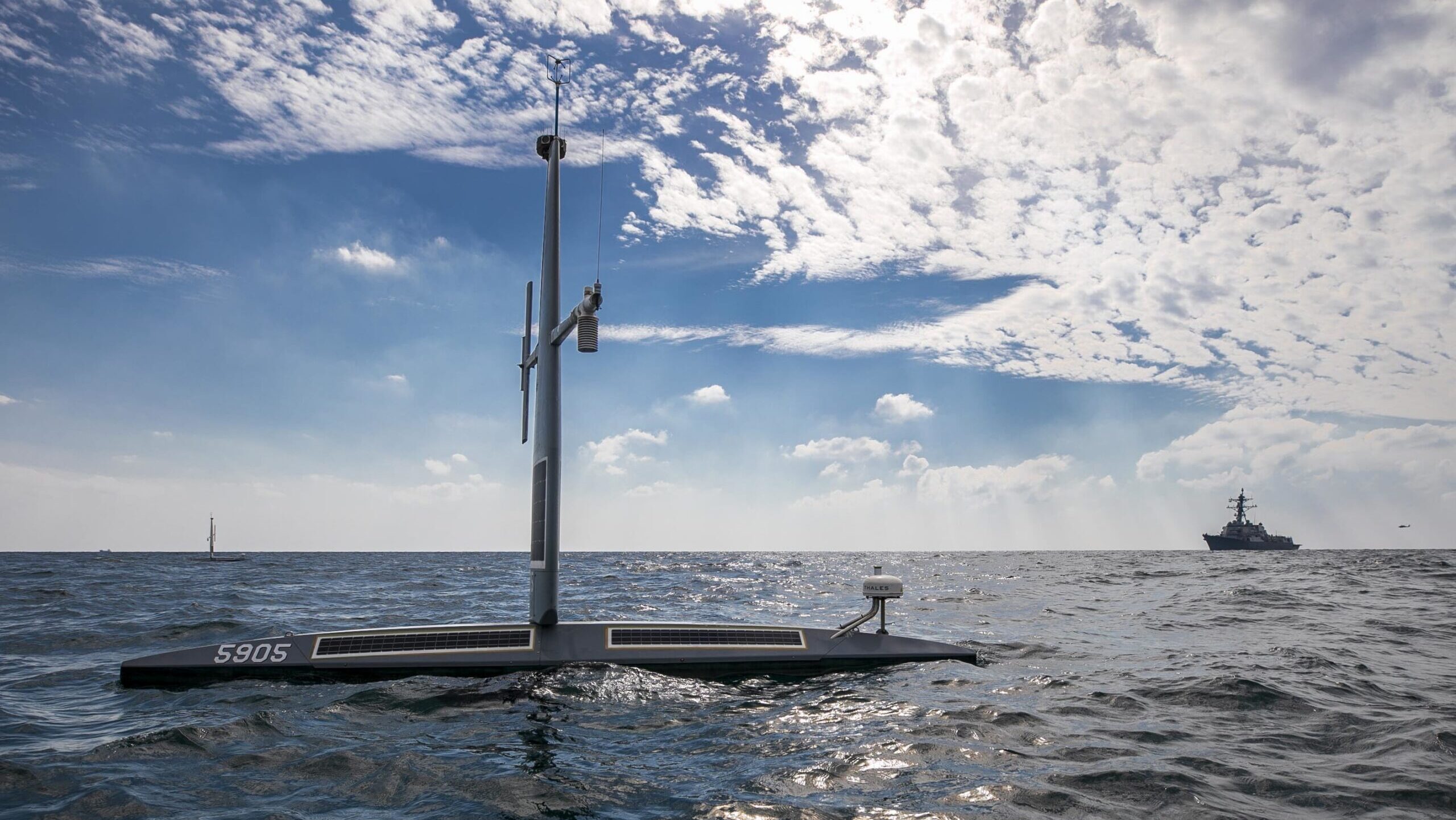
The U.S. Navy is considering the establishment of a Robotic Autonomous Systems (RAS) commander to enhance the integration of unmanned capabilities across its fleet. Chief of Naval Operations Adm. Daryl Caudle announced the initiative during the WEST 2026 conference in San Diego on February 10, 2026. This move forms part of a broader strategy to effectively utilize unmanned vessels and systems within naval operations.
Adm. Caudle described the proposed RAS commander as a pivotal role designed to manage and coordinate various unmanned systems to fulfill mission objectives set by strike group commanders. “This RAS commander, if you will, knows how to command and control these packages of unmanned capabilities,” he stated. The aim is to create a framework that allows for the effective deployment of unmanned assets, enhancing the Navy’s operational readiness.
Integrating Unmanned Systems into Navy Operations
Caudle introduced the concept of a hedge force strategy that seeks to maximize the use of unmanned systems. He is currently developing the “Fighting Instructions” framework, which includes guidelines for embracing RAS capabilities within the Navy’s command structure. The RAS commander would not only oversee unmanned systems but also coordinate across various domains, such as undersea, aviation, and cyber operations.
The role of the RAS commander is still being defined. Adm. Caudle envisions this position as part of the strike group staff, complementing existing roles like the strike commander and the information warfare commander. “Now I’ve got a strike commander, I got an integrated air missile defense, I got a sea combat commander, and I got a RAS commander too,” he explained, emphasizing the importance of integrating these capabilities to advise on strategic operations.
While the Navy has established models for traditional warfare, such as anti-submarine operations, the integration of RAS capabilities presents unique challenges. Caudle acknowledged the necessity of creating a cohesive ensemble of unmanned systems that can effectively address key operational problems faced by combatant commanders. “We don’t want this just to be a gadget,” he stressed, highlighting the need for meaningful application of these technologies.
Future Command Structure and Strategy Development
Despite the promising plans, Adm. Caudle indicated that a comprehensive unmanned strategy is not ready for publication. He emphasized the ongoing “discovery phase” of understanding how to properly organize command and control for these unmanned forces. This involves assessing how to maintain and train personnel to effectively utilize RAS capabilities in the operational environment.
The Navy’s focus on robotics and autonomous systems reflects a significant shift in modern warfare, aiming to enhance strategic flexibility and operational effectiveness. As this initiative progresses, the establishment of an RAS commander could redefine how the Navy approaches unmanned warfare, ensuring that these systems are not only integrated but also operationally effective.
Adm. Caudle’s efforts signal a proactive approach to addressing the complexities of modern military operations, illustrating a commitment to evolving the Navy’s strategic capabilities in an increasingly unmanned future.