
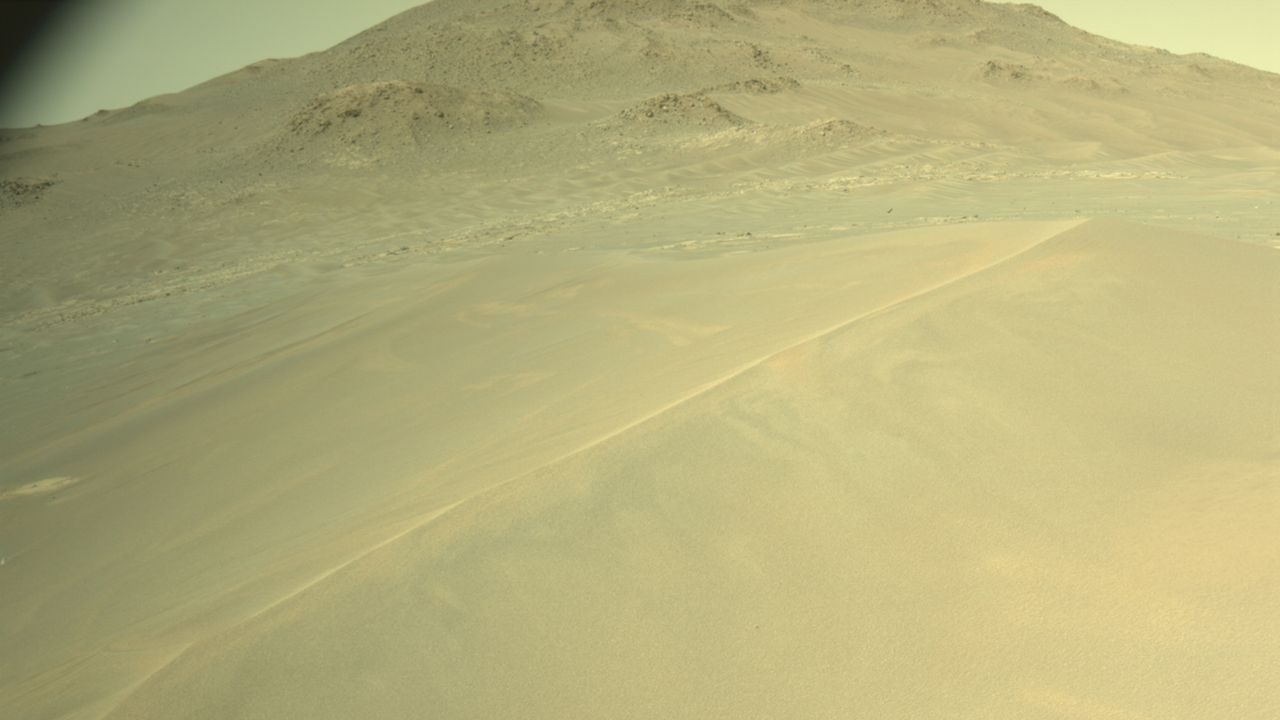
NASA’s Perseverance rover has provided its most detailed examination yet of a geological feature known as aeolian megaripples on Mars. In a mission update released late last month, team members highlighted the rover’s observation of a significant sand ripple, nicknamed “Hazyview,” located in the “Honeyguide” ripple field near the Jezero Crater, where Perseverance has been conducting research since its landing in February 2021.
Megaripples, which can reach heights of approximately 2 meters (about 6.5 feet), differ from smaller ripples as they tend to remain largely inactive. This inactivity allows them to act as natural records of past wind patterns and atmospheric conditions on Mars. The recent findings shed light on the complexities of Martian sand dynamics, revealing much about the planet’s geological history.
Understanding the dynamics of Martian sand is crucial, as wind remains a primary agent of surface alteration, despite the thin atmosphere on Mars. Wind can erode bedrock into sand-sized particles, transporting them across the surface. However, megaripples demonstrate a resistance to movement. The mission team noted that interaction between atmospheric water and dust can lead to the formation of a salty crust on the surface of these ripples. This crust binds the sand grains together, making it challenging for wind to displace them, thus locking in historical data.
Insights into Mars’s Geological Past
Perseverance’s recent studies of the “Hazyview” megaripple are significant for both scientific and exploratory reasons. The rover utilized an extensive suite of tools, including SuperCam, Mastcam-Z, MEDA, PIXL, and WATSON, to perform over 50 observations. This intensive analysis aims to determine the megaripple’s formation process and its current state of activity.
While studying sand may initially seem peripheral to the broader mission of searching for signs of ancient life on Mars, megaripples provide valuable insights into recent geological changes. If these ripples are indeed dormant, they offer a glimpse into previous wind regimes and the chemical interactions between water and dust. Conversely, if they show signs of movement, it indicates that even the cold and thin atmosphere of modern Mars can still facilitate significant surface reorganization.
Implications for Future Mars Missions
The findings from the “Honeyguide” ripple field also have practical implications for future Mars exploration. Understanding the chemical composition and cohesion of Martian soils is vital for mission planning. It affects vehicle traction, dust behavior around equipment, and the accessibility of resources for in-situ use. As Perseverance continues its journey across the Martian landscape, it is not only uncovering the planet’s historical narratives but also laying the groundwork for future missions.
For those interested in delving deeper into the Perseverance rover’s findings and ongoing research on Mars, additional information is available through NASA’s official channels. This exploration continues to enrich our understanding of the Red Planet’s past and future, marking an exciting chapter in planetary science.