
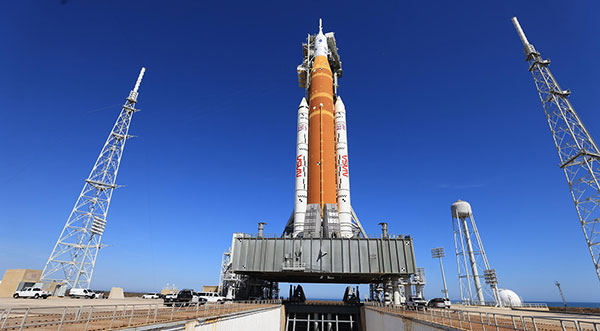
NASA is preparing to roll back the Artemis II rocket and Orion spacecraft to the Vehicle Assembly Building (VAB) at the Kennedy Space Center in Florida. This decision follows an issue observed on February 21, 2024, involving an interrupted flow of helium to the Space Launch System’s (SLS) interim cryogenic propulsion stage. The potential rollback indicates that the planned launch within the March window will not occur.
Engineering teams are currently analyzing data to identify the cause of the helium flow disruption. The helium is essential for maintaining the correct environmental conditions for the upper stage engines as well as pressurizing the liquid hydrogen and liquid oxygen propellant tanks. During the Artemis II wet dress rehearsals, the systems functioned correctly, but difficulties arose during normal operations and reconfiguration following the rehearsal, which concluded on February 19.
Preparations Underway for Rollback
As teams work to address the helium issue, preparations are being made to remove the pad access platforms at Launch Pad 39B. These platforms are subject to wind-related constraints and cannot be taken down during high winds, which are expected soon. Operators are currently using a backup method to maintain environmental conditions for the upper stage engines while ensuring the rocket remains in a safe configuration.
NASA’s investigation includes examining possible causes for the helium flow interruption, focusing on the interface between the ground and rocket lines, a valve in the upper stage, and a filter located between the ground and rocket systems. The team is also reviewing previous data from Artemis I, where troubleshooting was necessary for helium-related pressurization issues prior to launch.
Impact on Launch Schedule
If the rollback proceeds, it will mean that NASA cannot launch Artemis II during the March window. However, the agency is making swift preparations to possibly keep the April launch window open, depending on the outcomes of the ongoing data analysis, repair efforts, and schedule adjustments in the coming days and weeks.
In the meantime, NASA astronauts, including Reid Wiseman, Victor Glover, and Christina Koch, alongside Jeremy Hansen from the Canadian Space Agency (CSA), recently participated in integrated ground systems tests at Kennedy Space Center. These tests are crucial for ensuring that ground support systems are ready for the crew’s timeline on launch day. The situation remains fluid, and NASA is committed to resolving the helium issue efficiently to ensure the Artemis II mission’s success.