
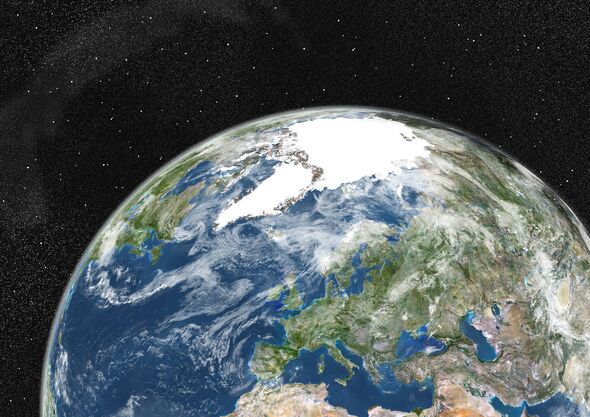
A conspiracy theory claiming that Earth will experience a complete loss of gravity for seven seconds on August 12, 2026 has gained traction on social media, raising alarm among the public. Proponents of this theory suggest that the phenomenon, referred to as a part of a supposed document called ‘Project Anchor’ from November 2024, could lead to catastrophic consequences, including the deaths of millions.
Social media platforms such as Instagram and X have been inundated with posts warning of this impending event. One account promoting the theory ominously stated, “On August 12, 2026, the world will lose gravity for seven seconds. NASA knows. They’re preparing but won’t tell us why.” This message has sparked fears of potential fatalities, with some theorists estimating as many as 60 million deaths as individuals might “plummet to the ground.”
In response to the viral speculation, NASA has firmly rejected these claims. The agency issued a statement to the fact-checking platform Snopes, clarifying that such an event is scientifically impossible. A representative from NASA explained, “The Earth will not lose gravity on August 12, 2026. Earth’s gravity, or total gravitational force, is determined by its mass. The only way for the Earth to lose gravity would be for the Earth system, the combined mass of its core, mantle, crust, ocean, terrestrial water, and atmosphere, to lose mass.”
Social Media’s Role in Spreading Misinformation
The rise of misinformation on social media has become a growing concern, particularly as platforms allow for rapid dissemination of unfounded claims. The current gravity theory is not an isolated incident; it highlights the challenges authorities face in combating conspiracy theories that can lead to public panic. NASA’s proactive measures to clarify the situation demonstrate the agency’s commitment to scientific accuracy and public safety.
Additionally, this incident comes during a period when various predictions about 2026 are circulating, many drawing from historical figures like Nostradamus. While the renowned philosopher did not make specific forecasts for this year, interpretations of his writings have led some to speculate on possible significant events. For instance, the New York Post reported that the 26th verse of Century I includes a phrase suggesting a “great man will be struck down in the day by a thunderbolt.” This has fueled speculation about potential political upheaval.
Another of Nostradamus’ quatrains, which mentions “Foists and galleys around seven ships,” has led to theories regarding geopolitical tensions, particularly in the South China Sea. While these interpretations are largely speculative, they reflect the ongoing interest in Nostradamus’ work and how it intertwines with contemporary anxieties.
As the gravity claim illustrates, the intersection of science, social media, and historical interpretation can create a fertile ground for misinformation. It is crucial for individuals to critically evaluate the sources of information they encounter online, particularly when it comes to claims that could incite fear and unrest.
In conclusion, NASA’s clear dismissal of the gravity theory serves as a reminder of the importance of scientific literacy and the need to approach sensational claims with skepticism. As society navigates an increasingly complex information landscape, verifying facts through credible sources will be essential in countering misinformation and its potential consequences.