
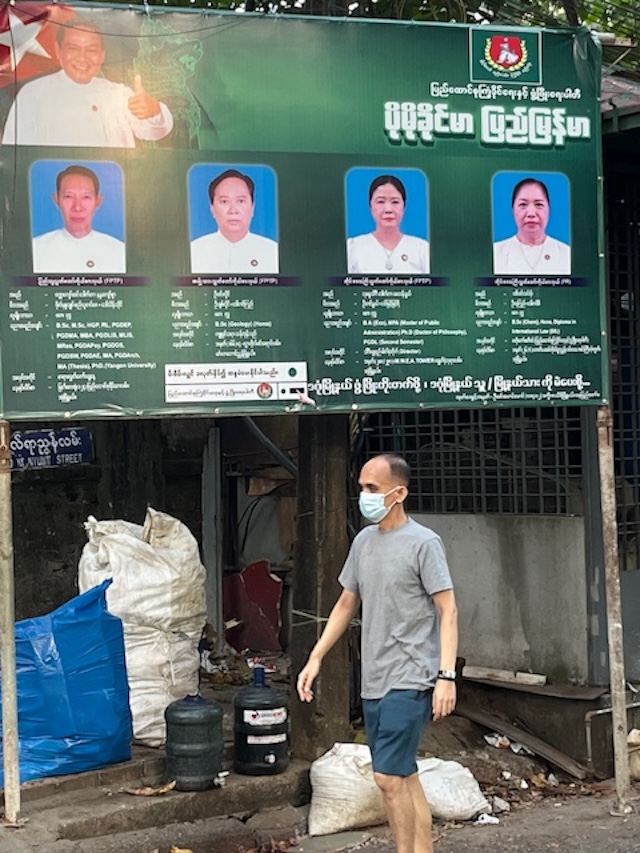
UPDATE: Myanmar’s tightly controlled elections, the first since the 2021 coup, are underway amidst an escalating climate of violence and repression. Early results show the military’s proxy party, the Union Solidarity and Development Party (USDP), racing towards victory, igniting international condemnation.
Just days after airstrikes killed 18 civilians in Tabayin township, the military junta faced harsh criticism from civil rights activists. “How can you hold elections and bomb civilians at the same time?” questioned Khin Ohmar, a prominent activist monitoring the elections.
Authorities report that over 22,000 political prisoners remain incarcerated, including members of the National League for Democracy (NLD) and its leader, Aung San Suu Kyi, who is still imprisoned following her party’s landslide victory in 2020. The junta has dismissed the legitimacy of the elections, recently dissolving 40 political parties that refused to register.
Despite the climate of fear, the military aims to project authority and legitimacy through these polls, which are scheduled to unfold in three stages. The first round occurred on December 28, 2023, alongside further voting set for January 11 and January 25, covering 265 of Myanmar’s 330 townships. Notably, 65 townships deemed too unsafe will not participate.
In major cities like Yangon, the atmosphere was subdued. Voter turnout was heavily influenced by threats from the regime, with many citizens fearing repercussions for non-participation. One Yangon taxi driver expressed his resignation, stating, “I’ll be jailed if I don’t vote.”
The USDP is leveraging propaganda focusing on stability and progress, reminiscent of its previous administration’s promises. Early reports indicate the USDP has secured 38 of 40 seats in the lower house, despite widespread skepticism about the election’s fairness. UN Secretary-General Antonio Guterres condemned the elections as neither free nor fair, calling for an end to the junta’s “deplorable” violence.
As the military escalates airstrikes against civilian areas, public sentiment grows increasingly hostile. Social media channels, once vibrant with electoral enthusiasm, now overflow with mockery directed at the regime. Citizens are attempting to boycott the elections, with many relieved to discover their names are missing from electoral rolls.
International observers remain concerned about the implications of these elections. The shadow National Unity Government, representing resistance forces, continues to assert its authority over liberated territories, aiming to create a democratic, federal Myanmar free from military influence.
With millions displaced and entire regions under junta control, the landscape of Myanmar is fraught with tension. Speculation is rife that a USDP-led government might signal a return to forced conscription or the selective release of political prisoners to improve its image.
Khin Ohmar remarked, “Political prisoners are used as bait. The world would at least have to applaud.” As the world watches, the fate of Myanmar hangs in the balance, with the military seeking to reclaim legitimacy through a facade of democratic processes amidst ongoing violence and oppression.
Stay tuned for updates as this situation develops.