
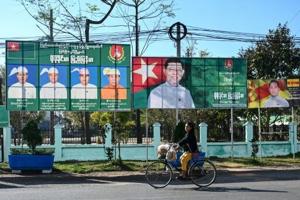
Myanmar’s military junta announced on February 14, 2024, that it intends to prosecute over 200 individuals for allegedly disrupting the upcoming elections scheduled for later this year. This announcement follows the junta’s enactment of new legislation that critics argue is designed to suppress dissent and stifle opposition.
The Election Commission, operating under military authority, claims that these individuals have been involved in activities aimed at undermining the electoral process. The military has intensified its crackdown on dissent since seizing power in February 2021, following the ousting of the democratically elected government led by Aung San Suu Kyi.
Human Rights Watch and other advocacy groups have condemned the junta’s actions, asserting that the charges are politically motivated. According to a report by the National Unity Government (NUG), a shadow government formed by ousted lawmakers, the junta’s measures are an attempt to create an environment of fear among the populace, discouraging participation in the elections.
Details of the Charges and Legal Context
The junta’s legal framework permits the prosecution of individuals deemed to be “disrupting” the electoral process, a term that remains broadly defined. This vagueness opens the door for potential misuse of the law against political opponents and activists.
The junta has faced significant criticism for its handling of the political situation in Myanmar, particularly with regard to human rights violations. The international community has expressed deep concern over the deteriorating conditions for civil liberties and political expression in the country.
The upcoming elections, which the junta claims will restore stability, are viewed by many as a facade. Observers believe that the military intends to consolidate its power rather than facilitate a genuine democratic process.
International Reactions and Implications
Countries worldwide have reacted strongly to the junta’s recent moves. The United Nations has called for the immediate cessation of hostilities and the release of political prisoners, urging the military to engage in dialogue with all stakeholders. The junta’s approach threatens to further isolate Myanmar on the global stage, as nations consider sanctions and other diplomatic measures.
As the situation unfolds, the implications for Myanmar’s future remain uncertain. With over 200 individuals facing prosecution, the potential for increased unrest and resistance within the country is significant. Observers continue to monitor the actions of the junta and the responses of the international community as they assess the trajectory of Myanmar’s political landscape.
The actions of the military junta raise critical questions about the future of democracy in Myanmar and the safety of those who oppose its rule.