
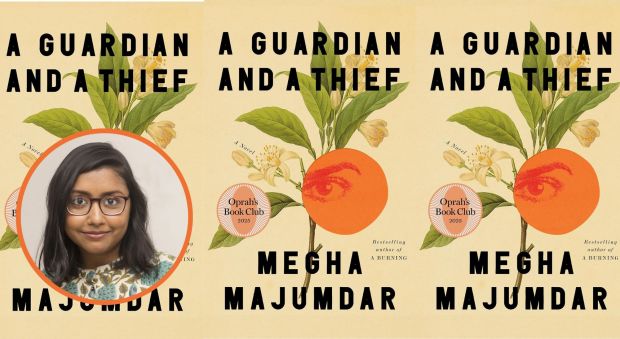
Megha Majumdar’s latest novel, A Guardian and a Thief, delves into the complexities of human behavior amid extreme adversity. Set in a near-future Kolkata, this National Book Award-nominated work opens with a mother, Ma, preparing to flee the oppressive heat of the city with her toddler. Her journey intertwines with Boomba, a man who has escaped rural India in search of a better life. Both characters embody the duality of being guardians and thieves, navigating a world where food scarcity and climate change force difficult moral choices.
As the climate crisis intensifies, the novel portrays a reality where even basic needs, such as shade and food, become scarce commodities. Reports of heat-related deaths in India highlight the pressing issues that underpin the narrative. Majumdar emphasizes how each decision made by her characters carries profound consequences, challenging their sense of morality in the face of survival.
Confronting Moral Dilemmas
Throughout the novel, Ma grapples with her responsibilities at a shelter, where she has been quietly taking from donations to feed her daughter. This dilemma encapsulates the book’s central theme: the erosion and exposure of humanity under crisis conditions. “What does it do to your humanity and to your soul to have to make those calculations?” Majumdar poses in a recent interview. She seeks to explore the murky waters of moral compromise when survival is at stake.
The narrative unfolds over a week, during which Ma’s plans are jeopardized, and Boomba seizes an opportunity to rectify his past mistakes. As their lives converge, the weight of impending tragedy looms large. Majumdar, who grew up in Kolkata before pursuing her education at Harvard and Johns Hopkins, draws on her background to inform the characters and setting.
The Impact of Global Forces on Individual Lives
Majumdar’s exploration extends beyond personal struggles to the broader implications of global issues such as climate change and inequality. She questions the nature of free will within complex systems: “What happens when food supply chains break down?” Her writing challenges readers to confront the realities of living in environments shaped by forces beyond individual control.
While Majumdar acknowledges the potential for humanity to exhibit generosity in times of crisis, she also recognizes the darker impulses that may arise. “I think there will also be moments where we act very selfishly and perhaps viciously,” she reflects. This duality forms the backbone of her character development, allowing them to navigate their moral landscapes authentically.
Majumdar’s concise writing style contributes to the novel’s impact. She crafts tightly plotted scenes that resonate with clarity and purpose, making every word count. “I want to give the reader clarity in terms of understanding why I am asking them to read a scene,” she explains. This commitment to precision lends an emotional weight to the narrative, enhancing the reader’s experience.
In juxtaposing moments of joy amid despair, such as teenagers celebrating their identity, Majumdar enriches the portrayal of Kolkata. She emphasizes that the city is not merely a backdrop of devastation but a vibrant place filled with life and resilience.
Confronting the difficult subject matter of children suffering and enduring loss, Majumdar draws on her own experiences as a parent. “It’s about putting emotional truth into a character,” she notes. By imagining the pressures on her characters, she seeks to evoke empathy and understanding, even in grim circumstances.
As readers engage with A Guardian and a Thief, they are invited to reflect on the profound questions it raises about morality, survival, and the humanity that emerges in the face of crisis. Through her compelling narrative, Megha Majumdar continues to establish herself as a vital voice in contemporary literature, prompting essential conversations about the world we inhabit.