
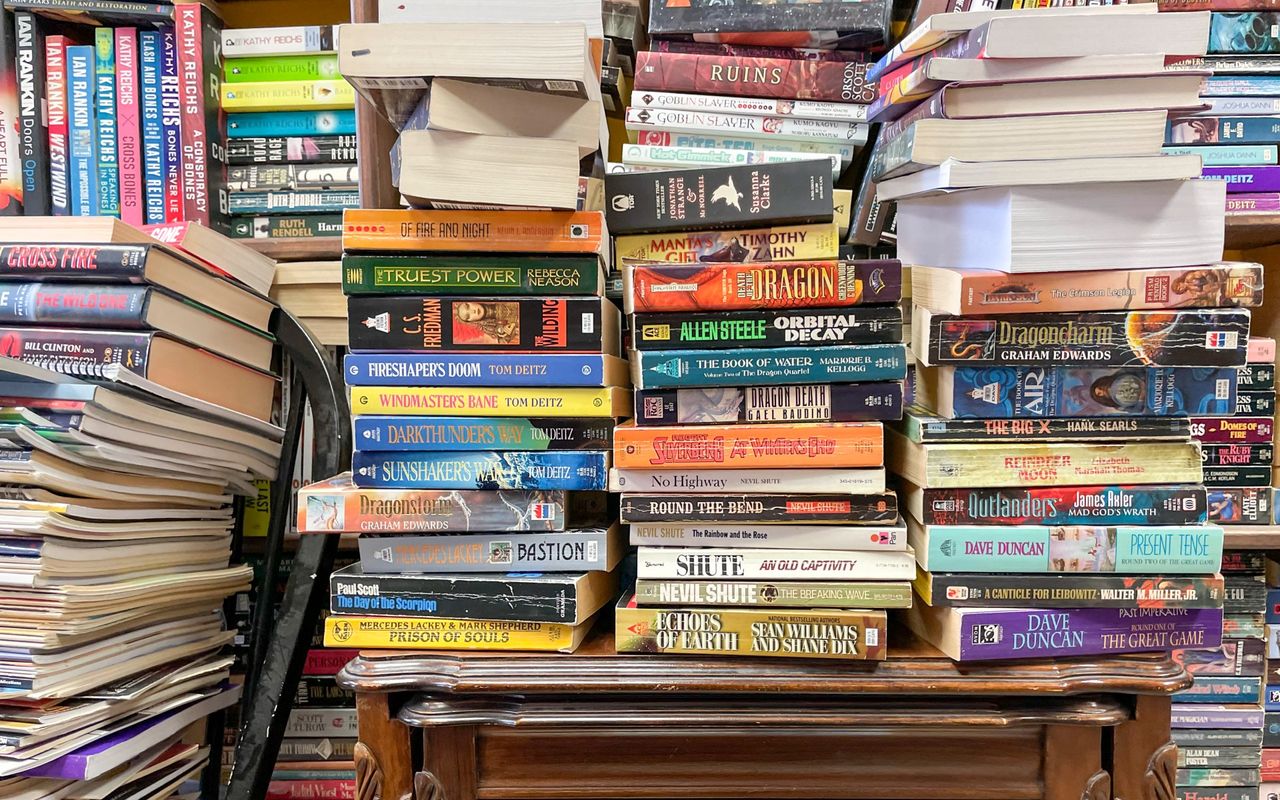
The long-standing tradition of mass-market paperbacks is nearing an end as sales decline and consumer preferences evolve towards more expensive book formats. Once celebrated for making literature accessible to the masses, these compact books are facing significant challenges in the modern marketplace, marking a potential shift in the reading landscape.
Sales Plummet Amid Changing Consumer Habits
According to data from Circana BookScan, unit sales of mass-market paperbacks have plummeted from 131 million in 2004 to approximately 21 million in 2024, representing a staggering decline of about 84%. The trend shows no signs of reversing, with 15 million units sold through October 2025, as reported by Publishers Weekly. The decline is attributed not only to the rise of digital formats like e-books and audiobooks but also to readers’ increasing preference for higher-priced books, such as hardcovers and trade paperbacks.
ReaderLink, the largest distributor of books to airports, pharmacies, and big-box stores in the United States, has announced it will stop carrying mass-market titles. This move signals a further retreat from a format that has been a staple in retail for nearly a century. According to Ivan Held, president of publishing imprints Putnam, Dutton, and Berkley, “as a format, I would say it’s pretty much over.”
The Cultural Impact of Mass-Market Paperbacks
Mass-market paperbacks, typically printed on lower-quality paper and measuring about four by seven inches, have historically been available in a variety of venues, from grocery stores to gas stations. They played a crucial role in democratizing access to literature, making it possible for many readers to acquire books for as little as a dollar or two. As noted by Smithsonian Magazine, these books were instrumental in fostering a reading culture in America.
Industry insiders lament the decline of this format. Esther Margolis, publisher of Newmarket Books, expressed that mass-market paperbacks “democratized America.” She highlighted how affordable books provided educational opportunities for many, stating, “you can’t really do that today.” The concern is that the shift away from mass-market titles may limit access to literature for those who cannot afford more expensive book options.
Bookseller Anne Paulson from Cherry Street Books in Minnesota mentioned that she anticipated this decline, noting that it reflects a broader trend of removing accessible literature from the market. “It may take brand new books out of people’s hands who could not otherwise afford a brand new book,” she stated.
The removal of mass-market paperbacks is viewed as a symptom of a larger book affordability crisis. R. Nassor at Book Riot pointed out that while mass-market paperbacks may be fading into the past, the alternatives offered do not adequately replace them. He remarked that while trade paperbacks are often priced significantly higher, they fail to provide the same accessibility that mass-market books once did.
As the publishing industry navigates this transformative period, the implications of losing mass-market paperbacks could be profound, potentially reshaping how people engage with literature and access reading materials. The conversations around this transition reflect a deeper concern for the future of reading and literacy in an increasingly digital world.