
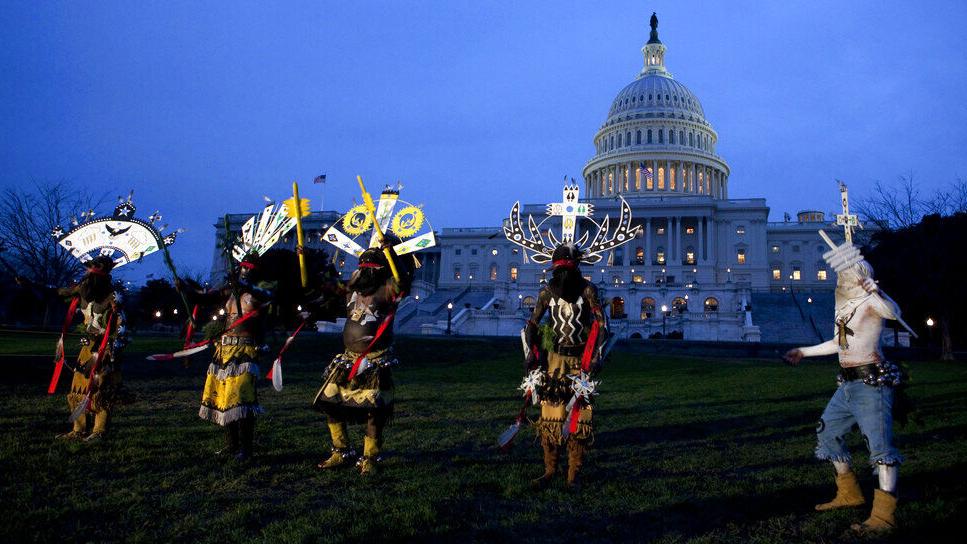
Mary Velasquez Riley emerged as a transformative figure for the White Mountain Apaches, fostering both economic development and community resilience. In December 1965, she participated in a historic event in Washington, D.C., where the White Mountain Apache tribe became the first Native American group to donate the national Christmas tree. This moment symbolized the tribe’s progress, a feat largely attributed to Riley’s extensive contributions.
Born on December 24, 1908, at Fort Apache, Mary was immersed in the Apache culture from an early age. Her mother was Apache and her father, a Mexican rancher, worked to supply Fort Apache with produce. Mary’s early life was characterized by hard work, as she helped with daily chores on the family ranch before and after attending school. The influenza epidemic of 1918 forced her to leave school after only three years to assist her father in caring for sick relatives and delivering milk.
Despite her limited formal education, Mary cultivated a strong interest in local and national affairs, often sitting beside her father as he read the newspaper. Fluent in Apache, Spanish, and English, she was instilled with a strong work ethic and financial acumen, managing the ranch’s finances as a young girl.
On March 2, 1935, Mary married Peter Kessay Riley, who also hailed from the White Mountain Apache Indian Reservation. Together, they raised five children, with Mary balancing farm responsibilities and work as a housekeeper at Fort Apache hospital while Peter served in the military.
Mary’s leadership journey began in 1958 when she became the first woman elected to the White Mountain Apache Tribal Council. She served for two decades, leading various committees focused on health, education, and welfare. Her advocacy took her to Phoenix and Washington, D.C., where she lobbied for her community’s needs.
Establishing Economic Foundations
Riley’s commitment to economic progress is evident in her role in founding the Fort Apache Timber Company (FATCO) in 1962. By 1963, the company was fully operated by the tribe, with a mission to utilize tribal timber resources for economic development. Its objectives included providing business training and employment opportunities for tribal members, and FATCO remains operational today.
Mary was also pivotal in establishing the Alchesay-Williams Creek National Fish Hatchery, which has played a key role in replenishing local fish populations, including brown and rainbow trout. This initiative addressed the near extinction of certain species and contributed to the ecological health of the region.
The White Mountain Apaches capitalized on their natural resources to attract tourism. By the late 1960s, over one-third of fishing in Arizona occurred within the more than 300 miles of fishing streams on the reservation. The tribe developed recreational facilities, including twenty lakes created since 1957, which provided camping, swimming, and boating opportunities, all contributing to the local economy.
Mary supported the development of the Sunrise Park Resort near Greer, a year-round destination for skiing in the winter and outdoor activities during the warmer months. The resort has become a hallmark of the region’s recreational offerings. Furthermore, she advocated for the construction of a high school on the reservation, emphasizing education as a cornerstone for community empowerment.
Legacy and Recognition
After retiring from the council in 1978, Mary’s impact on the White Mountain Apache community was recognized in 1984 when she received accolades for her contributions to tribal progress. She passed away on October 5, 1987, and was interred at Fort Apache Cemetery alongside her husband, Peter. In 1988, she was posthumously inducted into the Arizona Women’s Hall of Fame.
Mary’s legacy continues to resonate within the White Mountain Apache community. The Mary V. Riley Building on the reservation houses the tribal education department, symbolizing her enduring commitment to education and empowerment.
During her time in Washington, D.C., for the Christmas tree lighting, then-Indian Commissioner Phileo Nash remarked on the tribe’s advancements, noting it was “probably the most developed reservation in the country.” Riley’s relentless pursuit of economic opportunity has solidified the White Mountain Apaches as an entrepreneurial force, ensuring their place in the narrative of Native American progress.