
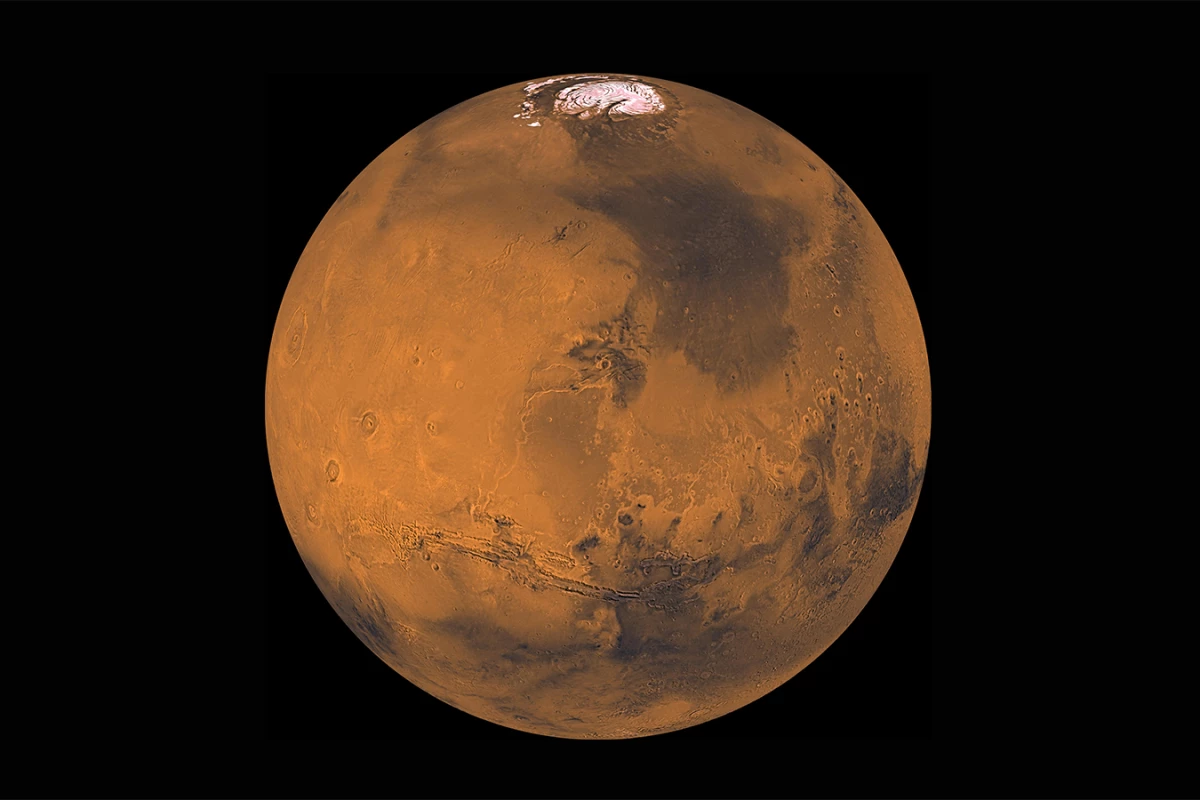
Research conducted by scientists at the National Institute of Standards and Technology (NIST) reveals that astronauts on future missions to Mars will experience time differently than those on Earth. The findings suggest that time on Mars runs approximately 477 microseconds faster per day compared to Earth, a phenomenon rooted in the Theory of Relativity.
Understanding Time Dilation
The concept of time dilation, as proposed by Albert Einstein, indicates that time does not flow uniformly across different gravitational fields and speeds. For example, astronauts traveling at high speeds or residing in lower gravity environments experience time differently than individuals on Earth. This principle is not merely theoretical; it has practical applications that have already been observed in technologies such as the Global Positioning System (GPS).
When GPS satellites orbit the Earth at speeds of around 17,500 mph (approximately 28,000 km/h), they experience time at a rate of 7 microseconds faster each day due to their speed. However, they also gain an additional 45 microseconds per day due to the weaker gravitational pull at their altitude, resulting in a net gain of 38 microseconds daily. Without these corrections, GPS data would be inaccurate, potentially leading to significant navigational errors.
The Complexity of Time on Mars
As humanity prepares for more ambitious missions to Mars, the complexities of time measurement become increasingly significant. Unlike the Moon, where calculations primarily involve the Earth, Moon, and Sun, Mars presents a more complicated scenario. According to researchers Neil Ashby and Bijunath Patla, the gravitational influences of multiple celestial bodies must be factored into the equations, complicating time calculations.
Additionally, Mars follows an elliptical orbit around the Sun, which causes fluctuations in its speed throughout the Martian year. This variability, combined with the complexities of its gravitational interactions, results in a predicted time difference of 477 microseconds per day, along with a fluctuation of 266 microseconds that must be accounted for throughout the year.
Correcting these discrepancies is not as straightforward as with GPS satellites. For Mars missions, the need for continuous adjustments to onboard clocks is essential to maintain accurate communication and data transmission. Ashby emphasized the importance of understanding how time operates on Mars, stating, “It’s good to know for the first time what is happening on Mars timewise. Nobody knew that before.”
The findings, documented in The Astronomical Journal, highlight the need for a robust system to manage time on Mars effectively, especially as plans for human colonies on the Red Planet progress. As missions become more frequent and complex, understanding time on Mars will be critical for successful navigation and operation.
As humanity ventures further into space, these insights into time dilation will help mitigate potential issues that could arise from time discrepancies, ensuring astronauts can navigate and communicate effectively during their journeys to Mars.