
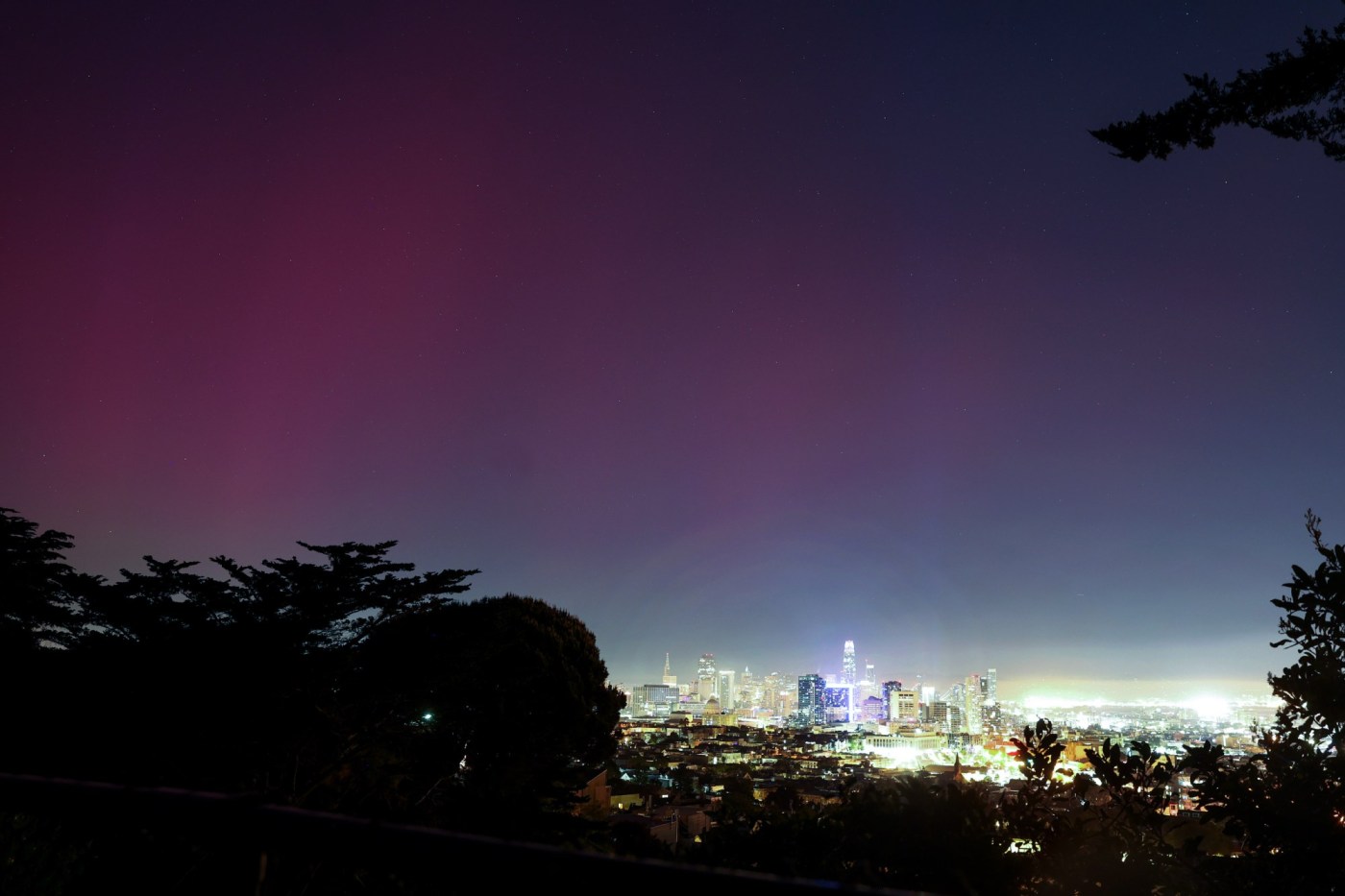
Jason Press, a graduate of Marin Catholic High School, is harnessing the power of artificial intelligence to improve the quality of data collected about the aurora borealis. Currently a senior at Pepperdine University in Malibu, California, Press is leading a data research project aimed at overcoming the challenges posed by cloud cover, which often obscures the stunning natural light display.
During his research, Press discovered that cloudy conditions significantly hinder the availability of clear data about the auroras. “There are very few clear-sky nights with aurora data,” the 22-year-old noted. “When clouds roll in, that data is usually lost. My job was to build a model that could see through the clouds.” This innovative approach has allowed Press and his team to recover vital scientific information that had previously been discarded.
Breakthrough Research and Presentation
Last summer, the research team successfully cleared up images from 90 minutes of satellite video, providing valuable insights into the aurora borealis. By December 2023, their findings were recognized, leading to an invitation to present at the annual conference of the American Geophysical Union, a prestigious gathering for scientists in the field.
Press’s project has garnered praise from his academic mentors. Fabien Scalzo, a computer science professor at Pepperdine, expressed his enthusiasm about Press’s work, stating, “I’m thrilled by the work Jason has done. His curiosity and hard work at the intersection of computer vision and AI are opening vast areas of research in the analysis of auroras.”
Understanding Solar Activity and Its Implications
The aurora borealis, which results from the interaction between solar-charged particles and the Earth’s magnetic field, has been monitored via satellite for over a decade. According to Press, at least half of the data from these satellite videos has been rendered useless due to cloud cover. This limitation has significant implications for scientists trying to predict severe solar events.
His chief mentor, Gerard Fasel, a physics professor at Pepperdine, emphasized the importance of this research. He highlighted that improved data analysis of the aurora borealis could help scientists predict catastrophic events caused by solar flares or “solar wind” emissions. Historical incidents, such as the 1859 solar storm that disrupted telegraph lines and the 1989 blackout in Quebec, underscore the need for this predictive capability.
“We’d like to be able to predict these storms so that we can power our spacecraft down to avoid damaging electrical circuits,” Fasel explained. He has been studying the aurora borealis since 1995 and believes that this research will deepen the understanding of solar-terrestrial interactions.
Jason Press, who grew up in Mill Valley and is the middle child of five in a family of veterinarians, has shown a remarkable blend of intellectual curiosity and creative ingenuity. His family relocated to Belvedere when he was 18. The principal at Marin Catholic, Chris Valdez, reflected on the Press family’s legacy at the school, noting that all five siblings excelled academically while actively participating in service, sports, and music.
“Creative endeavor is a family characteristic,” Valdez remarked. “It is no surprise that Jason is using his intellectual gifts and curiosity not only to explore this data recovery project but also to develop tools to aid in the process.”
As Press continues his research, the implications of his work could extend far beyond the aurora borealis, potentially enhancing the capabilities of scientists worldwide to better understand and predict solar events. His innovative use of AI may well pave the way for significant advancements in the field of space weather research.