
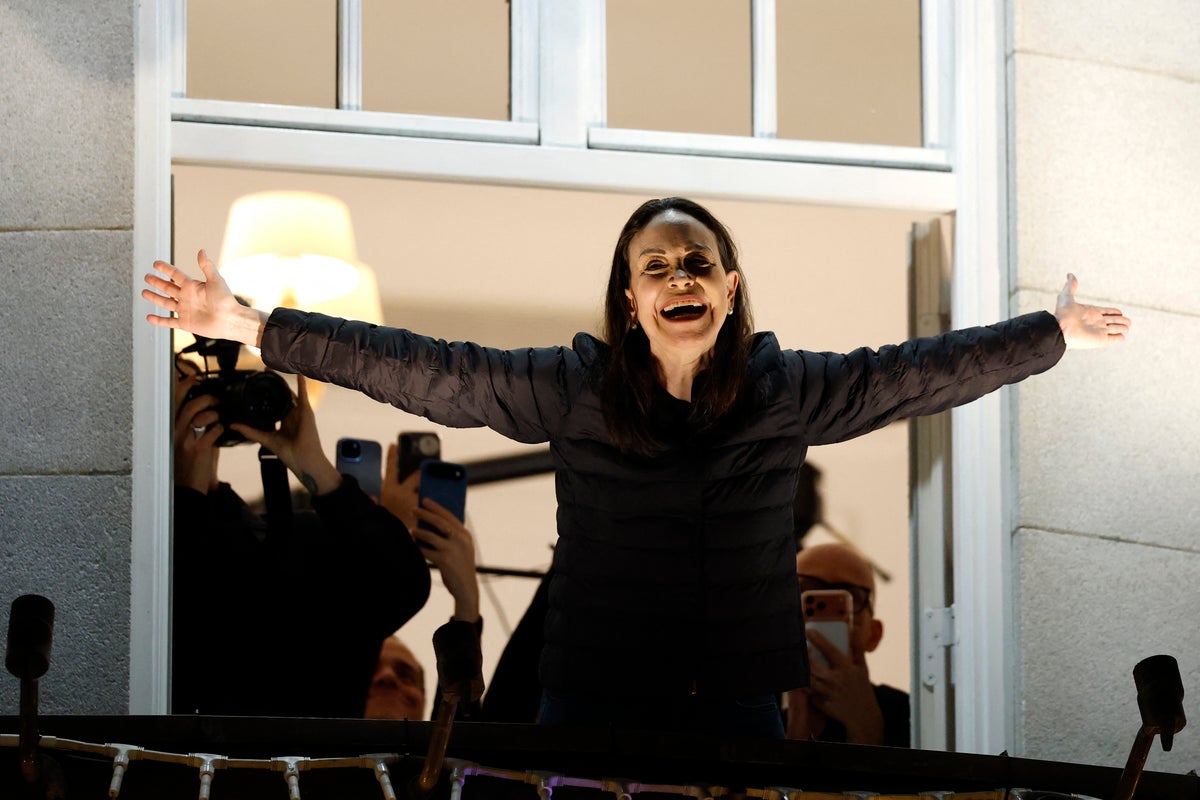
Maria Corina Machado, the Venezuelan Nobel Peace Prize laureate, made a triumphant public appearance in Oslo on March 14, 2024, marking her first since a year-long period of hiding. Her presence drew a passionate crowd of supporters, who gathered outside the Grand Hotel, a traditional accommodation for Nobel laureates. Machado, dressed in a black puffer jacket and jeans, emerged to loud cheers, symbolizing a significant moment for the pro-democracy movement in Venezuela.
Machado’s appearance comes after a dramatic escape from her home country, where she had been barred from running in presidential elections and labeled a fugitive by President Nicolás Maduro. Reports indicate that she fled Venezuela by boat earlier in the week, reaching the Caribbean island of Curacao before continuing her journey to Norway on a private jet.
Defiance Against Oppression
This public return is remarkable, given the restrictions imposed on her for nearly a decade. Although she could not attend the Nobel ceremony in person to accept her award, her display of courage resonated deeply with those who gathered to support her. As Machado stepped out onto the hotel balcony, she joined her supporters in singing the Venezuelan national anthem, “Gloria al Bravo Pueblo.”
Upon her arrival, supporters chanted “courageous!” and “freedom!”, emphasizing the collective hope for change in Venezuela. Machado expressed her desire for her supporters to return to their homeland, saying, “I want you all back in Venezuela,” while people around her captured the moment with their cellphones. Videos surfaced showing her climbing over barricades to embrace supporters, illustrating the strong connection she maintains with her supporters despite the risks involved.
Machado’s daughter accepted the Nobel Prize on her behalf during the official ceremony. A large portrait of her was displayed in Oslo City Hall, symbolizing her absence yet significant presence at the event. In a recorded message, she conveyed gratitude towards those who risked their lives to support her, stating, “This is a measure of what this recognition means to the Venezuelan people.” She emphasized that “freedom is a choice that must be renewed each day,” highlighting the broader implications of her fight for democracy.
The Context of Her Struggle
Machado has been in hiding since January 9, 2024, when she briefly addressed supporters at a rally opposing Maduro’s inauguration for a third term. She had intended to challenge Maduro in the contested July 2024 elections but was ultimately barred from running. The elections have been widely criticized both domestically and internationally as fraudulent, leading to protests and calls for change.
Retired diplomat Edmundo Gonzalez stood in for Machado during the elections, which were marked by repression, including disqualifications and arrests of opposition figures. The National Electoral Council, aligned with Maduro’s regime, declared him the winner, further fueling dissent among the populace.
During the Nobel ceremony, Jørgen Watne Frydnes, chair of the Norwegian Nobel Committee, acknowledged Machado’s extraordinary efforts to attend. He described her as “one of the most extraordinary examples of civilian courage in recent Latin American history,” and noted the extreme dangers she faced in her journey to Oslo. The audience responded with applause and cheers when he announced her impending arrival.
Machado’s situation echoes that of many past laureates who have been unable to collect their awards due to imprisonment or exile. Recent examples include Iranian activist Narges Mohammadi and Belarusian advocate Ales Bialiatski, both of whom faced similar circumstances in recent years. The challenges faced by Machado highlight the ongoing struggles for human rights and democracy in Venezuela and beyond.