
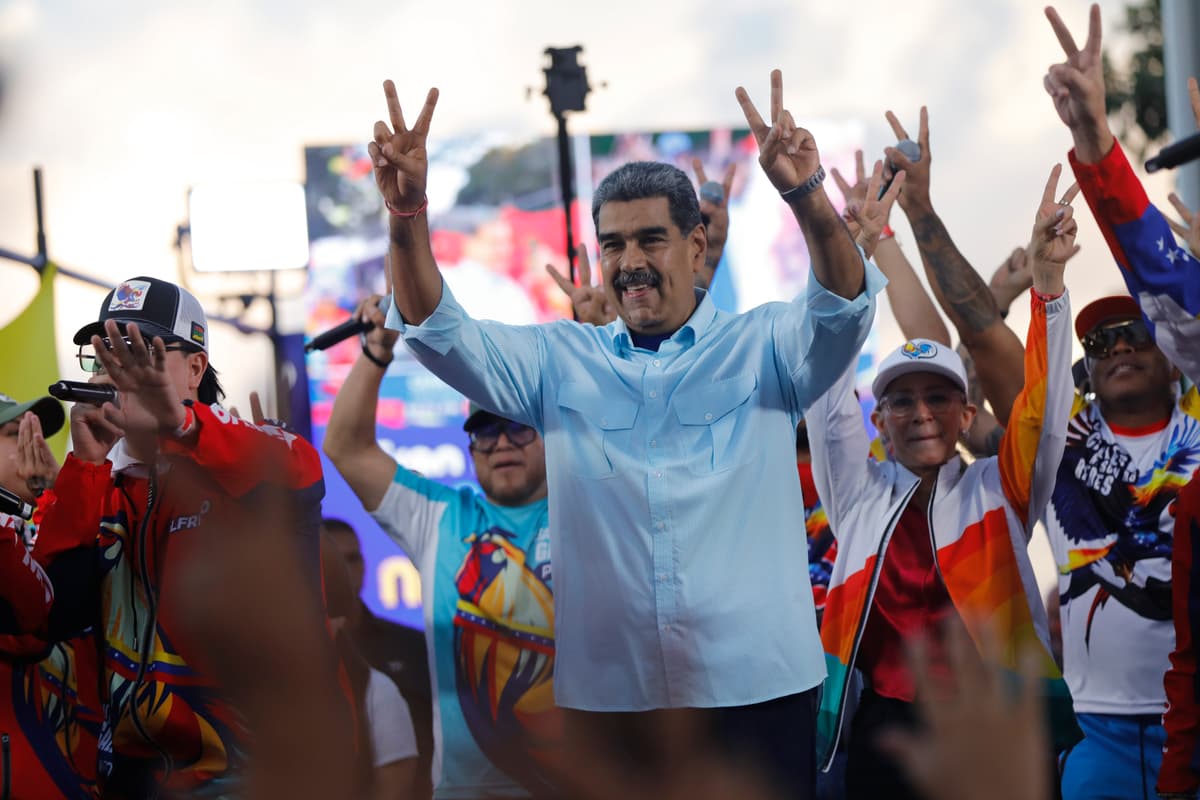
Venezuelan President Nicolás Maduro has expressed a readiness to engage in discussions with former U.S. President Donald Trump as part of efforts to address pressing issues such as drug trafficking and the revitalization of Venezuela’s oil industry. This statement comes in the context of increasing military pressure on his government, particularly from the United States.
In a recent interview, Maduro emphasized the importance of collaboration between the countries to tackle the ongoing crisis related to narcotics, which has significantly impacted both nations. He stated that a dialogue with Trump could pave the way for constructive solutions, suggesting that mutual interests could lead to a more stable and secure region.
Challenges Facing Venezuela’s Oil Sector
Venezuela’s oil industry, once a cornerstone of its economy, has faced significant challenges over the past decade. The country holds some of the largest proven oil reserves in the world, yet production has drastically declined due to mismanagement, sanctions, and a lack of investment. Currently, production hovers around 700,000 barrels per day, a stark contrast to the peak of over 3 million barrels per day in the late 1990s.
Maduro’s government has been under pressure to reform the sector and attract foreign investment. His recent overtures towards Trump signal a potential shift in strategy, as he seeks to navigate the complex geopolitical landscape. Engaging with the former president could also be viewed as an attempt to ease sanctions that have crippled the Venezuelan economy.
Experts note that any talks between Maduro and Trump would likely focus on practical steps to curb drug trafficking, a serious concern for both nations. The United States has long accused Venezuela of being a significant transit point for cocaine and other illicit drugs bound for American markets.
Political Implications of Possible Dialogue
The potential dialogue between Maduro and Trump is laden with political implications. If such discussions were to materialize, they could reshape U.S.-Venezuela relations, which have been strained for years. Trump’s administration had previously imposed strict sanctions on Venezuela, which Maduro argues have exacerbated the humanitarian crisis in his country.
Maduro’s willingness to engage in talks may also reflect a recognition of the need for international support to stabilize Venezuela’s economy. According to the United Nations, over 7 million people in Venezuela are currently in need of humanitarian assistance, highlighting the urgency of the situation.
As the geopolitical landscape evolves, the international community will be watching closely to see if this proposed dialogue leads to tangible outcomes. The stakes are high, not only for Venezuela but also for regional stability and security in the Americas.
In summary, Maduro’s openness to discussions with Trump marks a notable development in Venezuelan politics, indicating a potential shift towards dialogue in addressing critical issues such as drug trafficking and the future of the oil industry. Whether these talks will materialize and lead to effective solutions remains to be seen.