
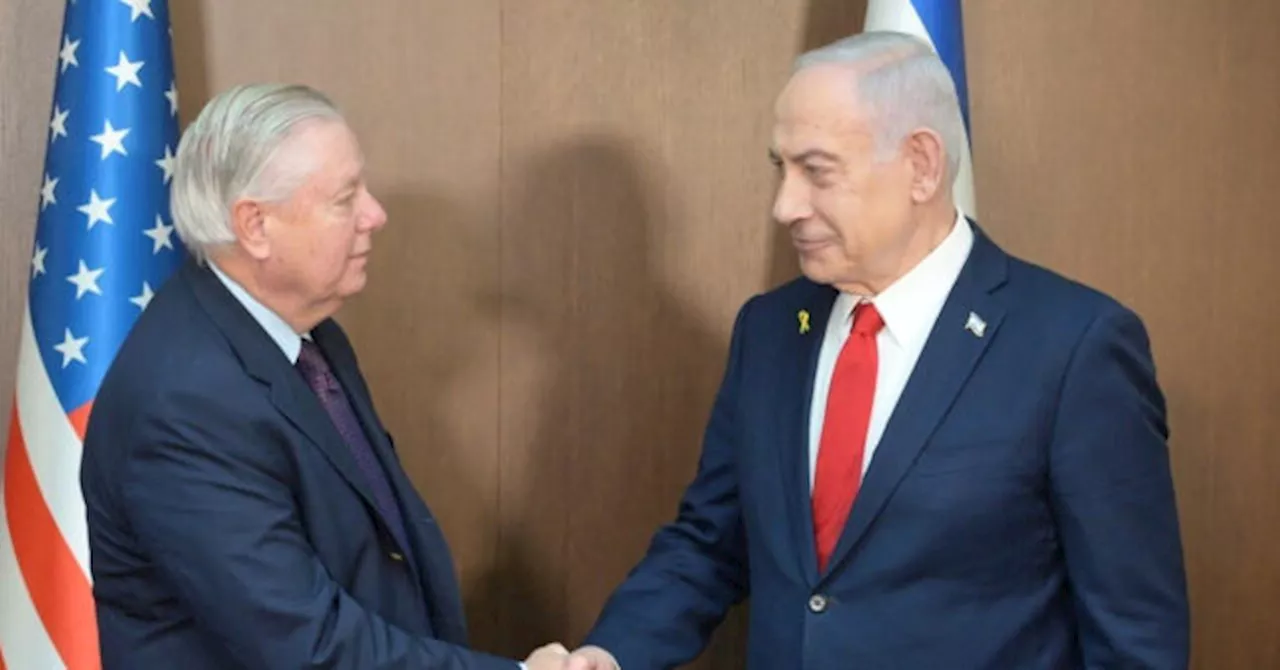
Senator Lindsey Graham called for a formal defense pact between the United States and Israel during his recent visit to Israel, emphasizing the strategic advantages this partnership brings to both nations. Speaking to reporters after meetings with Israeli leaders, including Prime Minister Benjamin Netanyahu and Foreign Minister Gideon Sa’ar, Graham asserted that strong support for Israel remains a cornerstone of the Republican Party.
In his remarks, Graham dismissed claims that support for Israel is dwindling within the GOP, insisting that such assertions do not reflect the political reality. “There is no strong anti-Israel movement in the Republican Party,” he stated. Graham emphasized that over three-quarters of Republican voters in his home state of South Carolina strongly support the U.S.–Israel relationship, a sentiment he believes is echoed nationally.
Graham outlined the tangible benefits the U.S. receives from its aid to Israel, describing this assistance as delivering “tenfold” returns in terms of intelligence, counterterrorism, and technological advancements. He highlighted how Israel’s security capabilities, particularly in counterterrorism, provide the United States with advantages that would be difficult to replicate. “If Israeli intelligence disappeared tomorrow, America would be blind in the region,” he warned.
Strengthening U.S.-Israel Relations
During his visit, Graham urged the establishment of a formal defense agreement to solidify the military partnership between the two nations. He argued that such a pact would reflect strategic realities and not just political symbolism. “Israel does more to keep America safe than almost any other ally,” he said, underscoring that the survival and strength of Israel directly benefit U.S. interests.
Despite acknowledging Israel’s military effectiveness, Graham noted challenges in the information space, advising Israeli leaders to focus on military objectives rather than seeking international approval. He rejected accusations of genocide against Israel, contrasting the nation’s conduct with the goals of its adversaries. “If Israel wanted to kill all Palestinians, it could,” he stated. “Hamas wants to kill all Israelis — but cannot.”
Graham characterized Hamas, Hezbollah, and Iran as interconnected threats, linking them to a broader Iranian-led agenda against both Israel and the United States. He expressed concerns that Hamas has utilized ceasefires to rearm and consolidate power, complicating the prospect of lasting peace. “Without Iran, there is no Hamas or Hezbollah,” he remarked.
Recognizing the potential for military action, Graham suggested that Hamas should be placed on a strict timeline to disarm. He warned that failure to comply should prompt decisive Israeli military action, backed by the United States. He extended this approach to Hezbollah, advocating for either voluntary disarmament or coordinated military efforts among Israel, the U.S., and regional allies.
Future of U.S.-Israel Cooperation
Graham concluded by honoring the victims of the October 7 massacre and expressed optimism that decisive actions taken now could reshape the region positively. He reiterated the importance of removing armed groups from political power to facilitate normalization and expanded peace agreements with Arab states.
In emphasizing the necessity of a formal U.S.–Israel defense pact, Graham reaffirmed that a robust alliance with Israel is vital to American security and global influence. He stated, “The better Israel does, the better America does,” framing the relationship as one of mutual benefit and strategic importance.