
Congress may soon confront a significant legal challenge regarding presidential war powers, particularly in light of President Donald Trump‘s recent military actions in Iran. As lawmakers prepare to vote on a resolution invoking the War Powers Resolution, questions are arising about the extent of the President’s authority to engage in military actions without congressional approval. This situation echoes a pivotal moment from 2006 when then-Senator Joe Biden questioned Supreme Court nominee Samuel Alito about the President’s unilateral decision-making power in military interventions.
During that confirmation hearing, Biden posed a crucial question: whether the President could invade Iran without congressional consent unless an immediate threat to national security was evident. Alito’s response indicated a lack of consensus on this matter, stating, “The President has the power of the commander in chief.” He acknowledged that previous cases supported a President’s authority to act in emergencies when Congress could not respond in time. This foundational debate over executive power has been reignited as Congress weighs its options regarding Trump’s military actions.
The War Powers Resolution, enacted in 1973, restricts the President’s ability to introduce U.S. armed forces into hostilities without explicit congressional approval unless specific conditions are met. These conditions include a declaration of war, statutory authorization, or a national emergency resulting from an attack on the United States. Since its passage—overriding a veto from Richard Nixon—conservative leaders have sought to diminish its authority.
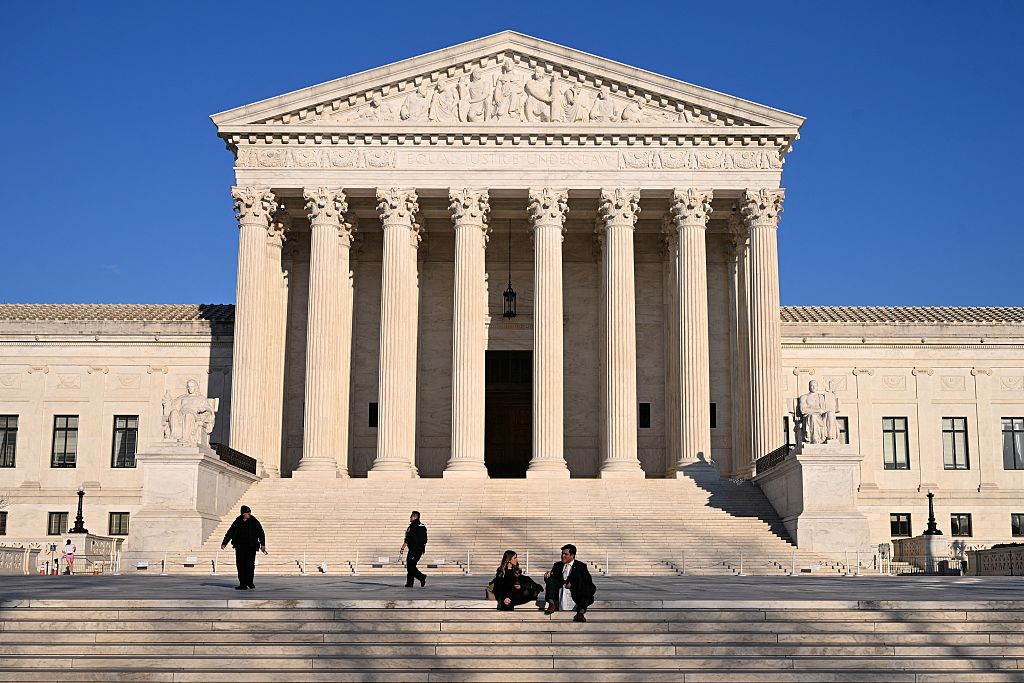
Challenges to the War Powers Resolution have received support from key figures in the judiciary, including Chief Justice John Roberts. In a 1984 memorandum, Roberts advised against conceding any role for Congress in military operations, arguing that any legislative reference to Congress’ authority to declare war should be opposed. His stance has been echoed in later discussions, including his confirmation hearing in 2005, where he avoided directly addressing Congress’s power to halt military interventions.
The current political climate raises the possibility of a legal showdown over wartime authority. Should Congress choose to act, it may lead to a court case that tests the boundaries of presidential power. This would not only challenge the War Powers Resolution but could also reinvigorate the longstanding debate over the balance of power between the legislative and executive branches regarding military actions.
Justices like Brett Kavanaugh and Clarence Thomas have also weighed in on the issue, with Kavanaugh expressing that courts should enforce constraints on wartime activities while simultaneously cautioning against imposing new limits on executive actions. Thomas, on the other hand, has articulated a viewpoint asserting that the President bears primary responsibility for national security matters, indicating a reluctance to allow Congress to impose significant restrictions.
The implications of this ongoing struggle extend beyond mere legal interpretations. With Trump’s military actions in Iran reportedly leading to numerous casualties, including hundreds of Iranian deaths, public sentiment and political accountability are at stake. The situation serves as a reminder of the complex interplay between military authority, legislative oversight, and the consequences of unchecked power.
As Congress considers its next steps, the potential for a significant legal battle looms. The outcome may not only redefine the limits of presidential authority but also reshape the landscape of U.S. military engagement. The stakes are high, and the path forward remains uncertain.