
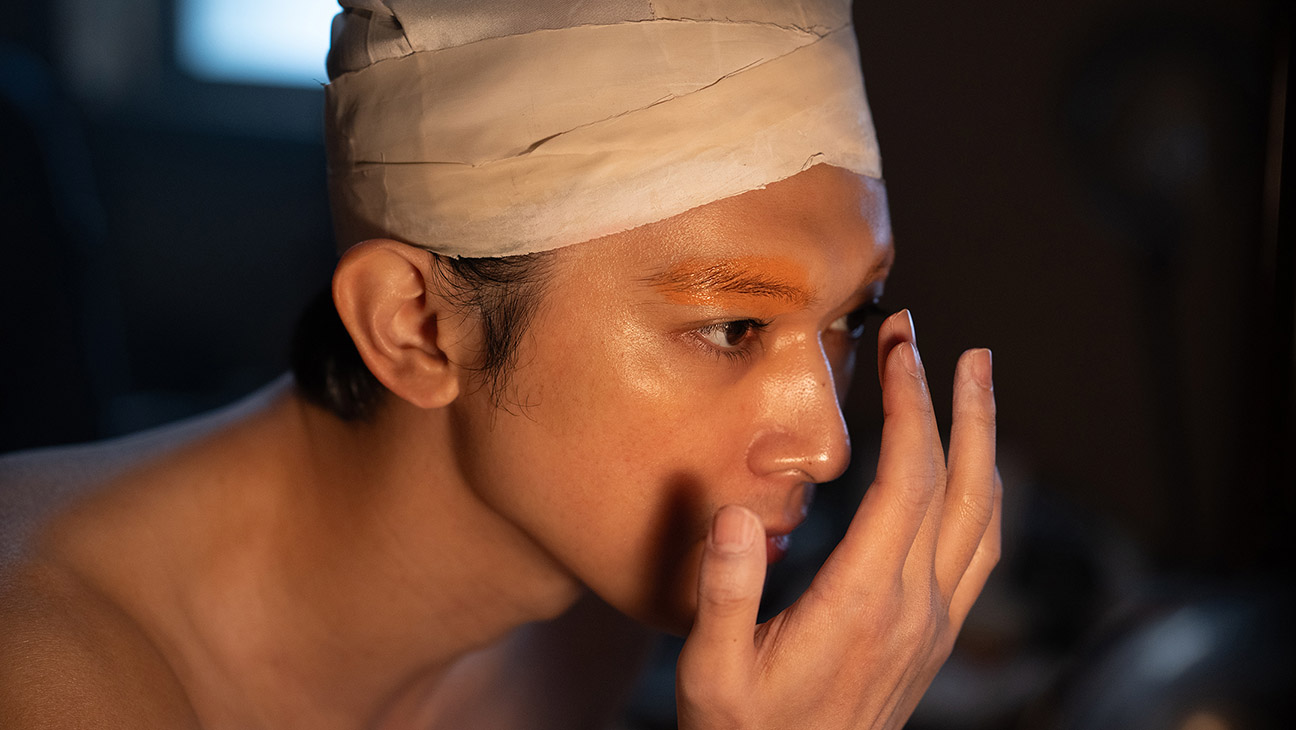
Japanese period drama Kokuho has emerged as a beacon of success in a challenging year for the film industry. Directed by Lee Sang-il, this nearly three-hour epic set in the world of traditional kabuki theater defied expectations by becoming Japan’s most commercially successful live-action film, grossing over $112 million.
The film premiered in May 2025 as part of the Directors’ Fortnight at the Cannes Film Festival, receiving positive early reviews. Following its release in Japan, it quickly gained traction through word of mouth and is now poised for a full theatrical release in the United States in early 2026. Many industry experts are now considering Kokuho a strong contender for the Best International Feature Film at the upcoming Academy Awards.
Kokuho: A Deep Dive into Kabuki Culture
Adapted from an 800-page novel by acclaimed author Shuichi Yoshida, Kokuho tells the intertwined stories of two kabuki performers over a span of five decades. One is an orphaned onnagata prodigy who specializes in female roles, while the other is an heir to a prominent theatrical lineage. Their relationship is marked by obsession, rivalry, and ultimately, transcendence.
As noted by The Hollywood Reporter, Lee crafts a narrative that seamlessly integrates backstage drama with a broader exploration of ambition and beauty. He has remarked that his goal was to “bathe” audiences in the experience of kabuki rather than simply explain it. This approach has proven effective, as the film’s immersive kabuki sequences have not only revitalized the box office but also sparked renewed interest in the traditional art form across Japan.
Director’s Journey and Personal Connection
Born in Niigata in 1974 to a Korean-Japanese family, Lee has been a significant figure in Japan’s independent film scene since the late 1990s. His previous works, such as Hula Girls and Villain, have showcased his ability to blend engaging storytelling with sharp social commentary. Kokuho marks a deeply personal project for Lee, having evolved from a 15-year passion that included extensive kabuki training for the lead actors, Ryo Yoshizawa and Ryusei Yokohama, under the guidance of master actor Nakamura Ganjirō IV.
The film’s performances are pivotal, with Ken Watanabe portraying the patriarch whose authority shapes the characters’ journeys. The juxtaposition of Watanabe’s gravitas with the nuanced portrayals by Yoshizawa and Yokohama adds depth to the narrative, inviting audiences into a rich emotional landscape.
Lee’s commitment to authenticity extended to the film’s production design and cinematography, with the visual representation of the kabuki world being a critical focus. He aimed for the audience to feel immersed in the kabuki performances, linking the characters’ personal struggles to the stories being portrayed on stage.
As the film continues to screen at various international festivals, including the Red Sea International Film Festival, Lee’s vision for Kokuho is resonating beyond Japan’s borders, prompting conversations about the sacrifices artists make in their pursuit of greatness.
In an interview, Lee reflected on the film’s impact, noting that it represents a collective experience for audiences who witness the beauty and brutality of the kabuki art form. He expressed a desire to portray the totality of beauty, including its darker aspects, and hopes that the film can bridge the growing gaps between people in contemporary society.
With its success, Kokuho has also led to increased interest in kabuki, as major venues across Japan report a rise in attendance, particularly among younger audiences. Lee sees this as a cultural resurgence, highlighting the timeless allure of kabuki theater.
As the film prepares for its U.S. release, Lee’s exploration of the complexities of kabuki and its performers continues to resonate, offering a profound reflection on art, ambition, and the human experience.