
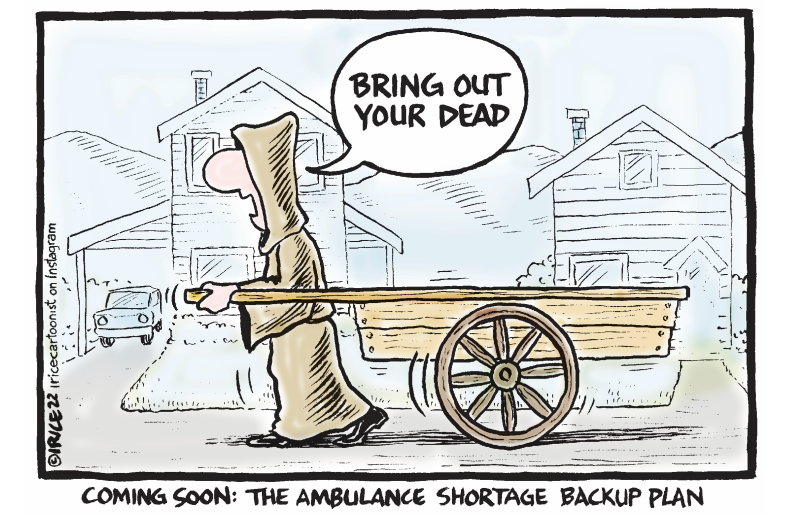
In response to ongoing challenges in rural emergency medical services, Minnesota lawmakers are preparing to tackle critical funding issues as they convene on February 17, 2024. The urgency of ensuring prompt ambulance response, vital for saving lives, is particularly pronounced in remote areas of the state, as highlighted by State Senator Grant Hauschild. He emphasized that equitable health care should not depend on geographic location, stating, “Your health care shouldn’t be determined by your zip code.”
Hauschild’s remarks reflect a growing concern among legislators and health care officials about the sustainability of ambulance services in rural communities. While progress has been made, including the allocation of $6 million for a pilot program in Fergus Falls and the eastern Iron Range, the need for a permanent solution remains pressing. This pilot aims to enhance regional coverage alongside existing rural services.
The issue stems from inadequate federal reimbursement rates for Medicare and Medicaid, which disproportionately affect rural areas with aging populations that rely more heavily on these services. Hauschild noted the challenges faced by communities in lobbying for change at the federal level, stating, “Unfortunately, those efforts have been unsuccessful at the federal level.”
At the state level, lawmakers have taken steps to address these issues. In addition to the pilot program, $24 million was allocated to support rural ambulance services outside the Twin Cities area. A bipartisan rural EMS task force was established, and a new initiative introduced EMT training for high school students, supported by $200,000 from the state through Lake County Ambulance and the Lake Superior School District.
Despite these measures, concerns persist regarding their effectiveness as long-term solutions. Dr. David Herman, CEO of Essentia Health, described the current funding as “patches” rather than sustainable fixes. He emphasized the importance of continued legislative action to support county boards and local governments in maintaining essential ambulance services.
As lawmakers prepare for the upcoming session, the financial viability of maintaining 24/7 ambulance coverage across Minnesota’s more remote regions remains a priority. “We have to look at different ways to fund rural EMS,” Dr. Herman stated, highlighting the necessity of having emergency teams available, even if calls are infrequent.
Hauschild reiterated the gravity of the situation, characterizing it as a crisis for rural communities. “In our most rural communities, we don’t have private hospitals taking on EMS and ambulance services. We have our local, small, rural communities taking on these services themselves,” he said. The financial burdens placed on these communities to fill the gaps left by federal reimbursement failures are substantial, with some facing bankruptcy as they strive to provide critical services.
The disparities in healthcare access underscore a fundamental issue: the need for equitable funding solutions that transcend geographic boundaries. As volunteer first responders in remote areas resort to bake sales to support their departments, the urgency for state and federal governments to step in is clear.
As the legislative session approaches, Minnesota lawmakers have a crucial opportunity to address these challenges and ensure that residents in every corner of the state receive the emergency medical services they need, regardless of their location. The stakes are high, and effective, long-term solutions are essential for the health and safety of all Minnesotans.