
Latvian startup Deep Space Energy is making significant strides in space technology with its development of a compact radioisotope power generator. This innovative system promises to deliver the same energy output as traditional space nuclear systems while utilizing five times less fuel. The company has successfully raised €350,000 in pre-seed funding and secured an additional €580,000 from public contracts and grants to advance its technology toward commercialization.
The generator operates by converting heat from radioactive decay into electricity. The primary heat source is derived from radioisotopes, specifically Americium-241, extracted from commercial nuclear reactor waste. Unlike conventional radioisotope thermoelectric generators (RTGs) that depend on thermocouples for energy conversion, Deep Space Energy claims its unique design significantly enhances fuel efficiency.
Founder and CEO Mihails Ščepanskis noted that the technology has already been validated in laboratory conditions. The reduced fuel requirement not only decreases mass but also has substantial implications for cost and scalability in space missions.
Applications in Space and Defence
The generator is intended as either an auxiliary or primary power source for satellites, particularly in environments where solar energy is unreliable. This includes the strategic enhancement of satellite resilience. According to Ščepanskis, “Our technology, which has already been validated in the laboratory, has several applications across the defence and space sectors. It provides the redundancy of satellite power systems by supplying backup power that does not depend on solar energy, making it crucial for high-value military reconnaissance assets.”
Conventional RTGs require large quantities of radioactive materials to maintain long-term output. Deep Space Energy claims that its system would only need about 2 kg of Americium-241 to generate 50 watts of electrical power for a lunar rover. In contrast, traditional systems would require approximately 10 kg of radioisotope material for the same output. This substantial reduction in mass has direct implications for launch costs, with estimates suggesting that sending one kilogram to the Moon can cost up to €1 million. Thus, reducing the radioisotope mass by 80 percent could significantly lower mission budgets or allow for additional payload capacity.
The company is targeting satellites operating in Medium Earth Orbit, Geostationary Orbit, and Highly Elliptical Orbit. In these regions, spacecraft are essential for synthetic aperture radar imaging, signal intelligence, and missile-launch detection systems. A non-solar backup system bolsters operational resilience against power degradation, eclipses, or potential disruptions.
Meeting Lunar Challenges
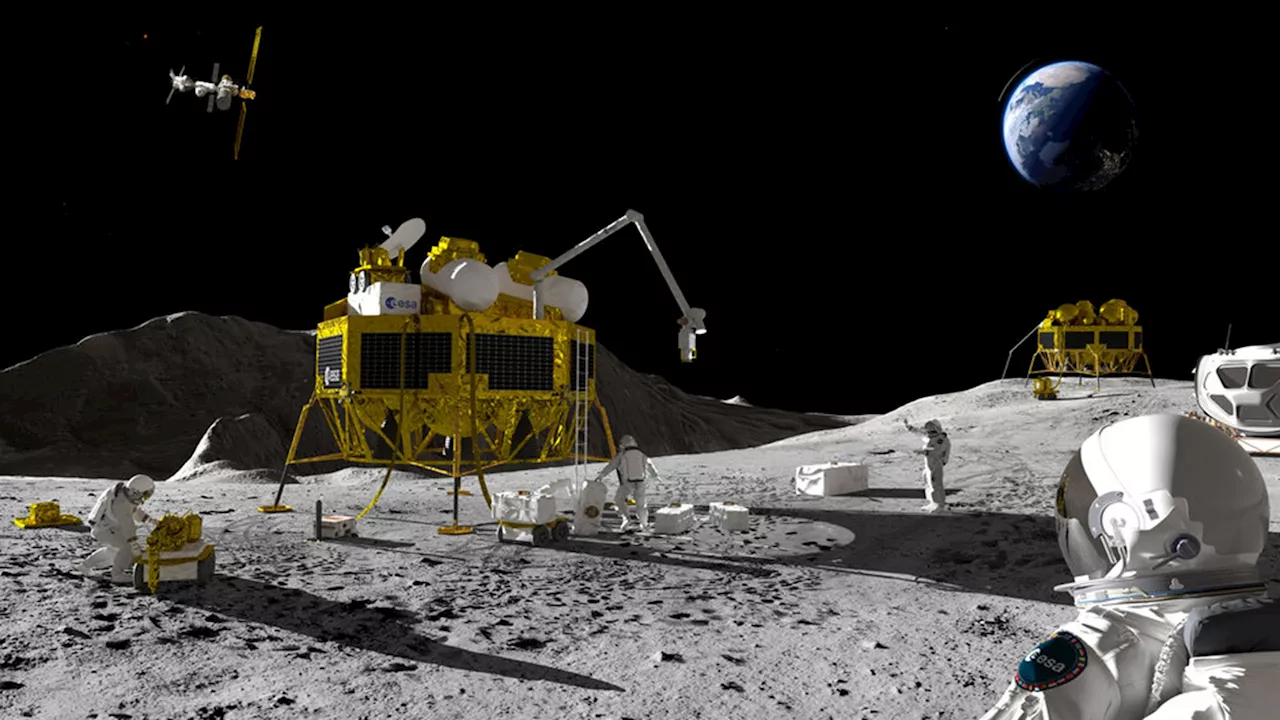
Operating on the Moon presents unique challenges, including the lengthy lunar nights, which last approximately 354 hours and see temperatures plummet below minus 150 degrees Celsius. In such conditions, solar panels become ineffective, and battery systems struggle to bridge these extended cycles without incurring significant mass penalties.
Deep Space Energy’s compact radioisotope generator provides a continuous low-power output, independent of sunlight, essential for thermal regulation, communications, and survival systems during extended lunar nights or operations in permanently shadowed regions. With projections indicating that Americium-241 production capacity could reach around 10 kg per year by the mid-2030s, the efficiency of Deep Space Energy’s system could facilitate more missions than previously possible with traditional RTGs.
The company aims to position its technology for a range of applications, including deep space science missions, lunar surface operations, and high-value defense satellites. By offering a lighter and more fuel-efficient alternative to legacy RTG technologies, Deep Space Energy is poised to contribute significantly to the future of space exploration and satellite resilience.