
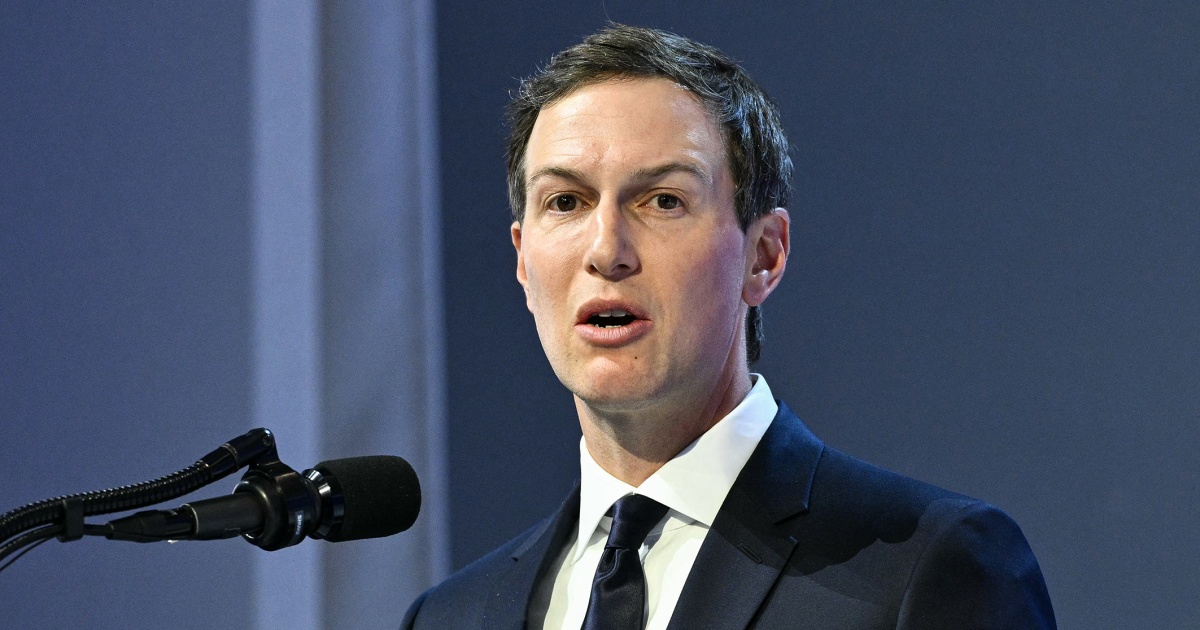
Jared Kushner, son-in-law of former President Donald Trump, presented an ambitious plan for a “New Gaza” at the World Economic Forum in Davos, Switzerland. This vision includes high-rise towers and vibrant tourist areas, a stark contrast to the current state of the territory, which has been devastated by conflict. Kushner claims that much of the preliminary reconstruction could commence within the next two to three years, despite the overwhelming challenges on the ground.
During his presentation, Kushner shared optimistic projections, stating, “We’ve already started removing the rubble and doing some of the demolition.” He displayed slides featuring futuristic designs, showcasing concepts for residential zones, coastal tourism, and advanced manufacturing. However, the reality in Gaza tells a different story.
Israeli forces occupy about half of the Palestinian enclave, where over 71,000 Palestinians have reportedly lost their lives, according to the Palestinian Health Ministry. The humanitarian crisis is severe, with hundreds of thousands of Gaza’s 2 million residents displaced and living in tents, vulnerable to disease and harsh weather conditions.
The ongoing conflict stems from the October 7, 20231,200 fatalities and the kidnapping of 251 individuals. Despite Kushner’s plans aiming for rapid development, the entry of construction materials into Gaza remains heavily restricted. Israel continues airstrikes targeting what it claims are Hamas positions, with both sides accusing each other of violations.
Kushner insists that there is “no Plan B” for his vision of Gaza, which he hopes will create a thriving economy with a projected GDP of over $10 billion by 2035. He emphasized the importance of creating a hopeful environment where the Gazan population can achieve their aspirations.
Yet, skepticism looms over the feasibility of such plans. Ghassan Al-Tanani, who recently lost his brother in an airstrike, expressed doubt about the effectiveness of Kushner’s proposals. “I want to understand where this so-called World Peace Council in Gaza is,” he stated, reflecting the sentiments of many who feel left behind by the international community.
Displaced resident Ghassan Qudeeh echoed these concerns, remarking, “I am one of the 95% of us who are not convinced.” Qudeeh fears that future developments may lead to further Israeli control rather than genuine improvements for Palestinians.
Kushner’s proposal includes the construction of a new port and airport, which raises questions about Israeli acceptance of the plan. Israeli officials have not provided comments regarding their stance on Kushner’s vision or its alignment with the military realities on the ground. Nomi Bar-Yaacov, an associate fellow at the Geneva Centre for Security Policy, highlighted that any high-rise development would face rejection from Israel if it compromised security.
Despite the international aspirations for peace, internal dissent within Israel is evident. Bezalel Smotrich, Israel’s far-right Finance Minister, has called for a military administration in Gaza, underscoring the complexities of governance in the region.
Kushner’s plan has faced criticism, particularly regarding its lack of Palestinian representation. The executive board overseeing the project does not include Palestinian voices, although Kushner acknowledged the contributions of Ali Shaath, a Palestinian former planning minister now responsible for a separate technocratic body in Gaza.
The United Nations Office for Project Services estimates that Gaza contains over 60 million tons of rubble, a staggering amount that would require over seven years to clear. White House deputy press secretary Anna Kelly dismissed the U.N. estimates as “laughable,” reflecting a broader skepticism towards international assessments of the situation.
As Kushner continues to advocate for his vision of “New Gaza,” the realities on the ground present significant obstacles. The stark disconnect between ambitious plans and the current humanitarian crisis raises questions about the path forward for Gaza and its people.