
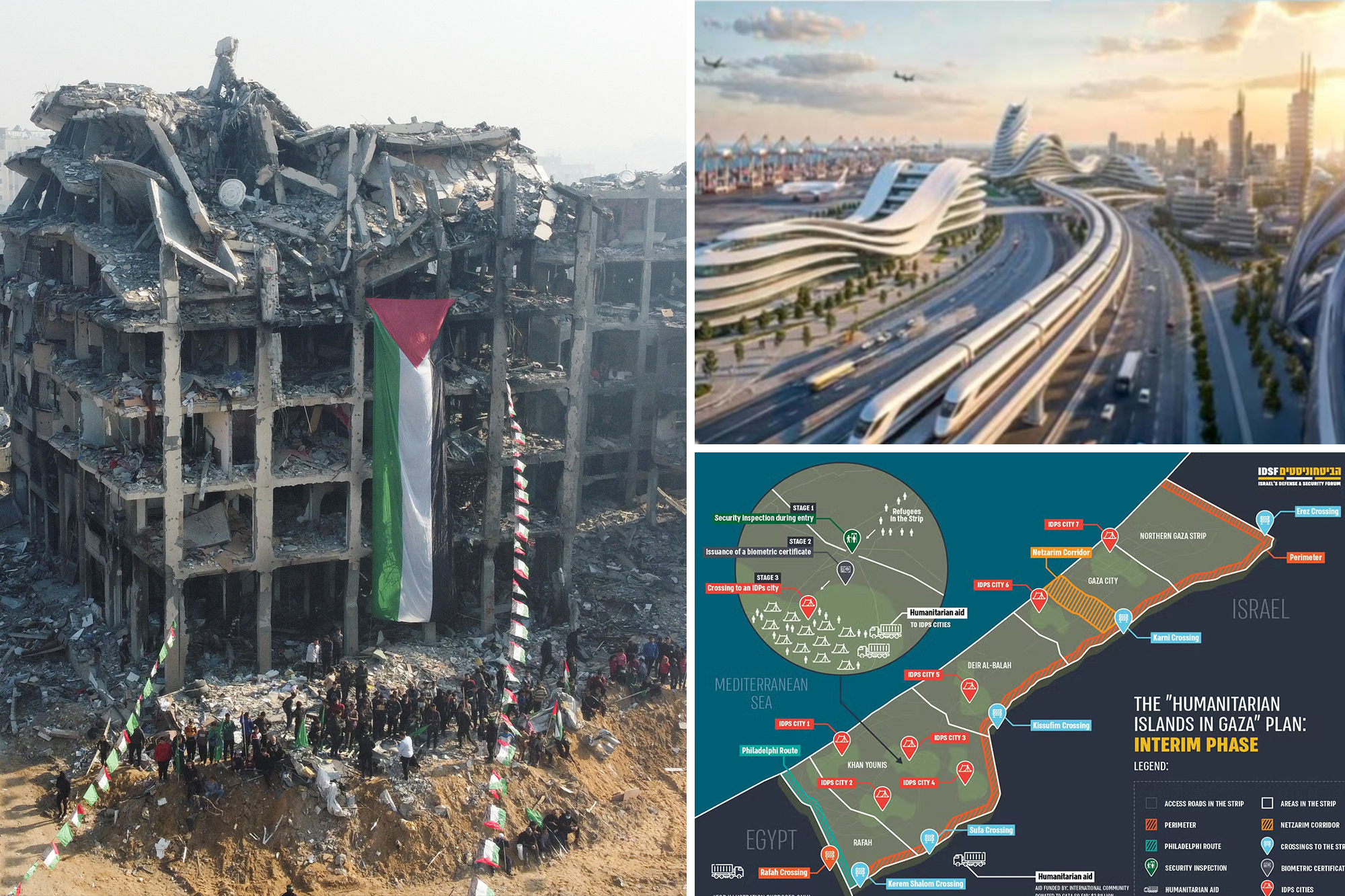
A proposed plan to transform Gaza into a modern urban center, titled “Project Sunrise,” has emerged, detailing a staggering investment of $112 billion. Developed by Jared Kushner, former U.S. President Donald Trump’s son-in-law, and U.S. special envoy Steve Witkoff, the ambitious initiative seeks to rebuild the war-torn region into a futuristic destination over the next 10 years.
The proposal, which is currently being pitched to potential investor countries, outlines a vision for Gaza that includes luxury hotels, high-speed rail, and advanced infrastructure powered by artificial intelligence. According to the Wall Street Journal, the plan features a comprehensive 32-slide PowerPoint presentation aimed at showcasing how Gaza could evolve from destruction to a bustling metropolis along the Mediterranean coastline.
Vision for a New Gaza
The executive summary of the presentation emphasizes a transformative opportunity: “Gaza’s destruction has been profound, but we believe what lies ahead is not just restoration — it’s a chance to develop a gateway of prosperity in the Middle East with state-of-the-art infrastructure, urban design, and technology.” The proposal indicates that the U.S. is prepared to finance $60 billion in grants and debt guarantees as part of this initiative.
Key components of the plan include the establishment of a “Chief Digital Office” and an innovation lab that would shape digital governance and policymaking. Despite its ambitious nature, the proposal has raised critical questions, particularly regarding the housing of the estimated 2 million Palestinians who may be displaced during the extensive construction efforts. An estimated 68 million tons of rubble remain in Gaza, remnants of extensive destruction caused by Israeli airstrikes during the ongoing conflict.
Challenges Ahead
While the proposal outlines distinct phases for construction, details on investor participation remain sparse. U.S. officials familiar with the initiative express skepticism about its potential success, citing a crucial requirement: that Hamas, the governing body in Gaza, agrees to disarm.
In a related context, Witkoff recently met with high-level delegations from Egypt, Turkey, and Qatar in Miami to discuss the second phase of the Gaza cease-fire plan. This meeting underscores the complex geopolitical landscape surrounding the proposal, which aims to combine humanitarian efforts with substantial economic investment.
The road ahead for Project Sunrise remains uncertain, as stakeholders navigate the intricate dynamics of regional politics and the pressing needs of Gaza’s population.