
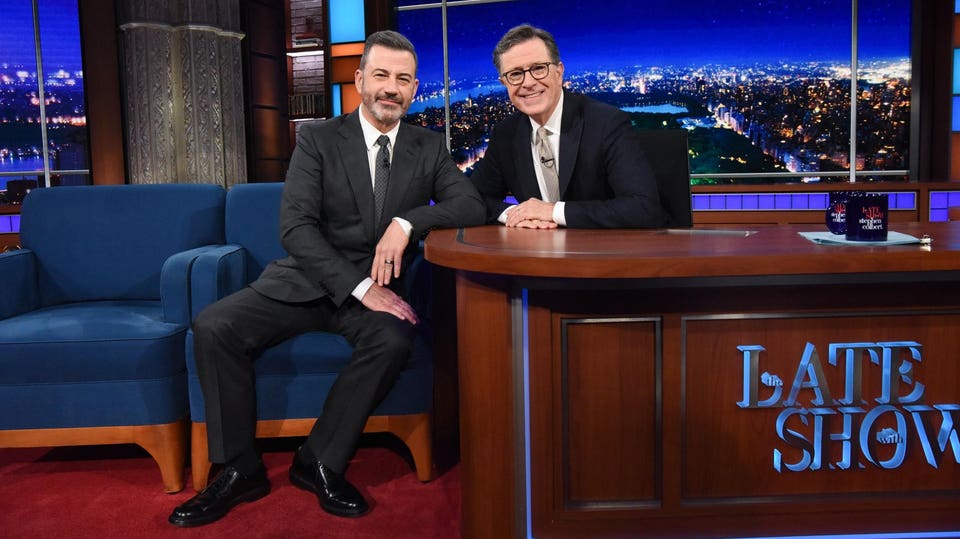
Late-night television hosts Jimmy Kimmel and Stephen Colbert have voiced strong objections to the Federal Communications Commission (FCC) enforcing its “equal time” mandate, which requires networks to provide equal airtime to political candidates. During their respective shows on Thursday night, both Kimmel and Colbert described the FCC’s actions as an attempt to “stifle” their platforms and labeled it a “crackdown” on late-night programming.
Kimmel had initially mentioned the FCC’s notice in his Wednesday monologue, framing it within the broader context of former President Donald Trump’s ongoing “war on talk shows.” He criticized the FCC chair, Brendan Carr, suggesting that the agency was “reinterpreting long-agreed-upon rules” to silence dissenting voices. Kimmel explained that the “equal time” rule was originally established when radio was the primary broadcast medium, with subsequent applications to television. He highlighted that late-night shows have enjoyed an exemption from this rule since 2006, a policy shift that occurred after Arnold Schwarzenegger appeared on “The Tonight Show.”
In his Thursday monologue, Kimmel accused Carr of attempting to “shut us up the easy way or the hard way,” arguing that removing the exemption for talk shows was a strategic maneuver to limit diverse viewpoints. He further questioned the relevance of such regulations in an era where broadcast television viewership has significantly declined, stating, “Broadcast TV used to account for 100% of viewing…now it’s like 20%.” Kimmel also pointed to networks like Fox News and Newsmax, which provide extensive pro-Trump coverage, suggesting that the FCC’s focus on late-night shows is misplaced.
Colbert addressed the FCC’s mandate later in his show, humorously warning his audience that he must be cautious about his comments regarding Trump. He referred to a New York Times headline that characterized the FCC’s actions as a “new crackdown on late-night TV” and joked about the implications for his future as CBS has decided not to renew his show for another season. Colbert claimed he had received legal advice to refrain from discussing the new regulations, framing it as a direct attempt to silence him and his fellow hosts, including Kimmel and Seth Meyers.
In a playful yet pointed address to the FCC, Colbert expressed disbelief over the idea that his show could significantly influence political outcomes. He remarked, “I’ve been doing this job for 21 years, and let me tell you something, buddy, if our government had turned out the way I had chosen, you would not have the power to make this announcement.”
The FCC’s enforcement of the “equal time” mandate highlights ongoing tensions between regulatory agencies and media platforms. As late-night hosts continue to navigate these challenges, the implications of the FCC’s actions remain to be seen, raising questions about the future of political discourse in entertainment media.