
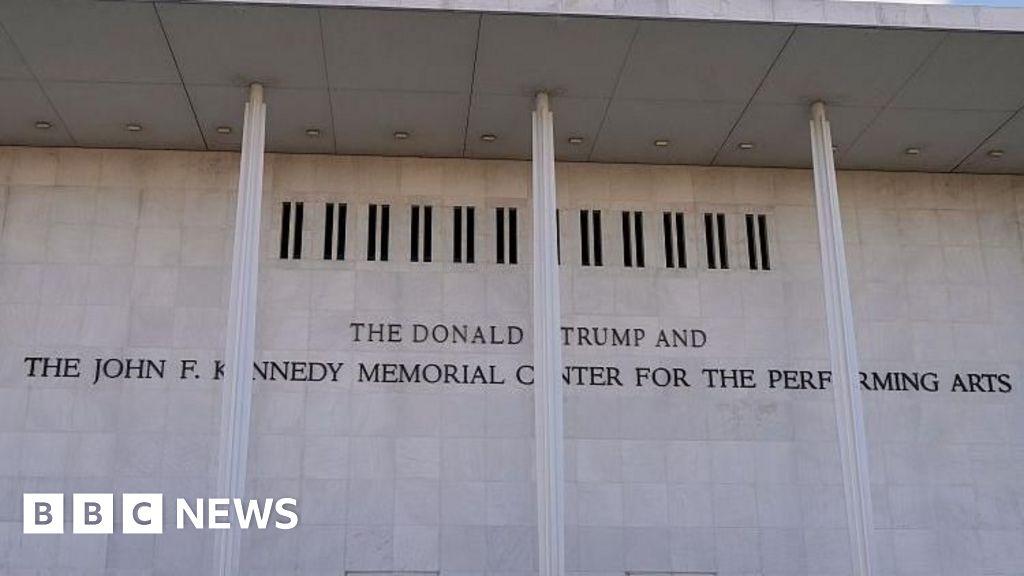
The Kennedy Center in Washington D.C. is seeking $1 million in damages from musician Chuck Redd, who cancelled a concert after the venue’s board voted to rename the institution in honor of former President Donald Trump. Redd called off his annual Christmas Eve performance, which he has hosted since 2006, following the controversial decision to rename the site to The Donald J. Trump and John F. Kennedy Memorial Center for the Performing Arts.
In a formal letter sent to Redd, Richard Grenell, the president of the Trump Kennedy Center, described the cancellation as a “political stunt” and stated that it “has cost us considerably.” Grenell also asserted that Redd’s actions reflected “classic intolerance” that was detrimental to the non-profit arts institution.
The situation escalated after the White House announced that the center’s board had unanimously voted for the name change. Shortly thereafter, crews were seen etching Trump’s name onto the building’s facade, with the official website and social media accounts also updated to reflect the new title. The White House justified the renaming by highlighting Trump’s contributions to the renovation of the facility, but the decision has faced significant backlash from Democrats, artists, and members of the Kennedy family.
Redd, a drummer and vibraphone player, explained his decision to cancel the concert, stating, “When I saw the name change on the Kennedy Center website and then hours later on the building, I chose to cancel our concert,” according to the Associated Press.
The Kennedy Center, which began its construction in the 1950s, was established as a living memorial to President John F. Kennedy following his assassination in 1963. Some U.S. lawmakers and legal scholars have raised concerns regarding the legality of the name change, arguing that since the center was named by a 1964 law, an act of Congress would be required to officially alter its name.
Adding to the legal complexities, Democratic Congresswoman Joyce Beatty from Ohio has filed a lawsuit seeking to reverse the name change. Beatty, one of several lawmakers designated as board members by U.S. law, contends that the renaming process was illegal and that her attempts to voice opposition during the meeting were stifled when she was muted.
As the dispute continues, the Kennedy Center’s actions against Redd signal a deepening conflict over the institution’s identity and its connection to political figures. The outcome of the lawsuit and the center’s demand for damages may set significant precedents for similar cultural institutions in the future.