
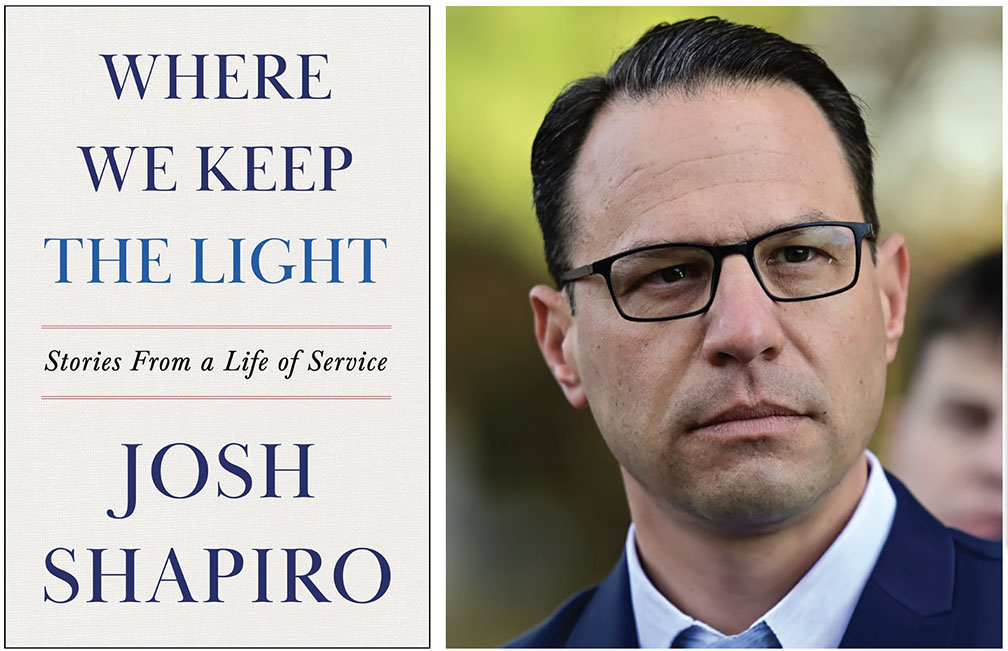
Josh Shapiro, the Democratic Governor of Pennsylvania, has released a new book titled “Where We Keep the Light,” providing a candid glimpse into his personal life and political aspirations. The book opens with a shocking incident where a firebombing targeted his family’s residence shortly after the first Seder of Passover. His son, Max, asked if the attack was motivated by their Jewish identity, highlighting the intersection of personal and public challenges that Shapiro faces.
Shapiro’s writing style reflects his well-known speaking ability; he combines humor, confidence, and directness to engage readers. As he navigates his political journey, he prepares for potential candidacy in the upcoming presidential race, having to first secure re-election as governor in November. He may encounter significant competition, notably from California Governor Gavin Newsom, who is also positioning himself as a frontrunner for the Democratic nomination.
Controversies and Political Dynamics
In his book, Shapiro touches on the speculation surrounding why Vice President Kamala Harris did not select him as her running mate during the last election cycle. He articulates concerns that his Jewish background and outspoken support for Israel may have influenced her decision, especially amid the ongoing conflict in Gaza. Shapiro recounts a tense meeting with Harris, where she questioned his connections to Israel, including a pointed inquiry from White House counsel Dana Remus about whether he had ever acted as an agent of the Israeli government. He reflects on these moments as indicative of the political climate surrounding Jewish leaders in America today.
Shapiro’s candidacy ambitions were further complicated by his dialogue with Harris, where he expressed uncertainty about whether she could win Pennsylvania without his support. He stood firm in his commitment to free speech regarding his comments on protests at the University of Pennsylvania, illustrating the delicate balance he must maintain between his beliefs and political strategy.
Personal Reflections and Community Impact
The firebombing incident that opens Shapiro’s narrative serves as a backdrop for his reflections on Jewish identity and the rise of antisemitism in the United States. He recounts the harrowing details of the attack, which could have had devastating consequences for his family. The perpetrator, Cody Balmer, pleaded guilty to throwing Molotov cocktails at the governor’s residence and expressed motivations related to the Palestinian cause, though the act was not classified as a hate crime.
Shapiro’s commitment to his Jewish heritage is a recurring theme throughout the book. He and his wife, Lori, aim to instill a sense of pride and responsibility in their four children, emphasizing the importance of living openly as Jews during challenging times. The couple’s shared history began in a Jewish day school, and they have continued this tradition by sending their children to the same institution.
The book also discusses the tragic shooting at the Tree of Life synagogue in Pittsburgh, where 11 individuals were killed in one of the deadliest antisemitic attacks in American history. Shapiro recounts the emotional toll this event took on him and the community, revealing his struggles with the responsibilities of being a public figure representing the Jewish faith at a time of rising hostility.
As he reflects on his political journey, Shapiro notes his impressive election record of 12 wins and one loss, the latter being during his school days. His education at the University of Rochester and Georgetown Law School set the stage for his political career, which includes receiving an endorsement from former President Barack Obama during his campaign for Attorney General.
In a candid moment, Shapiro shares an unexpected phone call from Donald Trump, who reached out to him after the firebombing to express concern for his safety. Shapiro acknowledges the complexities of engaging with Trump supporters despite his criticisms of the former president, expressing his desire to connect with all constituents regardless of their political affiliations.
Looking ahead, Shapiro faces the challenge of establishing himself as a viable contender in the Democratic primary, especially against a well-known figure like Newsom. Political strategist Hank Sheinkopf suggests that while Shapiro is a talented politician, he may struggle to gain traction in a field that appears to lean left of his positions.
In the concluding lines of his book, Shapiro conveys a message of resilience and hope, stating, “When the dark feels like it could consume us whole and churn us up and lose us, it is where we keep the light.” While he does not explicitly declare his intention to run for the presidency, the sentiment reflects his ongoing commitment to public service and the values that drive him as a leader.