
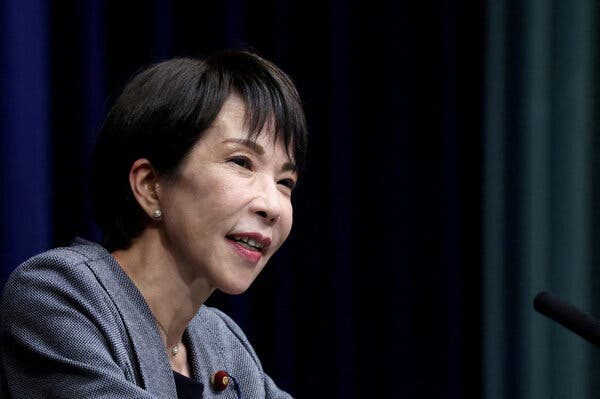
Japan’s Prime Minister, Sanae Takaichi, announced on Monday her decision to dissolve Parliament and call a snap election aimed at consolidating her power and rejuvenating her party’s fortunes. Takaichi, the first woman to hold the office, indicated that she would officially dissolve the House of Representatives when it meets for its regular session on Friday. The election is set for February 8, 2024, just three months into her tenure.
At a news conference in Tokyo, Takaichi expressed her belief that the decision should ultimately rest with the people. “I believe that the only option is for the people, as sovereign citizens, to decide whether or not Sanae Takaichi should be prime minister,” she stated.
This election represents a significant gamble for Takaichi, who risks losing crucial seats that could impede her ability to advance her political agenda. Analysts suggest that while a major defeat for the Liberal Democratic Party (L.D.P.) could threaten her position, such an outcome appears unlikely.
Takaichi’s approach is characterized by her hard-line conservative stance, which may invigorate the L.D.P. and secure the necessary parliamentary seats to facilitate her economic and security initiatives. Mireya Solís, director of the Center for Asia Policy Studies at the Brookings Institution, noted, “She wants to seize the momentum and strengthen her hand at home and on foreign policy. The risk is, she cannot move forward with her agenda and emerges a much weaker figure.”
The decision to call a snap election underscores Takaichi’s ambitions and the challenges she faces as she navigates a complex political landscape. Her leadership style and policy direction will be closely scrutinized by both supporters and critics in the lead-up to the election.
As Japan approaches this pivotal moment in its political history, the implications of Takaichi’s gamble could reverberate beyond her immediate party interests, potentially influencing the nation’s future direction on key issues such as economic growth and national security.