
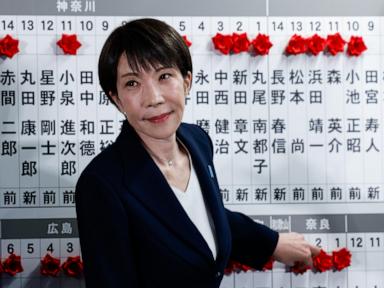
Japanese Prime Minister Sanae Takaichi has successfully leveraged her personal popularity to secure a significant electoral victory for her party, the Liberal Democratic Party (LDP). Following the parliamentary elections held on February 4, 2024, Takaichi announced plans to implement sweeping conservative reforms that could reshape Japan’s security, immigration, economic, and social policies.
Takaichi’s LDP secured an impressive 316 seats in the 465-member lower house, marking a record high since the party’s establishment in 1955. This result, coupled with the 36 seats won by the newly allied Japan Innovation Party (JIP), gives the ruling coalition a commanding total of 352 seats. Takaichi’s victory is a critical turning point that positions her to advance a conservative legislative agenda in a political landscape marked by recent scandals affecting the LDP.
In her first address following the election, Takaichi expressed her vision for a strong and prosperous Japan. She outlined immediate steps, including reappointing her Cabinet and advancing a delayed budget. Aiming to be reelected as Prime Minister next week, she emphasized the need for collaboration with opposition parties while firmly pursuing her goals. “I will be flexible,” she stated in an interview with NHK.
Despite facing challenges in the upper house, where the LDP lacks a majority, Takaichi’s enhanced power in the lower house enables her to pursue policies focused on strengthening Japan’s economy and military capabilities. This comes amid increasing tensions with China and a desire to bolster ties with the United States.
The recent election reflects a broader shift in Japanese politics, where Takaichi’s conservative approach resonates with many voters, particularly as the party seeks to distance itself from past funding scandals. Following only three months in office, Takaichi’s decision to call for an early election has proven strategic, allowing her to capitalize on her popularity.
Public sentiment appears to support Takaichi’s agenda. Voter Akihito Iwatake, a 53-year-old office worker, applauded the LDP’s decisive victory, believing the party’s shift toward conservatism is a positive development. “With Takaichi shifting things more toward the conservative side, I think that brought this positive result,” he remarked.
The election also indicates the rise of far-right populism, with the nationalist party Sanseito gaining traction. Exit polls suggested a significant increase in support for Sanseito, reflecting a changing political landscape in Japan.
As Takaichi prepares for the upcoming session of the lower house in mid-February, her primary focus will be on a budget bill necessary to address economic concerns such as rising costs and stagnating wages. She aims to revise security and defense policies by December, advocating for enhanced military capabilities and a potential lift on the ban regarding weapons exports. Such changes could mark a significant shift from Japan’s postwar pacifist principles.
In addition to military reforms, Takaichi plans to implement stricter immigration policies, including tougher requirements for foreign property owners and limits on the number of foreign residents. While she seeks to build support for these measures, questions remain about how to fund the proposed military expansion and manage diplomatic relations, particularly with China.
Despite her rightward shift, analysts expect Takaichi to maintain constructive relations with South Korea, emphasizing shared concerns over threats from North Korea. However, any moves to revise Japan’s pacifist constitution could provoke apprehension in Seoul, as noted by Leif-Eric Easley, a professor of international studies at Ewha Womans University.
In her campaign, Takaichi emphasized the importance of government investment in areas such as economic security and technology. However, political experts warn that prioritizing electoral success over substantial policy outcomes may lead to challenges in enacting necessary reforms.
As she embarks on this ambitious agenda, Takaichi is set to navigate a complex political landscape, balancing her party’s conservative goals with the realities of public opinion and international relations.