
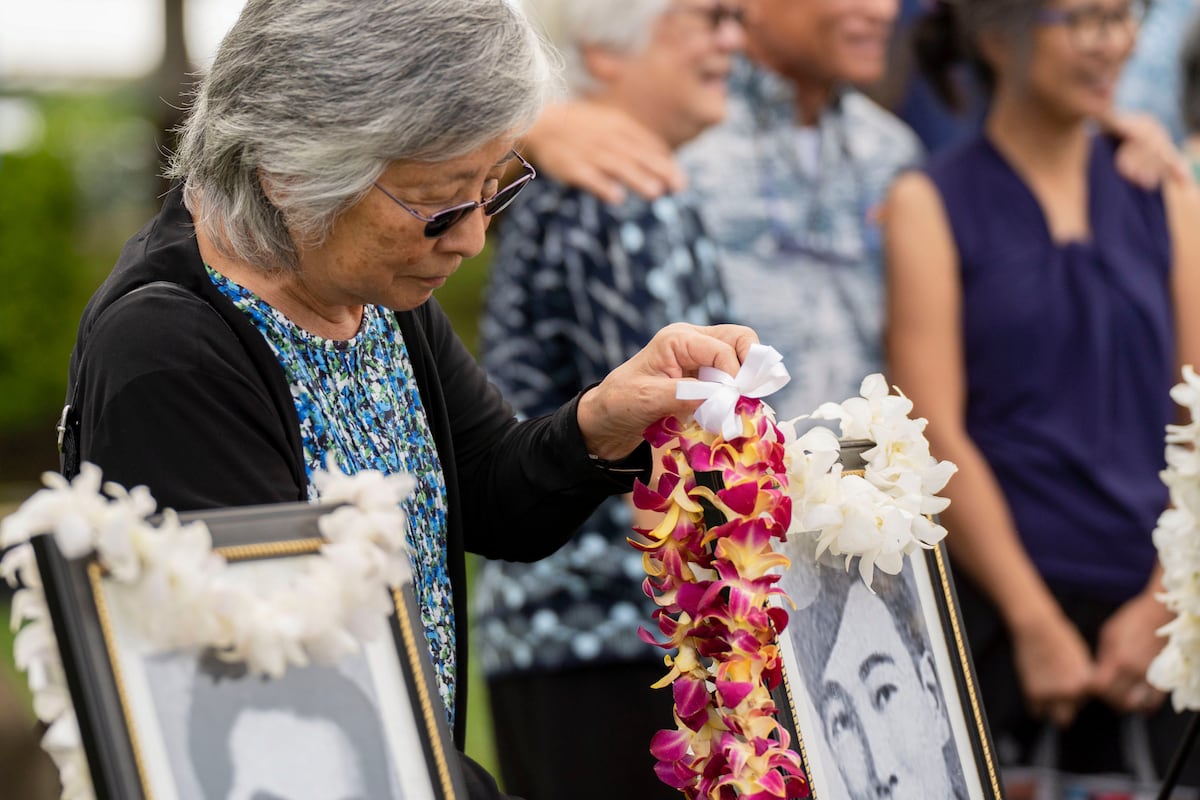
Seven Japanese American soldiers were honored with posthumous promotions to officer ranks during a ceremony on Monday in Honolulu, nearly eighty years after they died fighting for the United States in World War II. These men, who had been classified as “enemy aliens” during the war, were recognized for their bravery and sacrifice in a poignant event that featured framed photos adorned with white flower lei, marking their service and legacy.
The soldiers—Daniel Betsui, Jenhatsu Chinen, Robert Murata, Grover Nagaji, Akio Nishikawa, Hiroichi Tomita, and Howard Urabe—were originally students at the University of Hawaii and cadets in the Reserve Officer Training Corps. Their military journey began on December 7, 1941, when Japan attacked Pearl Harbor. This event led to a shift in their military service; they initially served in the Hawaii Territorial Guard but were soon barred from service due to their Japanese ancestry.
In response to the restrictions, the seven joined a civilian labor battalion known as the “Varsity Victory Volunteers.” They performed essential tasks like digging ditches and breaking rocks until the formation of the segregated 442nd Regimental Combat Team was announced in early 1943. This unit, along with the 100th Battalion, composed predominantly of Japanese Americans from Hawaii, eventually became one of the most decorated in U.S. military history. Many soldiers from this regiment fought valiantly for the Allies, even while their families were interned due to wartime fears.
During the ceremony, 1st Sgt. Nakoa Hoe of the 100th Battalion remarked, “It is important for us to really kind of give back and recognize our forefathers and these veterans that we stand on the shoulders of.” He emphasized the significance of honoring these soldiers, who faced immense challenges and prejudice while serving their country.
The seven men lost their lives while fighting in Europe in 1944, with all but Murata killed during the campaign to liberate Italy. Murata was killed by an artillery shell in eastern France. His nephew, Todd Murata, expressed pride in his uncle’s service, stating, “It’s an honor to be related to one of those people, those men, who volunteered for service. After all these years, people still remember them.”
The ceremony offered a moment of healing for the families of the fallen soldiers. June Harada, Urabe’s niece, shared her thoughts on the recognition, highlighting how it helps address historical injustices. “It’s nice to have our uncle recognized for this huge sacrifice that he made,” she noted.
Despite being American citizens by birth due to Hawaii’s annexation in 1898, these cadets were subjected to prejudice and suspicion. The recent ceremony was part of broader efforts to honor their contributions, coinciding with discussions about the representation of history in the United States. Concerns have arisen regarding the portrayal of minority contributions amid political climates that have raised questions about historical narratives.
The promotions of these soldiers to the rank of 2nd lieutenant were part of an initiative launched in 2023 during the Biden administration, although they received approval during the tenure of the Trump administration. The University of Hawaii had previously awarded the men posthumous degrees in 2012, recognizing their sacrifices and contributions to American history.
The recognition of these seven soldiers serves not only as a testament to their individual legacies but also as a reminder of the complexities of loyalty and service during a tumultuous period in U.S. history.