
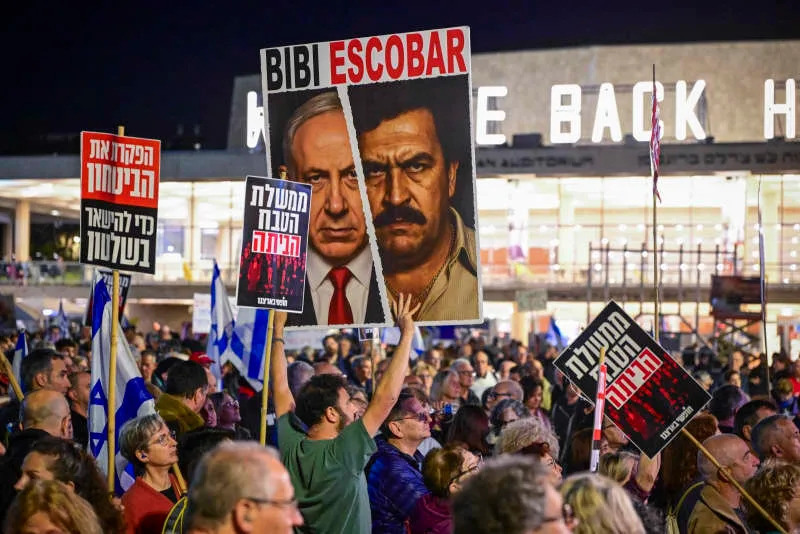
The Israeli government is set to advance two controversial initiatives that may redefine the balance of executive power. On October 7, the Ministerial Committee for Legislation will consider a bill proposing an inquiry into the Hamas attack, while the cabinet will deliberate the closure of Army Radio. These actions have sparked significant debate within the political sphere, highlighting tensions between accountability and allegations of politicization.
Inquiry into October 7 Events
The proposed legislation, spearheaded by Likud MK Ariel Kallner, seeks to establish an inquiry committee focused on the events of October 7. Unlike traditional state commissions, this committee would not be appointed by the president of the Supreme Court. Instead, it would be created by the Knesset and the government, comprising six members: three from the ruling coalition and three from the opposition. Additionally, the committee would include four representatives from bereaved families to oversee its proceedings.
Under the draft bill, a mechanism is outlined to resolve disputes over committee membership and leadership. If consensus is not achieved within a specified timeframe, each faction could appoint its representatives. In the absence of a single chair, the proposal allows for two co-chairs to be appointed. Supporters argue this framework would cultivate a balanced committee that reflects public trust and operates independently of the judicial system.
Critics, however, contend that bypassing an independent state commission could lead to a body perceived as politically motivated. They express concerns that such a committee would face challenges in uncovering the truth, potentially diminishing its legitimacy in the eyes of the public. Calls for a fully independent inquiry continue to resonate among opposition parties and advocacy groups.
Potential Closure of Army Radio
In a separate but related move, the cabinet is expected to vote on a proposal to close Army Radio. Defense Minister Israel Katz is advocating for this change, which would be implemented in stages. The initial phase would involve appointing a team to assess the implications for employees and consider options for continuing the station’s music service, Galgalatz, under a different framework.
Proponents of the closure argue that a military-run outlet should not engage in broadcasting current affairs or political commentary, positing that this change would reinforce the IDF’s commitment to an apolitical stance. Conversely, opponents warn that such a decision could significantly undermine press freedom and diminish democratic discourse in Israel. They highlight the station’s historical role in editorial independence and suggest that a government decision to close it without comprehensive legislation could face legal challenges, potentially leading to petitions in the High Court of Justice.
Overall, the government’s pursuit of these two measures points to a politically charged week ahead. The inquiry into the October 7 Hamas attack stands at the intersection of public demand for accountability and the need for a transparent investigation, while the proposed closure of Army Radio could reshape the media landscape in Israel. As these discussions unfold, the implications for executive authority and civil liberties will remain at the forefront of national discourse.