
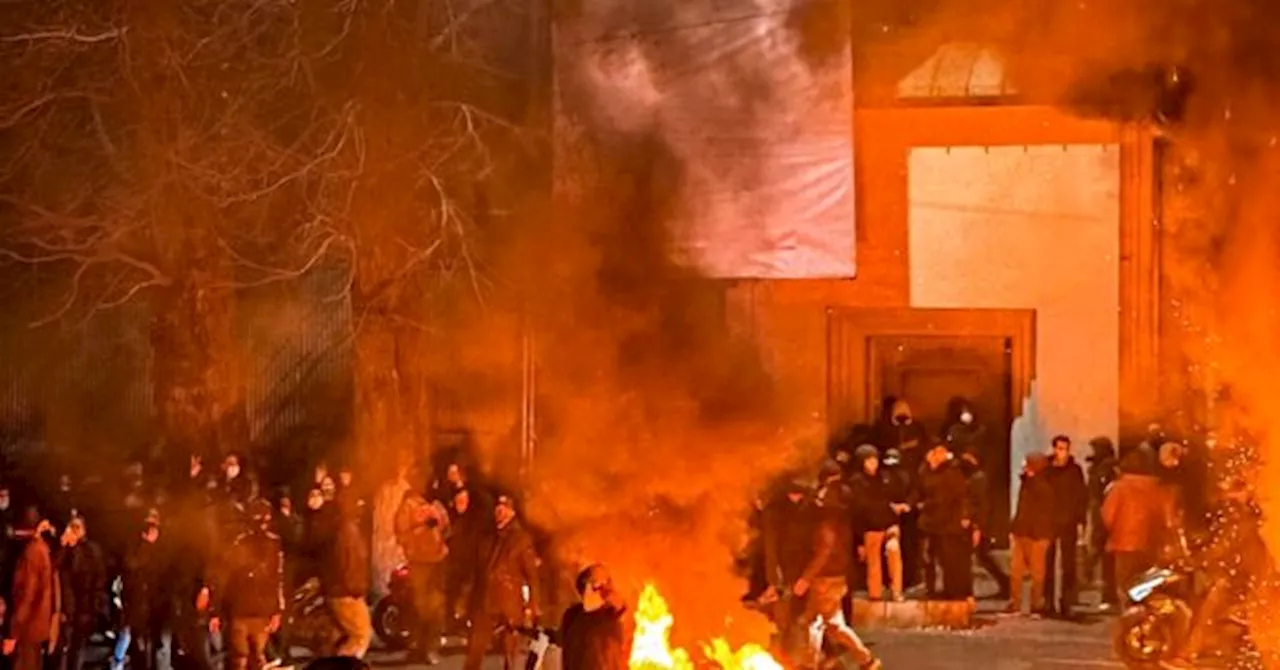
UPDATE: Iranian Foreign Minister Abbas Araghchi declared on Monday that the regime has “regained total control” over the ongoing protests, even as reports confirm a staggering 496 protesters killed amid a brutal government crackdown. This situation continues to escalate, with the United Nations condemning the violence and calling for immediate restraint.
The protests, which have gripped Tehran and other cities since late December, initially erupted over failing economic policies but have evolved into widespread anti-government demonstrations. Eyewitness accounts and reports reveal that 10,600 people have been arrested in the past two weeks alone, highlighting the severe human cost of the unrest.
Reports indicate that the scale of violence is incomprehensible, with hospitals overwhelmed by casualties, as the government enforces a nationwide internet shutdown to control the narrative. Mahmood Amiry-Moghaddam, director of a prominent human rights organization, stated that the massacre of protesters may be far worse than currently understood and urged the international community to intervene.
The regime’s narrative aims to downplay the violence, blaming external forces for the unrest. Araghchi summoned foreign diplomats on Monday, stating that their governments’ support for the protests constitutes “unacceptable intervention” in Iran’s internal security. He insisted that “no true Iranian would attack a mosque” while framing some protesters as “rioters and terrorists” fueled by foreign powers.
In a stark warning, Araghchi claimed that 53 mosques and 180 ambulances were set ablaze during the protests, reinforcing the government’s narrative of a foreign-backed uprising aimed at destabilizing Iran. He accused the United States and Israel of orchestrating the chaos, stating they are “sitting there, giving instructions” to protesters.
International response is intensifying, with UN Secretary-General António Guterres expressing shock at the reports of excessive force used against demonstrators. He called for Iranian authorities to respect human rights and lift the communication blackout, emphasizing the urgent need for accountability.
As the situation continues to deteriorate, the Iranian regime’s efforts to frame the protests as a war against terrorism only serve to heighten tensions. The government’s crackdown shows no signs of abating, and the international community watches closely as the death toll rises and calls for action grow louder.
With the protests now entering a critical phase, what happens next remains uncertain. Observers are concerned about potential further violence and the regime’s willingness to escalate its crackdown. This ongoing conflict is not only reshaping Iran’s political landscape but could also provoke broader international ramifications, as the world grapples with the implications of a regime determined to suppress dissent at any cost.
Stay tuned for more developments as this volatile situation unfolds.