
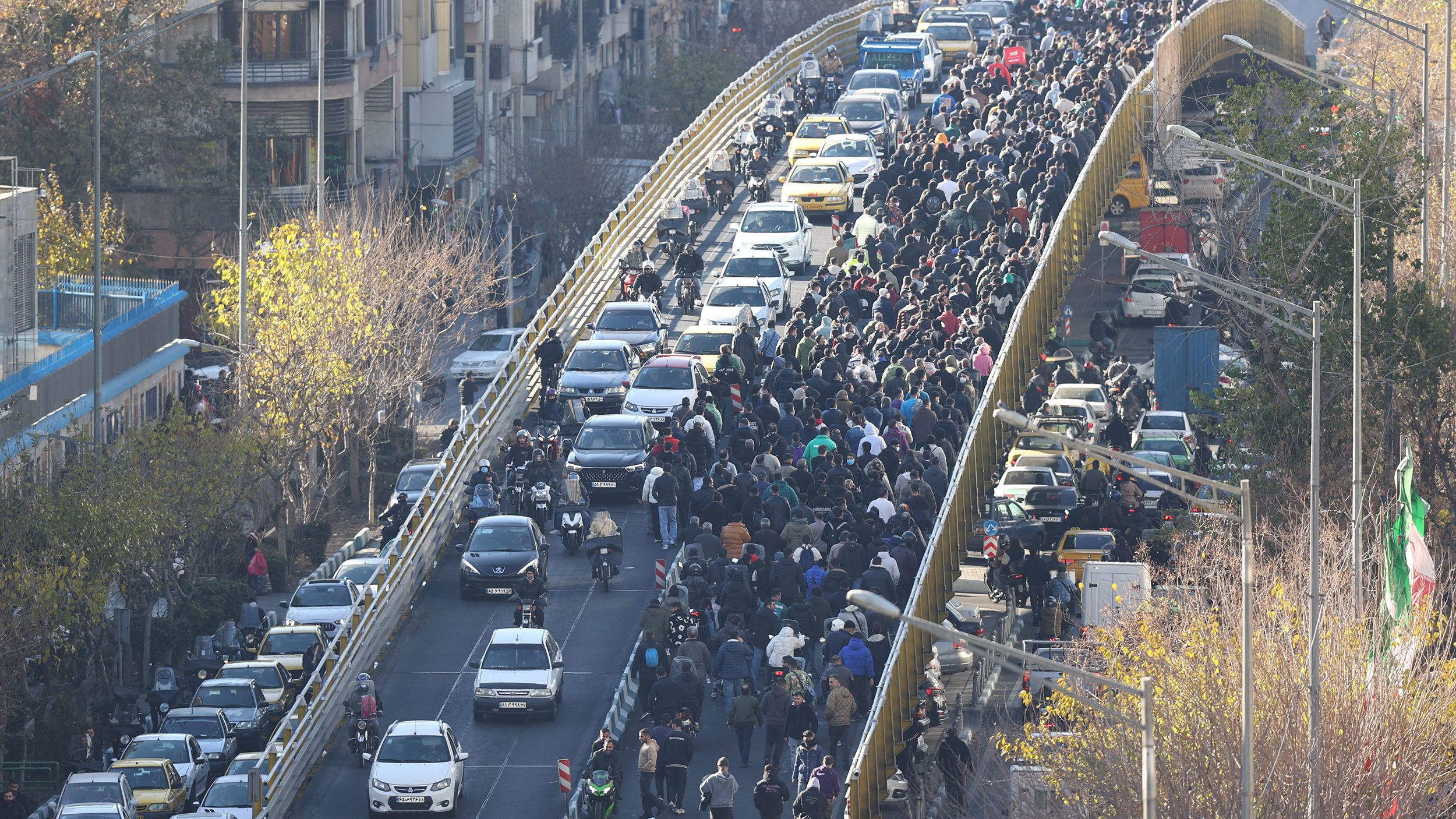
Iran has appointed a new governor for its central bank amidst an escalating economic crisis marked by significant currency devaluation and widespread protests. On Wednesday, the Cabinet led by President Masoud Pezeshkian announced the appointment of Abdolnasser Hemmati, a former minister of economic and financial affairs, to take over the role. He replaces Mohammad Reza Farzin, who resigned just one day after the onset of some of the largest protests the country has witnessed in three years.
The protests erupted following a dramatic decline in the value of the Iranian rial, which fell to a record low of 1.38 million rials against the U.S. dollar. This compares starkly to 430,000 rials when Farzin assumed office in 2022. Economic experts attribute the unrest to a soaring inflation rate of approximately 40%, which has exacerbated public dissatisfaction. Many traders and shopkeepers closed their businesses on Sunday, participating in protests across Tehran and other cities.
Hemmati’s agenda will focus on controlling inflation and stabilizing the currency. He plans to address the mismanagement of banks, according to government spokeswoman Fatemeh Mohajerani, who shared the news on social media platform X. Despite his experience, Hemmati’s prior tenure saw him dismissed by parliament earlier this year over allegations of poor economic management that reportedly weakened the rial.
The recent currency depreciation has intensified inflation, leading to soaring prices for food and other essentials. This situation has placed additional strain on households already suffering from the impact of international sanctions imposed on Iran as a result of its nuclear program. Inflation is expected to rise further due to recent increases in gasoline prices.
On Wednesday, Mohammad Movahedi Azad, Iran’s Prosecutor General, issued a warning regarding the protests, asserting that any attempts to shift focus from economic grievances to issues of security or public property damage would be met with a “strong reaction.” This statement reflects the government’s concerns about maintaining order amid the growing unrest.
In contrast to the current situation, the Iranian currency traded at only 32,000 rials to the dollar during the 2015 nuclear accord, which lifted international sanctions in exchange for Iran’s nuclear program oversight. The agreement began to unravel after then-President Donald Trump withdrew the United States from it in 2018.
Local reports indicated that protests have turned violent in some areas, with incidents of crowds breaking into government offices. In the southern city of Fasa, Hamed Ostevar, a local judiciary official, denied claims that a young man had been killed during the protests. He confirmed that three policemen were injured and four protesters were arrested in the unrest.
As protests continue, merchants and traders in major bazaars across Tehran, as well as in cities like Shiraz and Kermanshah, have kept their shops closed, reflecting the ongoing tension and uncertainty in the region. The economic situation remains precarious, and Hemmati’s leadership will be scrutinized as the country seeks to navigate these turbulent times.