
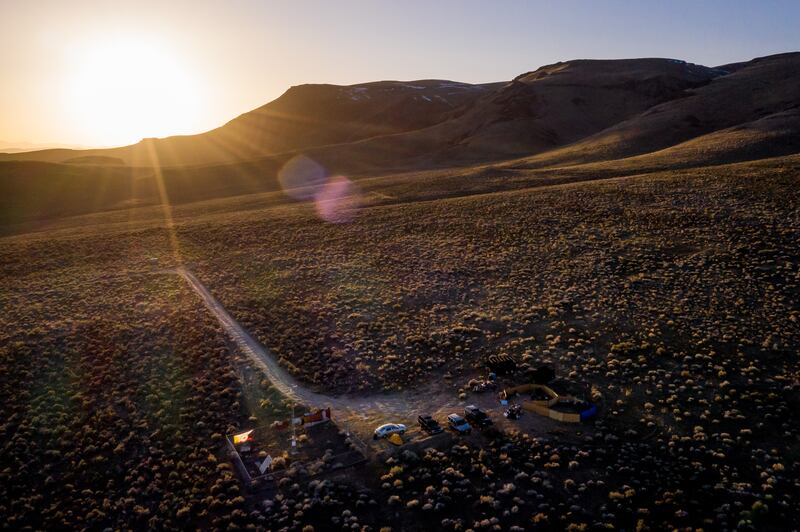
The third-highest ranking official at the U.S. Department of the Interior, Karen Budd-Falen, is under scrutiny for failing to disclose her family’s financial ties to what is set to be the world’s largest lithium mine, located on Bureau of Land Management property in Nevada. During her tenure as deputy solicitor for wildlife and parks in 2018, Budd-Falen’s husband, Frank Falen, sold $3.5 million worth of water rights to Lithium Nevada Corp., a subsidiary of Lithium Americas, which holds rights to the Thacker Pass Mine. This mine’s operation required permits from the Department of the Interior, and its approval was integral to the deal between the Falen family and Lithium Americas, as reported by The New York Times.
In January 2021, just as Budd-Falen’s time at the Department of the Interior and under the first Trump administration concluded, the mine received the necessary permits to commence operations. Subsequently, in March 2025, she was appointed as associate deputy secretary of the Interior, a role that does not require Senate confirmation. A few months later, in September 2022, the Trump administration secured a 5% equity stake in both the Thacker Pass mine and Lithium Americas, a move linked to a decision by the Department of Energy to release over $430 million from a $2.5 billion loan aimed at expediting mine development.
Concerns over potential ethics violations have arisen, given that the Ethics in Government Act mandates financial disclosures from certain high-ranking officials to prevent conflicts of interest. This legislation prohibits officials from engaging in matters that could financially benefit themselves or their immediate family. According to the Department of the Interior’s guidance, officials must refrain from involvement in assignments that could affect their financial interests or those of their spouse or minor child.
In an additional development, Frank Falen indicated to The New York Times that Karen Budd-Falen met with executives from Lithium Americas in Washington, D.C., in 2019, following the water deal’s signing. Although both parties claimed the meeting was social and unrelated to business dealings, the optics of such a meeting raised questions about potential conflicts of interest. Robert Weissman, co-president of Public Citizen, a government ethics watchdog, remarked that while it may not be clear if Budd-Falen recognized a conflict, she should have been aware, emphasizing that the public deserved transparency.
Budd-Falen, a seasoned attorney from Wyoming, has a long history of advocating for landowners’ rights in the West. As a fifth-generation rancher, she has often referred to herself as a “cowboy lawyer.” She and her husband established the Budd-Falen Law Offices in Cheyenne, which has operated for over three decades, promoting itself as “lawyers for the West.” Throughout her career, Budd-Falen has served in various capacities under multiple presidential administrations, including those of Ronald Reagan and Donald Trump. In 2018, she nearly accepted a nomination to lead the Bureau of Land Management but withdrew when asked to relinquish her family ranch.
Despite the emerging concerns regarding her financial disclosures and perceived conflicts of interest, Budd-Falen has not publicly commented on these matters. Her role at the Department of the Interior has received full endorsement from the agency, with Charlotte Taylor, deputy communications director, asserting that Budd-Falen is a proven leader committed to effective and responsible public land management. A separate statement emphasized her professionalism and dedication throughout her extensive career.
As investigations continue, the implications of Budd-Falen’s financial entanglements with the lithium mining industry raise critical questions about ethics and transparency within the government, particularly in matters involving significant public resources and environmental considerations.