
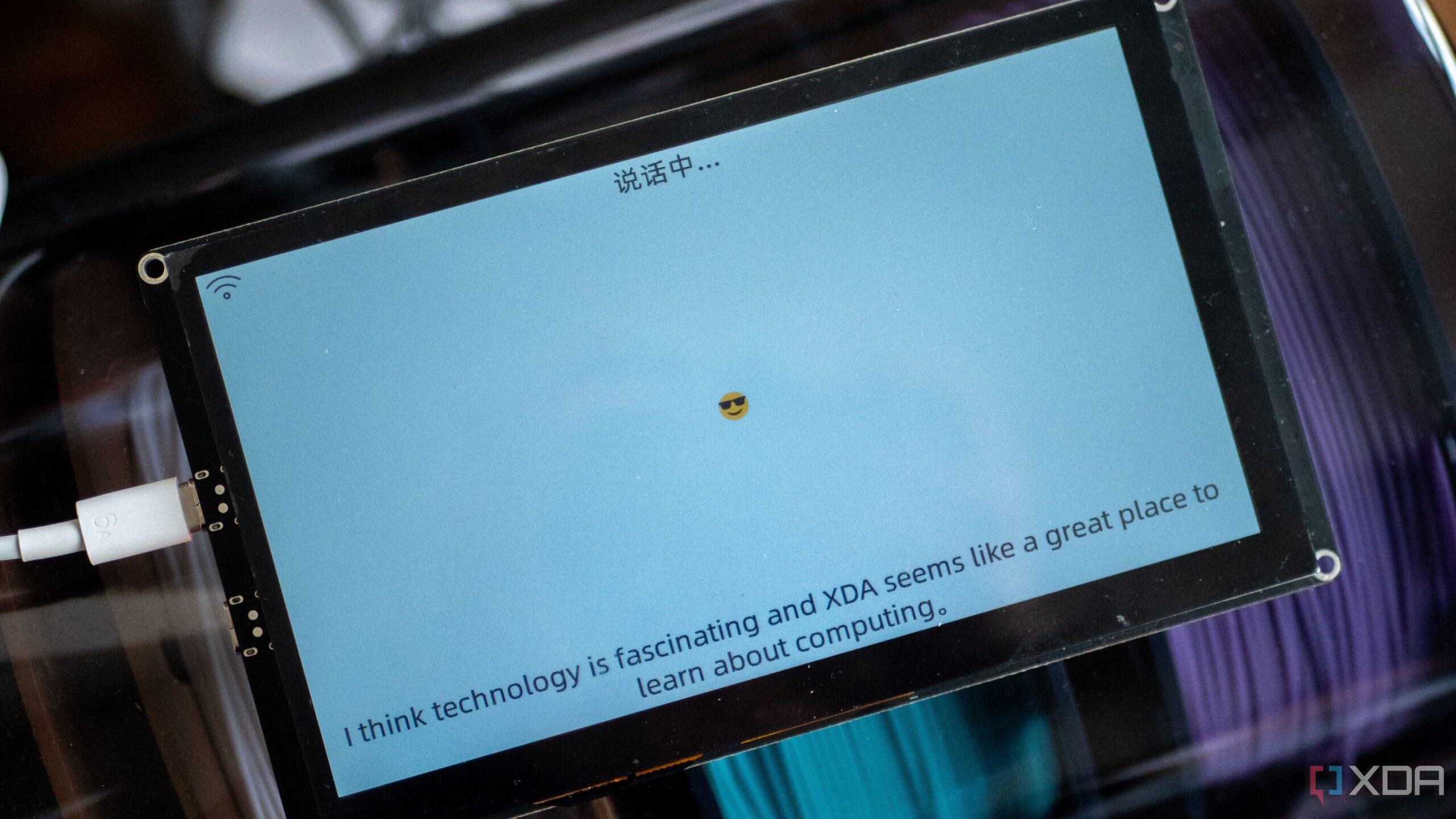
BREAKING NEWS: A tech enthusiast has just unveiled an innovative voice assistant using the ESP32-P4, transforming it into a chatbot that reacts with emotional expressions. This project, inspired by the XiaoZhi platform showcased at the Maker Faire Shenzhen last year, combines cutting-edge technology with user-friendly design, making waves in the DIY electronics community.
The newly developed voice assistant not only engages users in conversation but also visually represents emotions through animated emojis on a stunning 7-inch display. This capability marks a significant leap in personal assistant technology, allowing for a more interactive and engaging user experience.
With the XiaoZhi platform, the ESP32-P4 utilizes both local and cloud-based language models, ensuring swift and accurate responses. Unlike conventional chatbots, this system supports advanced features like wake word detection, speech-to-text, and text-to-speech processing, all managed seamlessly through the ESP32.
The emotional engagement of this voice assistant is a game-changer. Users receive responses that are not only verbal but also visual, with emojis that change according to the emotional tone of the conversation. For instance, a happy reply will show a smiling emoji, while a confused answer will display a puzzled expression. This feature enhances the interaction, making it feel more natural and relatable.
The developer emphasizes the ease of setup with XiaoZhi, which allows users to customize their assistant according to their preferences. For those opting for a self-hosted solution, the process is straightforward, enabling full control over data privacy and functionality. The assistant can seamlessly integrate with smart home devices, check weather updates, or even tell stories, broadening its applications beyond mere conversation.
In terms of hardware, the Elecrow CrowPanel Advance is a powerhouse. With 32MB of PSRAM and dual 400MHz RISC-V cores, it outperforms many standard ESP32 boards, providing ample resources for complex tasks. This ensures that users experience high-quality audio and fast response times, crucial for effective communication.
Despite the complexity of the underlying technology, the voice assistant operates intuitively. The developer notes that the emotional tagging for the emojis is processed by the language model on the server side, which ensures that the emotional responses are as nuanced as the conversation itself.
This advancement in voice assistant technology is not just a technical achievement; it has the potential to impact daily life significantly. Users can create a personalized assistant for various tasks, from managing home automation to serving as a companion during daily activities.
The project is also part of a growing trend in open-source technology, providing a platform for continuous improvement and customization. With a supportive community and an accessible framework, XiaoZhi stands out as a leading open-source voice assistant project.
As of now, this project is generating significant buzz within tech circles. The integration of emotional intelligence in voice assistants could redefine user interactions with technology, making them more engaging and human-like.
Stay tuned for more updates on this groundbreaking development in voice technology, as it sets the stage for future innovations in the field. This is a must-watch for anyone interested in the intersection of AI and everyday life.