
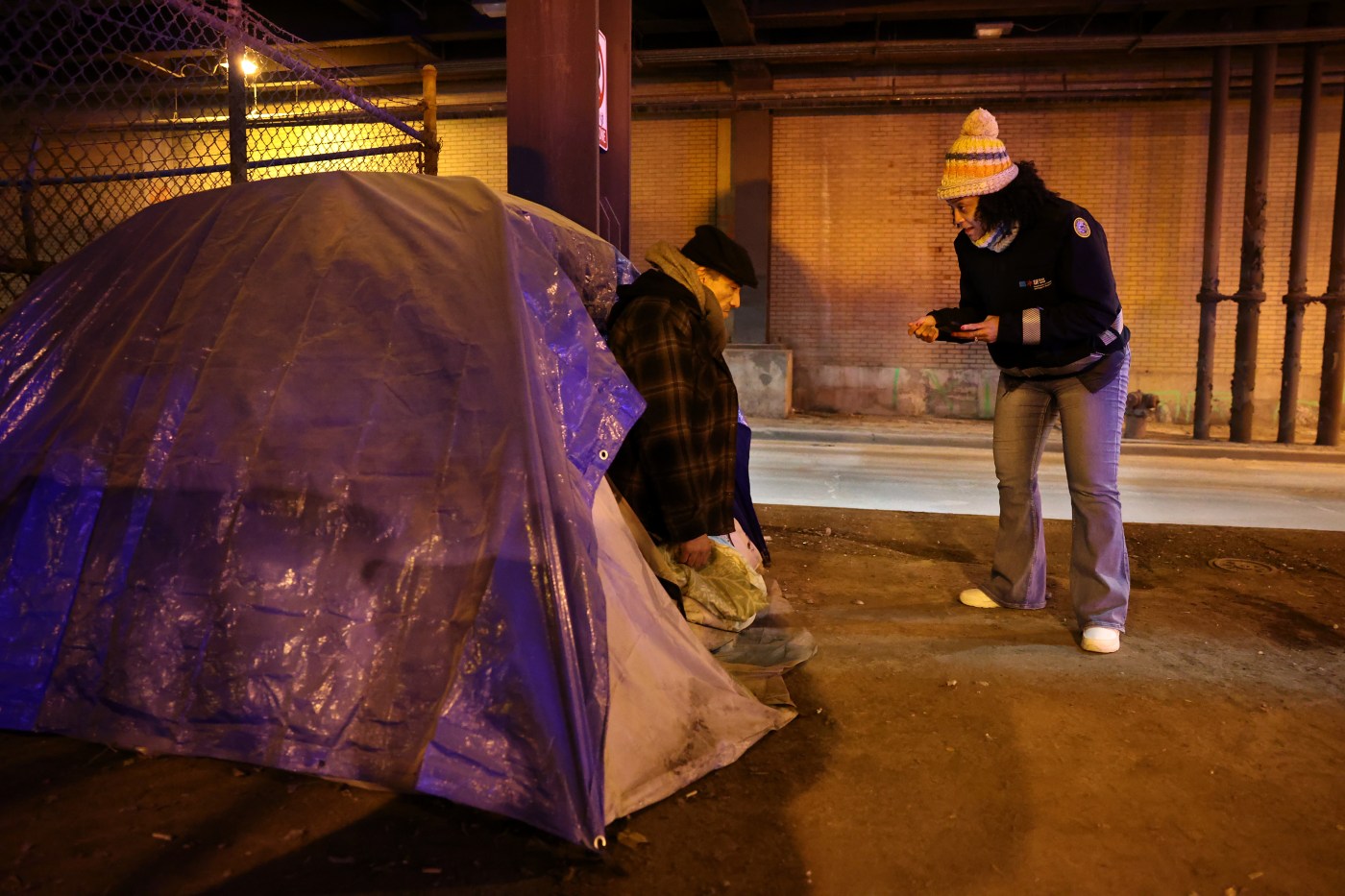
A recent report from the Illinois Department of Public Health has revealed a stark reality regarding homelessness in the state: individuals without stable housing face significantly reduced life expectancies. The “Illinois Homelessness Mortality and Morbidity Report” for the years 2017 to 2023 indicates that the average age of death for those experiencing homelessness is only 55.5 years, compared to 74.2 years for the housed population. This alarming disparity underscores a critical public health crisis that demands urgent attention.
The report highlights a troubling “death gap” affecting communities across Illinois, particularly in areas like Chicago’s Northwest Side, where many residents have long viewed homelessness as a problem confined to downtown. Outreach worker Monica Dillon emphasizes that this misconception is dangerous, as the issues of morbidity—the rate of disease and injury—are prevalent in local parks, libraries, and public transit stations. For instance, individuals experiencing homelessness are 39 times more likely to die from an overdose and nearly four times more likely to succumb to exposure to cold temperatures.
In response to this crisis, Dillon calls for a comprehensive approach to tackle homelessness effectively. Current efforts, she argues, are insufficient. Providing “light touch” services, such as handing out food and informational pamphlets, is not enough to address the root causes of homelessness. Instead, the community requires intensive outreach and housing case management to prevent homelessness from occurring in the first place.
A significant need has also emerged for a dedicated emergency shelter for adults on the Northwest Side. As it stands, individuals without shelter often have to travel long distances across the city to find accommodation, disrupting their connections to local employment, family, and healthcare services. Dillon asserts that having a local shelter is essential for maintaining community ties and providing necessary support.
The report stresses that the only real solution to the morbidity associated with homelessness is stable housing. To bridge the 20-year gap in life expectancy, the Northwest Side must invest in deeply affordable housing options that are equitably distributed across neighborhoods. The long-standing sentiment of “not in my backyard” has hindered progress, with real consequences for vulnerable populations.
Dillon concludes with a powerful message: the death gap is not an unavoidable reality but a result of policy choices. The community must advocate for comprehensive support from local government to ensure that every neighborhood provides opportunities for all residents to live healthy, fulfilling lives.
In addition to homelessness, another pressing issue has surfaced in Illinois: food insecurity. Recent changes to the Supplemental Nutrition Assistance Program (SNAP) requirements have left over 300,000 Illinois residents struggling to meet their basic needs. The 211 Metro Chicago helpline reported a staggering 99% increase in food assistance requests in December 2024 compared to the previous year. This rise in demand reflects the broader challenges faced by social services in the region.
The 211 Metro Chicago helpline, operated year-round by the United Way of Metro Chicago in partnership with Cook County, has been instrumental in connecting individuals with available resources. The helpline updates its database every six hours in collaboration with local food pantries, ensuring communities can respond effectively to rising needs.
As the United Way of Metro Chicago continues to address food insecurity, it has allocated $250,000 in emergency response grants to various organizations in 2025. Utilizing data from the 211 helpline allows the United Way to track evolving community needs and mobilize resources quickly.
These two crises—homelessness and food insecurity—highlight the urgent need for action in Illinois. Public-private partnerships, such as the 211 Metro Chicago helpline, are critical in maintaining the social safety net and meeting the increasing demands of the community. As officials and organizations work to address these issues, the focus must remain on building sustainable solutions that prioritize the health and well-being of all residents.