
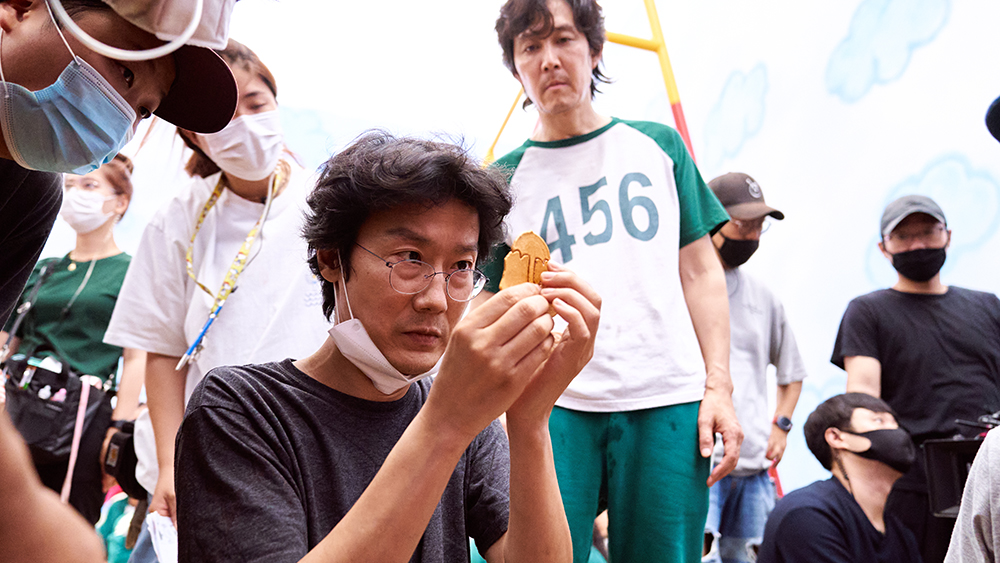
UPDATE: Renowned director Hwang Dong-hyuk shared groundbreaking insights into the creation of Squid Game at the Asian Film Awards masterclass held on October 29, 2023, at the Xiqu Centre in Hong Kong. Hwang recounted how the show’s concept, pitched as early as 2009, was initially dismissed as absurd, only to become a global phenomenon.
During the session, Hwang detailed the personal struggles that inspired the series. After his first feature flopped and a second project fell apart, he faced severe hardships, even selling household items to survive. This tumultuous period sparked his imagination while he frequented manga cafes, leading him to envision a distinctly Korean survival game narrative. Unlike typical survival stories featuring superhuman heroes, Hwang aimed to portray ordinary individuals engaged in childhood games, where the stakes were life and death.
After a decade of unsuccessful pitches and three more films, Hwang revisited the script in 2018. He found the world had evolved to mirror the themes of Squid Game. “By 2019, reality had caught up with my story,” he said, highlighting the growing wealth gap and social tensions that made his narrative increasingly relevant.
The arrival of Netflix Korea was pivotal in bringing Squid Game to a worldwide audience, as Hwang believed the survival game genre would resonate more globally. The series format allowed him to expand character backstories and enhance emotional depth, particularly with the introduction of Player 001, Oh Il-nam.
Hwang explained that gameplay choices were adapted for international viewers, opting for universally understandable games like marbles and honeycomb candy carving. He described the giant doll in the iconic “Red Light, Green Light” scene, inspired by a beloved Korean character, as a deliberate choice to evoke childhood nostalgia rather than fear.
In discussing the show’s central theme, Hwang emphasized the hyper-competitive nature of society, where people see each other as rivals rather than allies. He posed critical questions about the real adversaries in a system designed to benefit the elite, noting the urgency of collective recognition and response.
Reflecting on his career trajectory, Hwang shared his transition from journalism to film, driven by disillusionment with the press’s conservative stance during the pro-democracy movements of the 1990s. His significant works, including Silenced and Miss Granny, showcased his ability to blend personal experiences with broader societal issues, garnering both critical and commercial success.
Hwang expressed nostalgia for Hong Kong cinema, crediting it as a significant influence on his generation of filmmakers. He lamented the decline of Hong Kong films in Korea and highlighted the cultural exchange through adaptations of his films across Asia.
As Squid Game continues to captivate audiences worldwide, Hwang’s insights remind aspiring filmmakers of the importance of storytelling over technical skills. He urged them to seek diverse experiences and be prepared for the challenges of a career that demands both resilience and creativity.
This masterclass not only illuminated the making of a global hit but also served as a poignant reminder of the power of storytelling in addressing contemporary issues. As Hwang’s journey unfolds, it resonates with audiences, making today’s revelations even more compelling and shareable across social media platforms.