
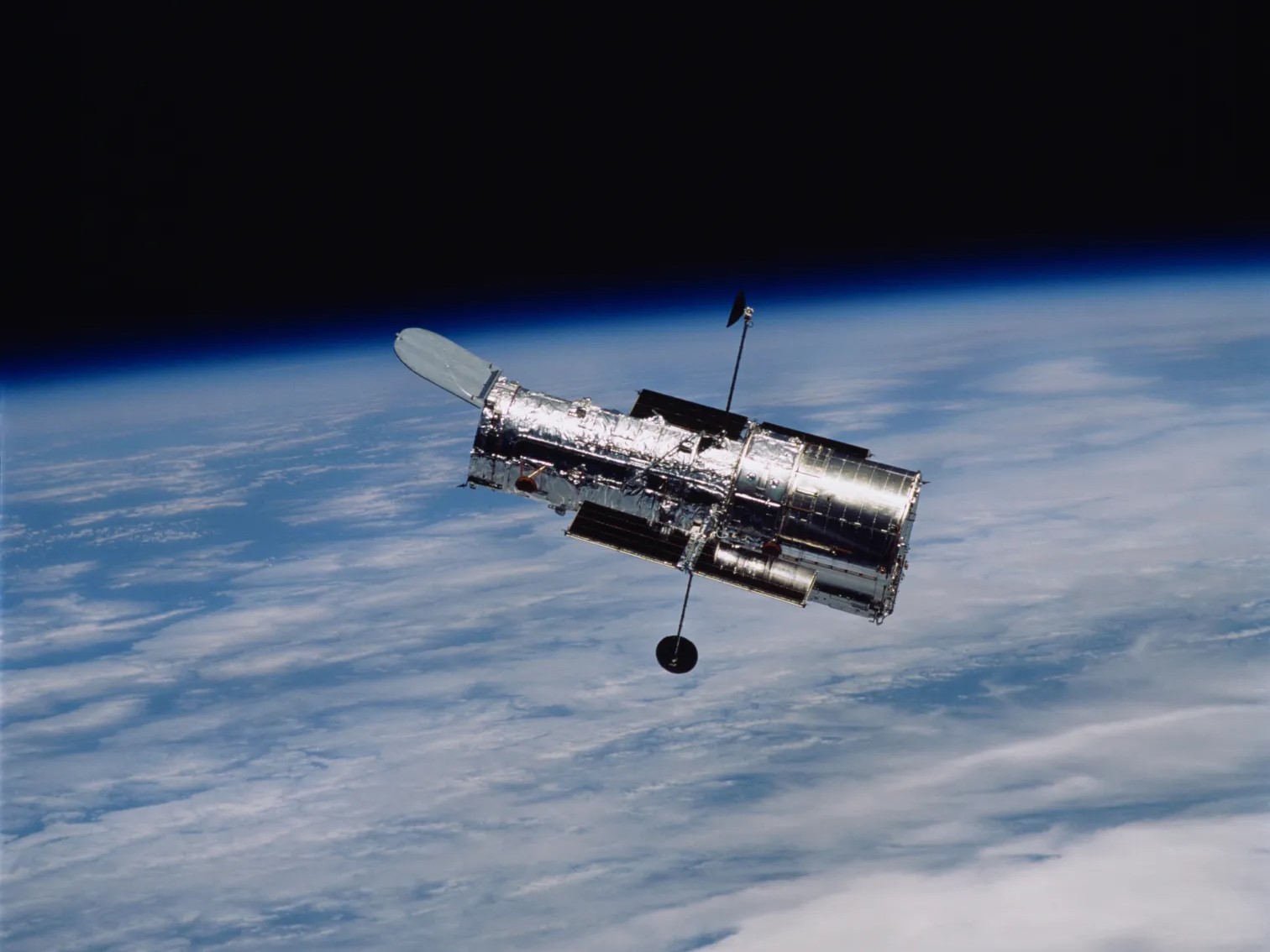
The Hubble Space Telescope has unveiled its latest image, showcasing a breathtaking view of a distant galaxy located over 200 million light-years away. This remarkable capture, released by the European Space Agency (ESA), offers a glimpse into the complex structure of the galaxy and highlights the telescope’s continued contributions to the field of astronomy.
This week’s featured image depicts the galaxy, known as NGC 6744, which resembles a miniature version of our own Milky Way. The image reveals intricate details, including the galaxy’s bright core and spiral arms, which are filled with young, luminous stars. The clarity of the image underscores the technological advancements of the Hubble, and how it continues to push the boundaries of our understanding of the universe.
Significance of the Discovery
The capture of NGC 6744 is not just an aesthetic marvel; it holds significant scientific value. According to NASA, studying galaxies like NGC 6744 helps astronomers understand the formation and evolution of galaxies over billions of years. The image also provides essential data that can inform theories about star formation and the behavior of dark matter, which remains one of the biggest mysteries in modern astrophysics.
Hubble’s ability to observe distant celestial bodies is unparalleled. Since its launch in 1990, the telescope has provided invaluable insights into the structure of galaxies, the life cycles of stars, and the expansion of the universe. With its powerful instruments, Hubble has revolutionized our knowledge of the cosmos, making it one of the most celebrated scientific tools in history.
The Ongoing Mission of Hubble
Despite being over three decades old, the Hubble Space Telescope continues to function effectively, thanks to multiple servicing missions that have upgraded its instruments and systems. The telescope has captured over 1.5 million observations, contributing to more than 17,000 scientific papers.
As scientists and astronomers eagerly analyze the latest images, the Hubble remains a cornerstone in the study of space. Future observations are expected to further enhance our understanding of galaxies, potentially revealing new insights into the origins of our universe. The telescope’s ongoing mission exemplifies the human drive to explore and understand the cosmos, inspiring future generations of astronomers and scientists.
Through images like that of NGC 6744, the Hubble Space Telescope continues to ignite curiosity about the universe, reminding us of the vastness beyond our planet and the mysteries that await discovery.