
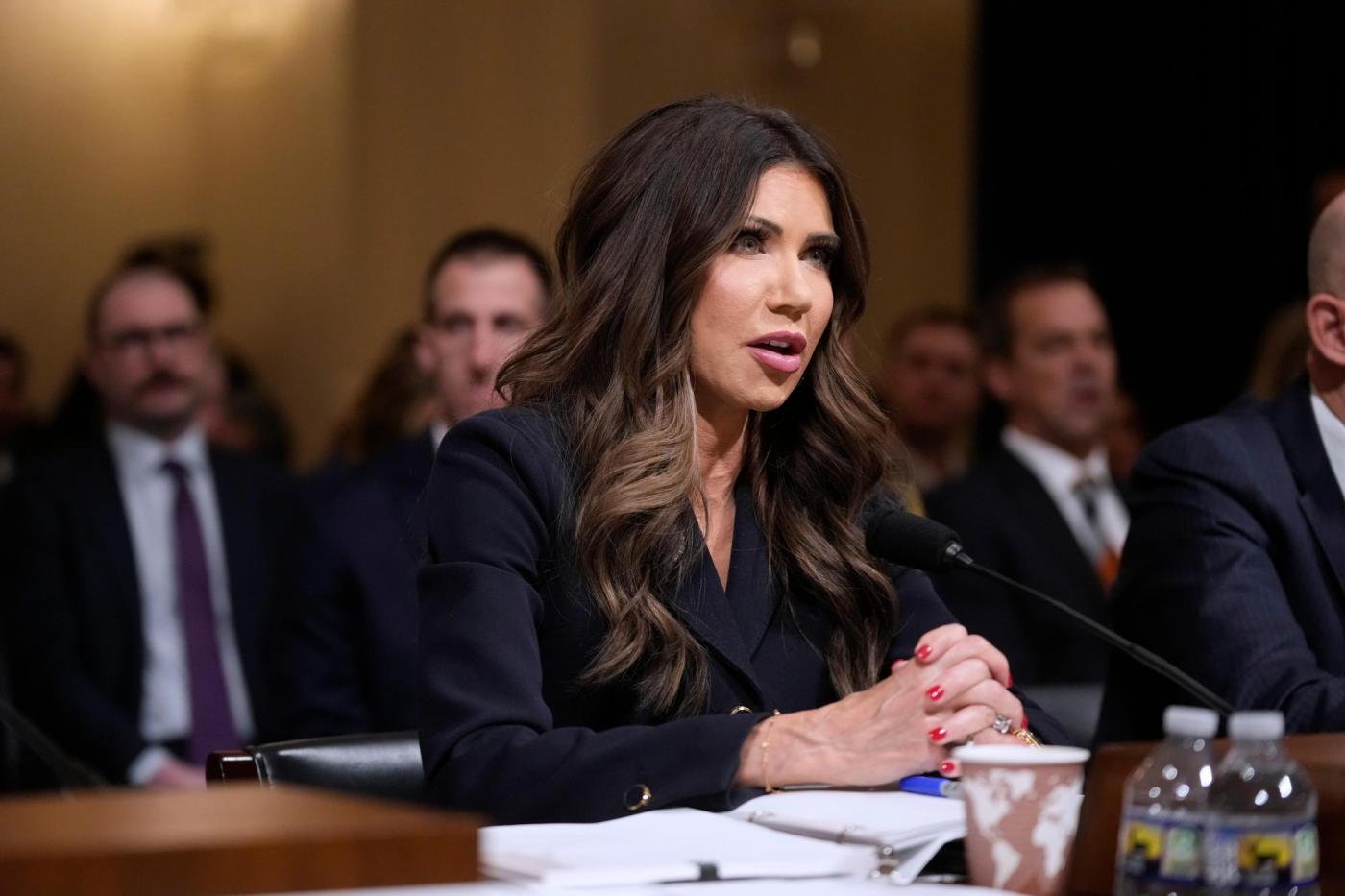
UPDATE: Homeland Security Secretary Kristi Noem confirmed during a House Homeland Security Committee meeting on October 25, 2023, that the U.S. has seized an oil tanker off the coast of Venezuela as part of an escalating counter-drug campaign against President Nicolás Maduro’s government. This aggressive action signals a significant surge in U.S. military efforts to combat drug trafficking amid rising tensions in Latin America.
Noem described the tanker seizure, which occurred on Wednesday, as a “successful operation directed by the president” aimed at disrupting the flow of deadly narcotics into the United States. “This is about pushing back on a regime that is systematically covering and flooding our country with deadly drugs,” she stated, emphasizing the lethal doses of cocaine that have been prevented from entering the U.S.
The seizure of the tanker is an unprecedented move in recent U.S. history, marking a dramatic escalation in the Trump administration’s efforts to curtail narcoterrorism linked to Maduro. The administration has ramped up military presence in the region, conducting airstrikes against drug-smuggling vessels in both the Caribbean Sea and eastern Pacific Ocean, raising eyebrows in Congress over the level of force being employed.
During a press briefing at the White House, President Donald Trump supported Noem’s statements, asserting that the tanker “was seized for a very good reason.” When questioned about the oil aboard the vessel, Trump confirmed, “Well, we keep it, I guess,” indicating U.S. intentions to retain the cargo.
Venezuelan authorities responded swiftly, condemning the action as “a blatant theft and an act of international piracy.” Maduro has long accused the U.S. of attempting to destabilize his government, claiming that these military operations are a thinly veiled attempt to oust him from power.
As tensions continue to mount, the immediate impact of this seizure is profound. The U.S. is not only asserting military dominance in the region but also sending a strong message to other nations involved in drug trafficking. The operation demonstrates a pivot towards more aggressive counter-narcotics strategies, with implications that extend beyond Venezuela’s borders.
Looking ahead, observers will be closely monitoring the U.S. military’s next moves and whether additional actions will follow in response to drug trafficking activities. As the Trump administration faces scrutiny from Congress, the potential for further military engagement remains a critical point of discussion.
This ongoing situation underscores the urgency of addressing the fentanyl crisis and other illegal drugs flooding American communities. The ramifications of the U.S. stance on Venezuela could reshape drug enforcement strategies moving forward, making this an essential story to follow for those concerned about drug-related issues in the U.S. and the geopolitical landscape in Latin America.
Stay tuned for further updates as this story develops.