
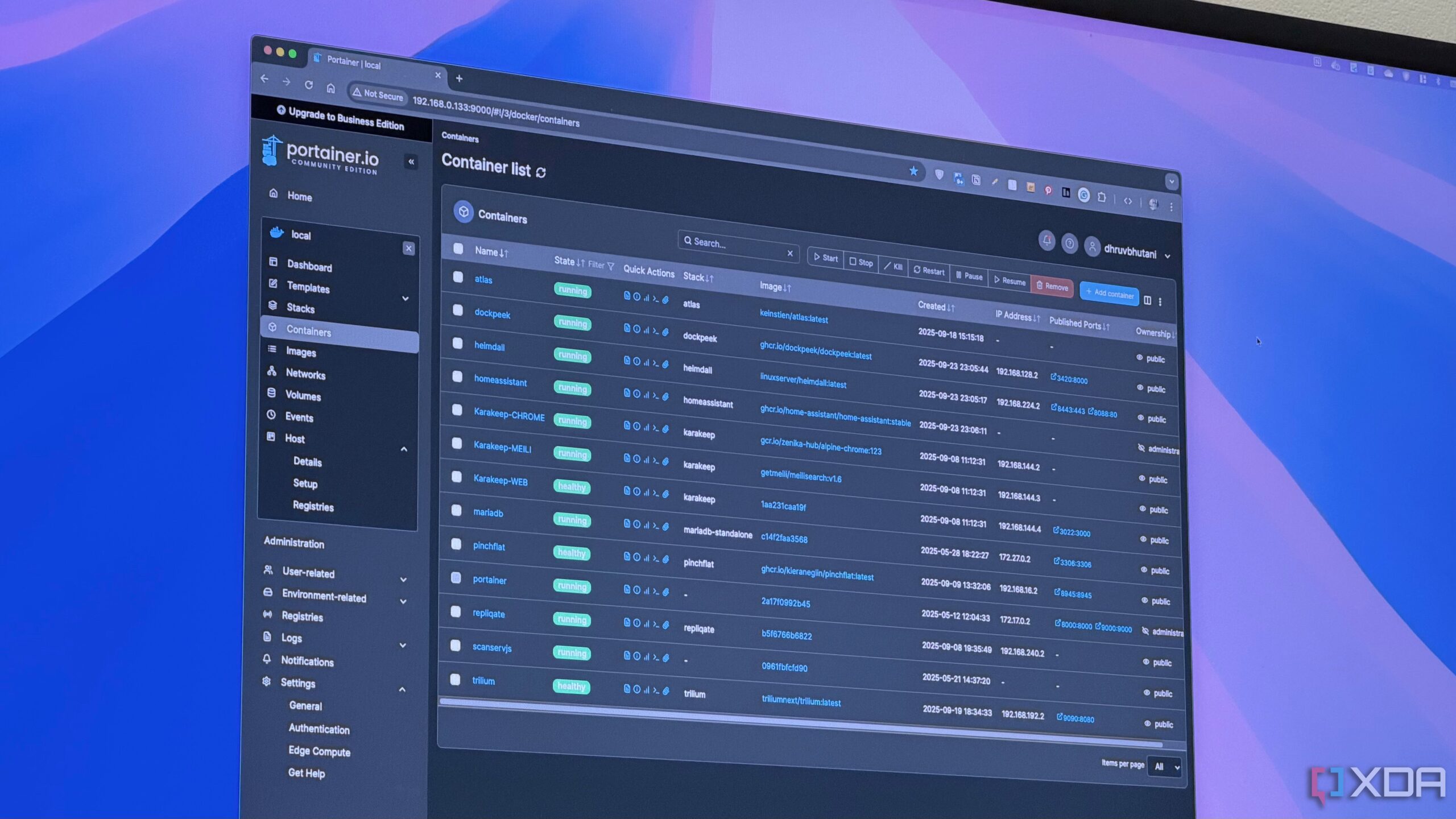
UPDATE: Home server enthusiasts are experiencing a major transformation as Docker technology is proving to be a game-changer in server management. A growing number of users report that moving essential services to Docker significantly enhances reliability and efficiency.
As of October 2023, many users have rebuilt their home servers using Docker, reporting a dramatic reduction in technical headaches and setup time. This shift is particularly relevant for those grappling with a chaotic mix of services that often lead to system breakdowns and complicated updates.
The heart of this revolution lies in Docker’s containerized approach, which allows users to isolate applications, manage dependencies, and streamline upgrades. For instance, media services like Plex and Jellyfin are now running in dedicated Docker containers, eliminating the risks associated with system-level updates that previously caused disruptions.
“Moving my media apps to Docker was a quality of life improvement,” one home server user shared. With Docker, configurations remain centralized, allowing for effortless upgrades by simply pulling the latest image and restarting the container. If an update creates issues, users can seamlessly roll back to a previous version, maintaining uninterrupted service.
Home automation tools, particularly Home Assistant, have also benefited from this migration. Users report increased stability, as Docker allows them to manage updates without the fear of breaking their setups. “Each update used to feel like a gamble,” another user noted, highlighting the newfound confidence in managing their home automation systems.
Additionally, self-hosted utilities such as Vaultwarden, Uptime Kuma, and Paperless-NGX have become integral to many setups, thriving in Docker’s isolated environments. This organization makes it easy to handle configurations and logs, providing peace of mind to users who once felt overwhelmed by their server management tasks.
Network monitoring and backup tools are also seeing a substantial upgrade. Services like Pi-Hole and AdGuard Home are now simpler to maintain, with Docker streamlining upgrades and backup processes. Dedicated backup containers with defined jobs allow users to efficiently manage their data, enhancing security and reliability.
Migrating to Docker may require initial time and planning, but the benefits are clear. Users recommend starting with one container at a time, particularly with media stacks, to gradually adapt to the platform. Once established, the transition to Docker becomes second nature, leading to a more stable and manageable home server experience.
For those feeling overwhelmed by their current setups, now is the time to consider Docker. This technology not only saves time but also transforms the way users interact with their home servers, allowing for a faster, more reliable, and less stressful management experience.
As this trend continues to gain traction, home server operators worldwide are sharing their success stories, reinforcing the idea that moving to Docker is the upgrade that can alleviate significant headaches in the long run.