
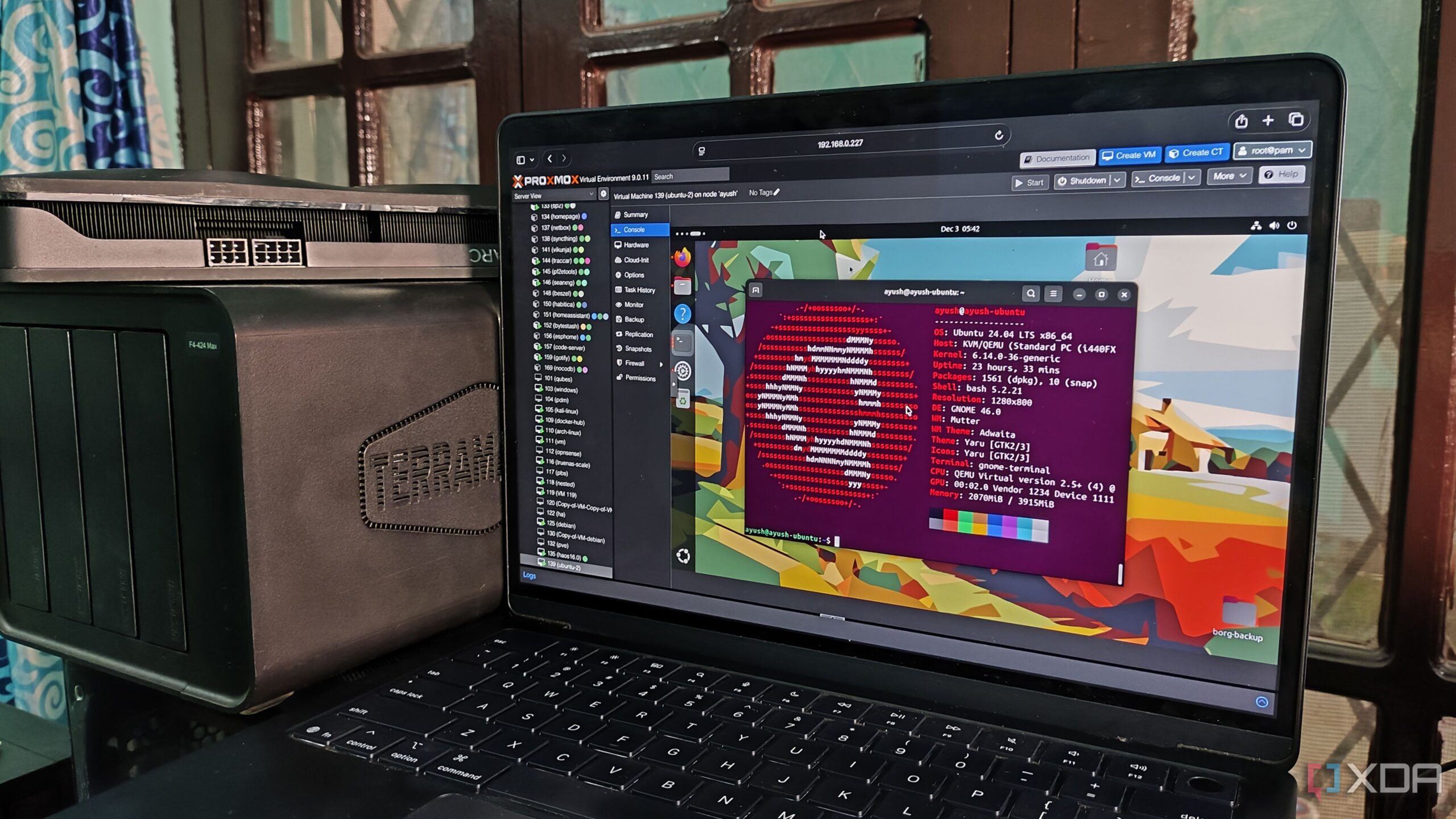
UPDATE: A home lab enthusiast reveals a significant performance boost after drastically reducing virtual machine (VM) usage. This transformation, prompted by resource hogging from over two dozen VMs, highlights a growing trend among tech users looking to optimize their home server efficiency.
In a recent analysis, the user, who operates primarily with Proxmox for virtualization, noted that their server encountered serious slowdowns due to excess VMs consuming memory and storage. “I had way more virtual machines than I could ever need,” they stated, emphasizing the urgent need for change.
The user reported an alarming situation earlier this year when upgrading to Proxmox 9. They faced an overprovisioned storage error, having exceeded the maximum capacity of their local storage pools and attached all-flash NAS. With a staggering number of VMs running, it became clear that drastic measures were necessary.
To remedy the situation, the tech enthusiast consolidated multiple projects into a single Debian-based VM, effectively streamlining operations. This included merging various Docker and Podman containers into one environment, drastically reducing resource consumption.
“Removing excess VMs had a profound impact on performance,” they noted. By disabling startup for less critical VMs, such as their Arch and NixOS instances, the user managed to reclaim valuable CPU and memory resources, ensuring that only essential processes were operational.
The transition from bulky VMs to lightweight Linux Containers (LXCs) proved revolutionary. LXCs consume significantly fewer resources, allowing the user to run multiple containers on older hardware without the sluggishness associated with traditional VMs. This shift not only improved performance but also simplified GPU sharing across containers, enhancing overall flexibility.
As of now, the user maintains only their Windows 11 development VM and the consolidated Debian instance operational 24/7, a stark contrast to the previous resource-draining setup. The benefit is clear: enhanced efficiency and much lower power bills, addressing both performance and financial concerns.
The home lab community is buzzing with interest in this optimization strategy as more enthusiasts face similar challenges with overprovisioned resources. With the ability to quickly spin up new instances using Terraform and Ansible configurations, the user has not sacrificed functionality while achieving a leaner setup.
This urgent update on home lab efficiency resonates with tech users looking to maximize their server capabilities without unnecessary waste. As the trend continues to grow, many will be watching to see how these practices evolve in the tech landscape.
Stay tuned for further developments in home lab optimization strategies that are making waves across the community.