
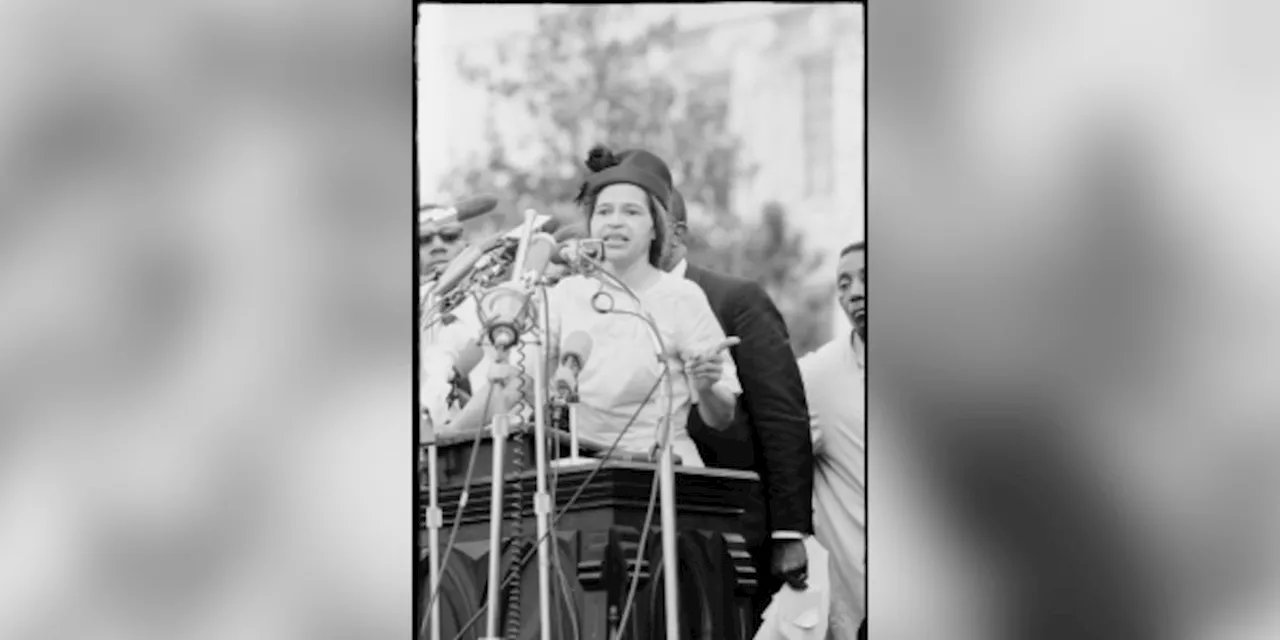
Newly released photographs of Rosa Parks, a central figure in the American Civil Rights Movement, have resurfaced in Montgomery, Alabama, seven decades after her pivotal act of defiance. Taken by the late photographer Matt Herron, these images depict Parks during the historic Selma to Montgomery march in 1965, illuminating often-overlooked facets of her activism.
The photographs, which were made public on December 7, 2023, at the Rosa Parks Museum, offer a glimpse into the broader context of Parks’ contributions beyond her famous refusal to surrender her bus seat on December 1, 1955. According to Donna Beisel, the museum’s director, the images serve as a reminder that Parks’ activism extended well beyond her most recognized moment.
These previously unseen images were discovered from a contact sheet archived at Stanford University. They were not printed or exhibited during Herron’s lifetime, often due to their quality or the lesser-known individuals they featured. Jeannine Herron, widow of the photographer, expressed the importance of reconnecting these images with the communities they represent.
Reconnecting with History
One of the notable subjects in Herron’s collection is Doris Wilson, a young participant from Marion, Alabama. Decades after the march, Herron had hoped to reconnect with her. Although he passed away in 2020, Wilson, now in her 80s, attended the unveiling of the photos, where she encountered familiar faces from her past. During the event, she recognized a photograph depicting herself receiving medical attention for blisters sustained during the march.
The doctor in the photograph, June Finer, also attended the event, reuniting with Wilson for the first time since the march. Their emotional exchange reflected the enduring bonds formed during that transformative period in American history. “Are you the one who rubbed my feet?” Wilson asked Finer, prompting laughter and a heartfelt embrace.
Wilson’s son, Robert E. Wilson, shared his surprise at seeing the photographs of his mother. “I’m so stunned. She always said she was in the march, but I never knew she was strong like that,” he said, recalling his childhood memories of the event.
Community Impact and Legacy
The release of these photographs not only honors Rosa Parks but also highlights the collective efforts of everyday individuals who played vital roles in the Civil Rights Movement. Cheryl Gardner Davis, who hosted marchers at her family’s farm in Lowndes County, reflected on her family’s sacrifices during that time. She recounted how her family provided shelter and support to weary marchers, an act that came with significant personal risks.
Among the array of photographs shared with the public were images of the campsite at Davis’ childhood home, a significant aspect of her family’s legacy that she had long sought to uncover. “It’s a vital way to bring light to the people who often are an afterthought in the recounting of that transformative historical period,” Davis remarked.
The unveiling of these photographs serves as a poignant reminder of the enduring significance of Rosa Parks and the countless individuals who fought for civil rights. As communities in Alabama and beyond reflect on this critical chapter in history, the newly revealed images contribute to a richer understanding of the collective struggle for justice and equality.