
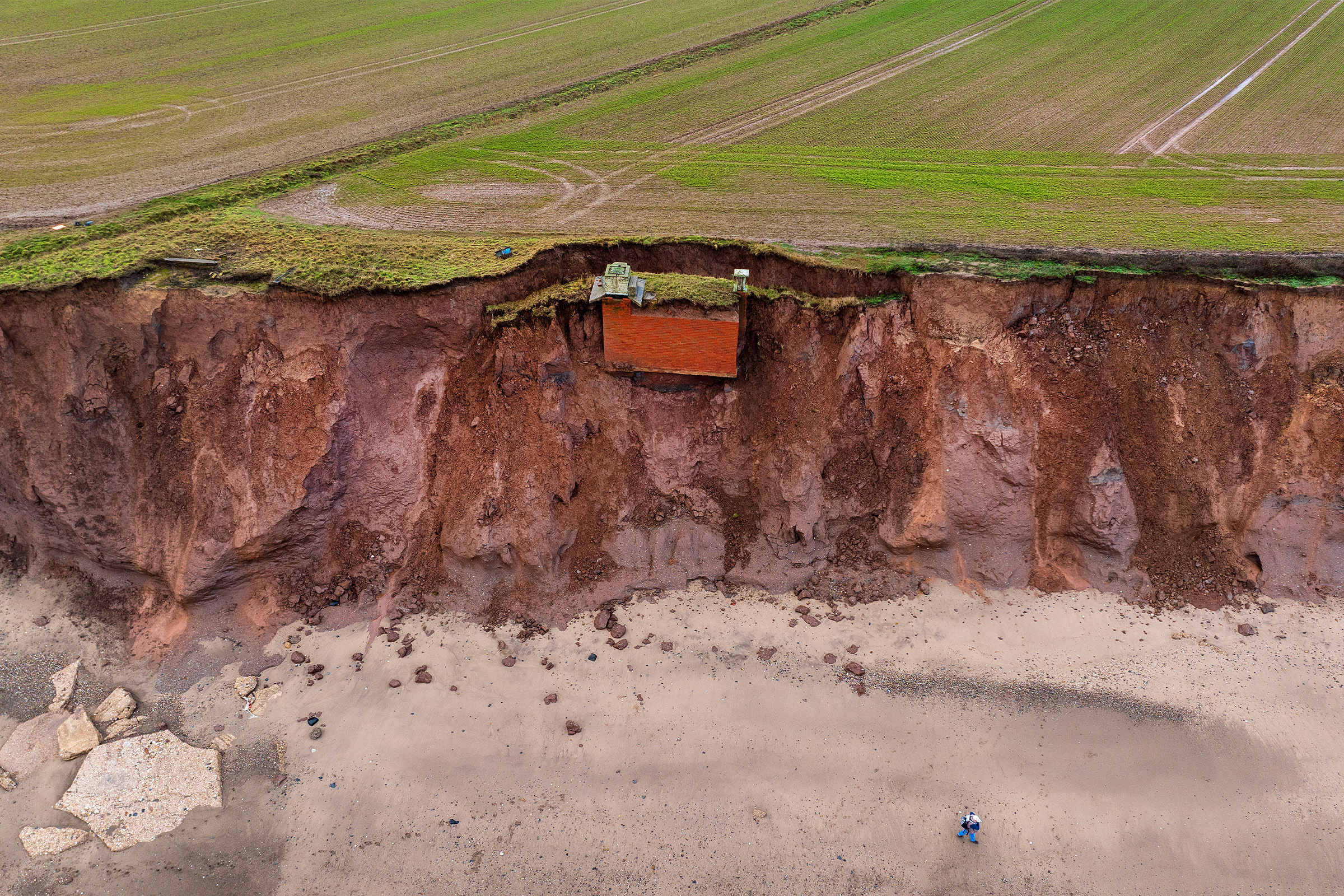
A nuclear bunker situated precariously on a crumbling cliff near Tunstall in East Yorkshire, UK, is just days away from collapsing into the sea. Constructed in **1959** as a lookout post during the Cold War, the **Tunstall Royal Observer Corps Post** now faces imminent destruction due to severe coastal erosion, according to a report by the **BBC**.
Local authorities, specifically the **East Riding of Yorkshire Council**, have urged residents to avoid the area surrounding the bunker, both atop the cliff and below, to prevent potential accidents from a collapse. “We live on one of the most eroded coastlines in Europe and this bunker hasn’t got long left, perhaps just a few days,” stated **Davey Robinson**, an amateur historian who has been documenting the bunker’s final moments.
Robinson, along with his partner, has visited the site daily for the past nine days, capturing footage that he shares on their YouTube channel. The videos have garnered attention from viewers around the world, highlighting the significance of the bunker as a historic landmark. “It was designed so that people could live inside it and just wait for a nuclear explosion to register,” Robinson explained. “Today, however, it’s a symbol of erosion in this area.”
The Impact of Coastal Erosion
Coastal erosion is a natural process, but experts suggest that it is being exacerbated by rising sea levels attributed to climate change. Currently, approximately **17 percent** of the UK’s coastline, which stretches over **10,000 miles**, is experiencing erosion. Communities like Tunstall are feeling the effects acutely, as visible landmarks, including the bunker, are lost to the relentless forces of nature.
“This whole area is eroding at a rapid rate, and to see an actual physical thing moving just shows what’s happening really,” Robinson remarked. His observations underscore the broader implications of coastal erosion, a pressing issue as communities grapple with the realities of environmental change.
The fate of the Tunstall Royal Observer Corps Post serves as a poignant reminder of both historical paranoia during the Cold War and the contemporary challenges posed by climate change. As it stands, the bunker’s impending collapse not only marks the loss of a historical structure but also raises awareness about the urgent need for action against environmental degradation.
As this story unfolds, it remains to be seen how local authorities will address the ongoing issues of coastal erosion and what measures will be implemented to protect other vulnerable sites along the coast.