
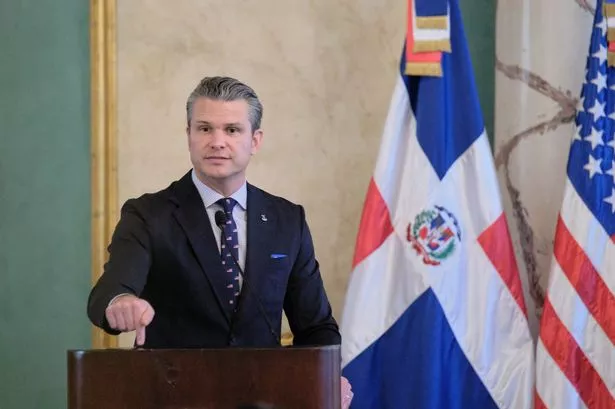
Defense Secretary Pete Hegseth faces increasing scrutiny following allegations that he issued a verbal order to “kill everyone” during a September 2, 2023 Naval strike on a suspected drug trafficking boat in the Caribbean Sea. This incident has intensified discussions around his prior remarks concerning military engagement rules, which were made during a speech to senior military officers just months earlier.
In his September address, Hegseth criticized what he termed the “politically correct rules of engagement.” He stated, “We fight to win. We also don’t fight with stupid rules of engagement. We untie the hands of our war fighters to intimidate, demoralize, hunt, and kill the enemies of our country.” This address took place after he called top U.S. flag officers to Quantico, Virginia and was attended by over 800 military leaders. His comments have raised questions about the implications of his directives, particularly considering their timing, coming only weeks before the controversial strike.
Reports from the Washington Post indicate that U.S. Navy Vice Admiral Frank Bradley, who oversaw the strike, followed Hegseth’s alleged order by instructing his forces to eliminate two survivors from the initial attack. Legal experts have characterized this directive as a potential “war crime,” arguing that the actions contradict both U.S. federal law and international regulations regarding armed conflict.
According to Todd Huntley, a former military lawyer, Hegseth’s order could constitute a “war crime,” as it suggests no mercy would be shown to those involved. Huntley emphasized that since there is no declared war between the U.S. and those aboard the suspected drug boats, the killings likely amount to “murder.” Legal concerns have sparked bipartisan inquiries among lawmakers regarding the legitimacy of the strikes, which, according to Pentagon estimates, have resulted in the deaths of at least 80 people.
In defense of the operation, Bradley argued that the survivors remained legitimate targets because they could potentially call for assistance from other traffickers. This rationale, however, has drawn criticism and raised further legal questions. The Trump administration previously asserted that the U.S. was engaged in a “non-international armed conflict” with designated terrorist organizations, a position supported by the Justice Department’s Office of Legal Counsel. This justification claimed that military personnel following lawful orders would not face prosecution.
Since the events of September 2, U.S. forces have conducted at least 22 additional strikes targeting suspected drug smuggling vessels in the Caribbean and eastern Pacific. These actions continue to evoke significant concern regarding the adherence to established rules of engagement and the broader implications for military conduct in non-traditional warfare scenarios.
As the debate unfolds, the potential ramifications of Hegseth’s orders and the strikes themselves remain a focal point for legal experts, lawmakers, and military officials alike. The situation highlights the complexities inherent in modern military operations, especially in regions where the lines between combatants and civilians can be blurred.