
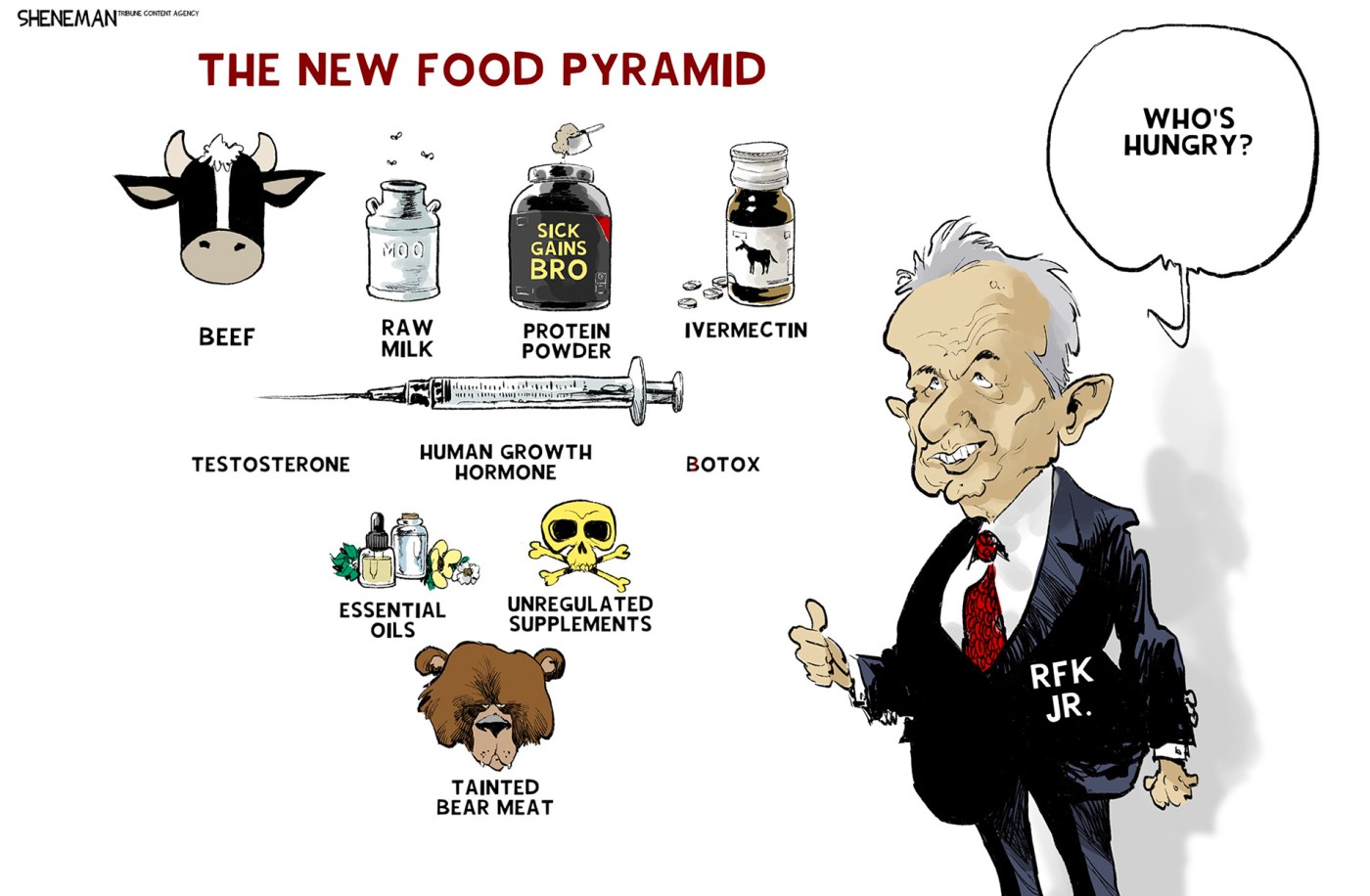
Recent statements from prominent health officials have sparked controversy over dietary guidelines and public health messaging. At a press conference, key figures such as Robert F. Kennedy Jr. and Mehmet Oz, Administrator for the Centers for Medicare and Medicaid Services, promoted new approaches to nutrition and alcohol consumption. Their remarks have drawn sharp criticism from medical professionals who worry about the implications of these guidelines.
During the event, RFK Jr. declared, “We are fighting back in the war on protein!” This assertion comes amidst ongoing debates about dietary fats and the consumption of saturated fats. Oz claimed progress in reducing alcohol consumption, stating, “We are gaining ground,” while also encouraging a more relaxed view of alcohol as a “social lubricant.” Such statements seem at odds with established medical advice, prompting concern from health experts.
The latest push for less restrictive dietary recommendations has raised eyebrows, particularly as health officials struggle to manage a flu outbreak across the United States. Critics point out that the Florida Department of Health has been slow to report flu cases, a tactic some describe as avoidance of accountability. In this context, the recommendations regarding alcohol and dietary fats appear to be poorly timed and lacking in scientific backing.
Oz’s comments have garnered attention for their seemingly contradictory nature. He previously promoted green coffee extract as a weight-loss miracle, only to later suggest it was more of a “magical special suggestion.” His latest remarks on alcohol guidelines, which encourage moderation while dismissing traditional dietary cautions, have led to skepticism about his qualifications in leading public health initiatives.
Moreover, RFK Jr.’s emphasis on traditional fats raises questions about the current understanding of nutrition. He lamented the “assaults on saturated fat,” urging a return to foods that many health advocates have warned against. As part of his argument, he referenced popular products like Nature Valley Protein and Cheerios Protein, highlighting a growing trend towards protein-enhanced foods.
In a somewhat humorous twist, RFK Jr. suggested adventurous dietary practices, such as consuming “bear peptides,” referencing an earlier incident where he was photographed with a bear carcass in Central Park. This unconventional proposal has not been taken seriously by most nutritionists, who emphasize the importance of a balanced diet grounded in scientific research.
The Environmental Protection Agency (EPA) is also facing scrutiny for its recent policy shift to prioritize business costs over human health in pollution regulations. Critics argue that this approach undermines public safety and environmental protections, further complicating the already contentious landscape of health and nutrition.
As the debate continues, some are left wondering about the future of dietary guidelines and the potential impact on public health. With influential figures like RFK Jr. and Oz leading the charge for dietary changes, the implications of their recommendations may significantly affect how the public perceives nutrition and health.
In light of these developments, Americans may find themselves at a crossroads, navigating a complex array of dietary advice as they seek to make informed choices about their health. The discourse surrounding these issues will undoubtedly evolve as more data emerges and public sentiment shifts.