
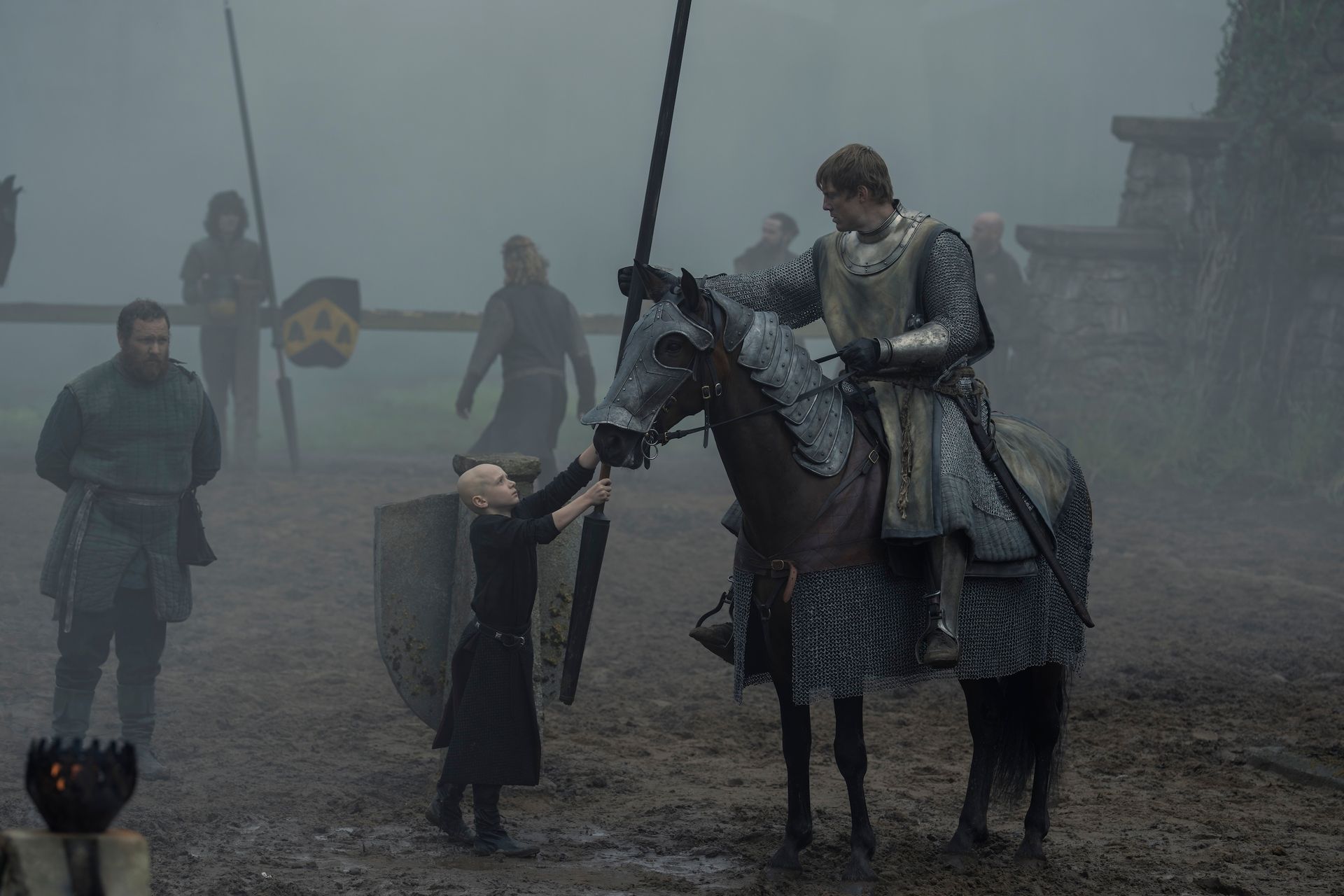
The first season of HBO’s A Knight of the Seven Kingdoms has concluded, marking a significant success for the network. It ranks among HBO’s top three most-watched premieres ever, showcasing an impressive start for the series. The show features one of the highest-rated episodes within the Game of Thrones franchise on IMDb, a testament to its strong reception among both critics and audiences.
A key factor in this success is the availability of a fully completed story to adapt. Unlike its predecessors, which had to navigate unfinished narratives, A Knight of the Seven Kingdoms draws from The Hedge Knight, the first of the Dunk and Egg novellas. This trio of novellas not only boasts a dedicated fanbase but also provides a clear narrative arc. This roadmap is instrumental in maintaining clarity and cohesion throughout the series.
Stable Foundations Lead to Strong Reception
The advantages of having a completed source material are evident. The characters in A Knight of the Seven Kingdoms possess defined trajectories, allowing the audience to anticipate their journeys without the risk of sudden plot twists that characterized the final season of Game of Thrones. This stability offers a sense of thematic unity that the earlier series struggled to maintain, particularly in its final episodes.
Critics have noted that while the conclusion of Game of Thrones was not inherently flawed, the hurried progression toward it left many viewers unsatisfied. The showrunners, David Benioff and D.B. Weiss, faced challenges when the series outpaced the published works of George R.R. Martin. Once they ventured beyond the source material, they were tasked with determining their own paths to established endgames, which led to uneven storytelling.
In contrast, House of the Dragon, which adapts Fire & Blood, encountered its own set of challenges. Martin has expressed disappointment with aspects of this adaptation, suggesting that it deviated significantly from his vision. Showrunner Ryan Condal acknowledged Martin’s concerns, stating that the adaptation required creative liberties due to the incomplete nature of the source material.
The Future: Navigating Uncharted Waters
The comparison of the Game of Thrones universe to the Star Wars franchise highlights the distinct challenges both face in adapting expansive source materials. Following Disney’s acquisition of Lucasfilm, the studio has often selected elements from the now-non-canonical Expanded Universe, resulting in a fragmented narrative. HBO’s approach with A Knight of the Seven Kingdoms signals a return to a more faithful adaptation, at least for the upcoming seasons.
Looking ahead, the series has a clear trajectory with two more published novellas to adapt. Each of these stories is complete, providing a solid foundation for the show’s continuation. Showrunner Ira Parker has outlined an ambitious plan that involves close collaboration with Martin for future seasons. As Martin continues to express intentions to write additional Dunk and Egg stories, the series stands at a crossroads.
The creative team must develop a long-term strategy to avoid the pitfalls that befell previous iterations of the franchise. The success of A Knight of the Seven Kingdoms may hinge not only on its current storytelling but also on its ability to navigate future narratives while remaining true to the essence of Martin’s work. The audience awaits with anticipation, hoping that the series can maintain its momentum and deliver satisfying arcs in the seasons to come.