
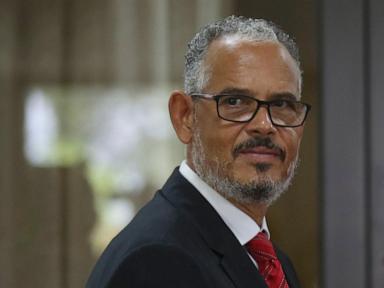
Haiti’s presidential council officially dissolved on Saturday after nearly two turbulent years of governance alongside Prime Minister Alix Didier Fils-Aimé. Despite the council’s resignation, Fils-Aimé is expected to maintain his position as the country gears up for its first general elections in a decade. This political shift occurs in the shadow of escalating gang violence, with criminal organizations controlling approximately 90% of the capital, Port-au-Prince.
The dissolution of the nine-member council came shortly after a noticeable increase in U.S. military presence in the region. The U.S. deployed a warship and two Coast Guard vessels near the capital, a move interpreted by analysts as a demonstration of Washington’s readiness to influence regional politics through military means. Diego Da Rin, an analyst with the International Crisis Group, noted, “The naval presence appears to provide the latest proof of Washington’s willingness to use the threat of force to shape politics in the Western Hemisphere.”
The council faced significant challenges during its tenure. In late January, two prominent members had announced a majority vote to remove Fils-Aimé from office, defying U.S. calls for political stability. Following this announcement, the U.S. government revoked visas for four council members and a Cabinet minister, signaling a shift in diplomatic relations. Ultimately, the council’s plans to unseat Fils-Aimé were abandoned as its members opted for dissolution instead.
Outgoing council president Laurent Saint-Cyr emphasized the need for national security and urged members to prioritize the country’s well-being over personal interests. “We need to put our personal interest to the side and continue progress for security,” he stated, rebuffing attempts to dismiss the prime minister. Fils-Aimé spoke briefly at the ceremony, assuring the public that the council’s efforts had laid the groundwork for governance sensitive to security and electoral issues.
As the political landscape shifts, the question of governance becomes central. Ongoing negotiations are focused on determining what, if anything, will replace the council. A new multinational security mission is anticipated to take over from the current U.N.-backed initiative led by underfunded and understaffed Kenyan police forces. Da Rin highlighted the necessity for clarity regarding the governing body, stating, “Countries contributing to this force will want to know they are working alongside a government whose legitimacy is undisputed.”
February 7 is a significant date in Haiti, marking the anniversary of the initiation of democratic rule following nearly 30 years of dictatorship. It is traditionally when presidents are inaugurated; however, the country did not hold elections as planned on that date. The anticipated elections, initially set for earlier in the year, faced delays due to rampant gang violence, which continues to plague vast areas of the capital and central regions.
The council was established in April 2024, following the assassination of President Jovenel Moïse, which plunged Haiti into chaos. Former Prime Minister Ariel Henry was unable to return to Haiti after a trip to Kenya due to a gang coalition’s attack on key state infrastructure, which forced the main international airport to close for nearly three months. The council was formed after urgent discussions among Caribbean leaders and U.S. officials aimed at creating a framework for political transition after Henry’s resignation.
Despite its formation with promises to reduce gang violence and improve living conditions, the council fell short of its goals. Da Rin remarked on the government’s failure to combat criminal gangs, which dominate most of Port-au-Prince and have expanded their influence into other regions. In late 2024, the council faced accusations of corruption, with a government agency alleging bribery involving three of its members.
On Saturday, as the council stepped down, André Joseph, a street vendor living in a makeshift shelter, expressed relief and optimism. With over 1.4 million people displaced by gang violence, he articulated a desire for effective leadership. “Their time is up. They were there nearly two years and didn’t do anything for the country,” he stated. “Haiti needs to move on with a better government in charge that could lead the country into a better direction.”
As the nation looks toward the future, the emphasis will be on establishing a government capable of navigating the complex landscape of security, governance, and the impending electoral process.