
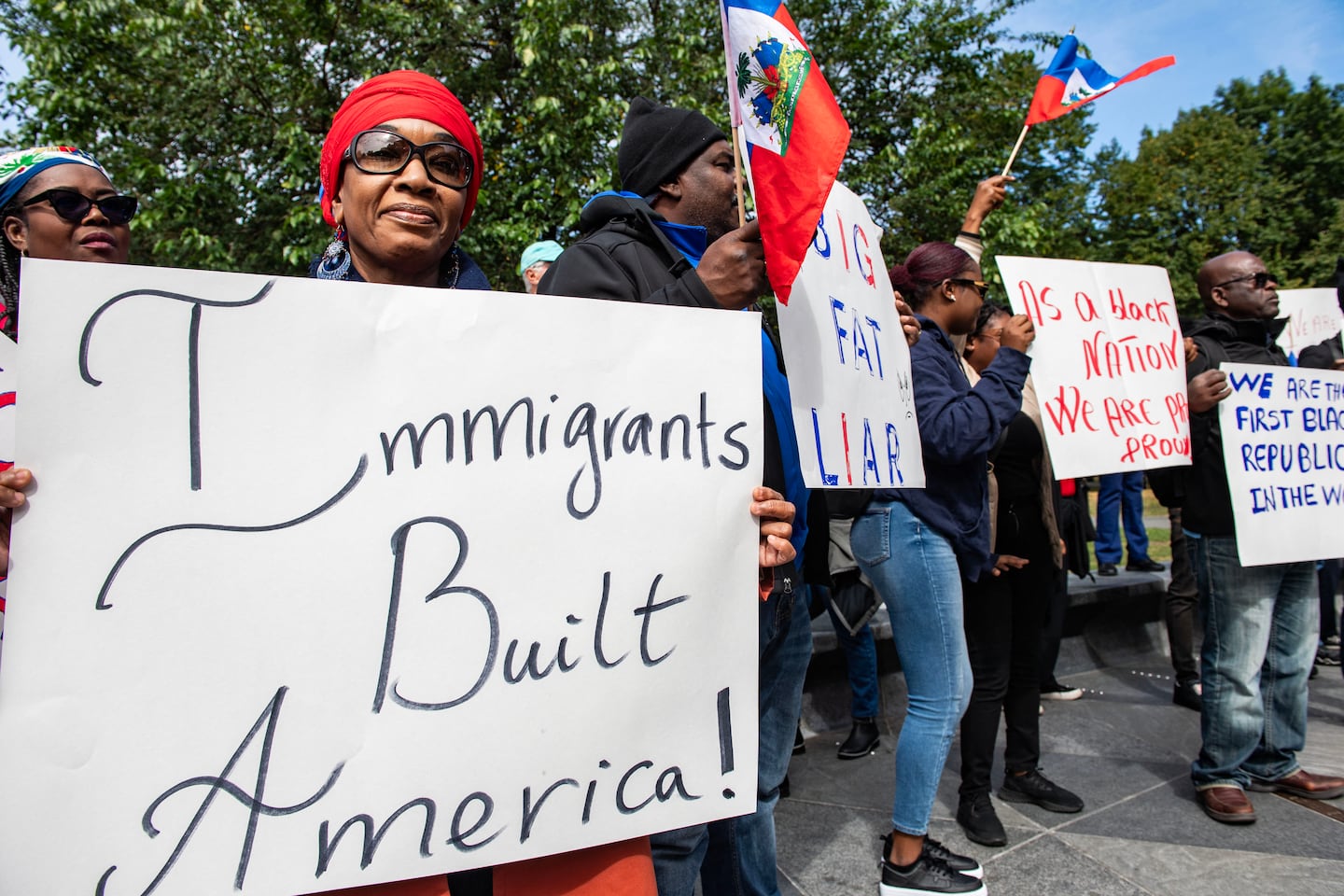
Tens of thousands of Haitians in Greater Boston find themselves in a precarious legal situation as the Trump administration prepares to challenge their temporary protected status (TPS) in the U.S. Supreme Court. Approximately 45,000 Haitians in Massachusetts hold TPS, a classification established for individuals fleeing nations experiencing significant turmoil. This status has been in place since 2010, following the devastating earthquake that hit Haiti.
On February 3, 2020, the administration announced its intention to terminate TPS for Haitians, claiming that the protections were no longer warranted. However, a federal judge in Washington intervened just prior to this decision, issuing a temporary block against the revocation of TPS. In response, the Department of Homeland Security announced its plans to appeal the ruling, leading to a state of uncertainty for many.
In the immediate aftermath of the judge’s decision, there was a noticeable sense of relief within the Haitian community in Greater Boston, which is home to the third-largest population of Haitians in the U.S. Yet, anxiety remains prevalent. John Randall, chief executive of Amego, Inc., a nonprofit organization in the region, described the chaos that ensued as his office scrambled to inform 24 Haitian employees that they would not be terminated due to the temporary reprieve. “Everyone is in a holding pattern but they’re still employable and legal today,” Randall stated, emphasizing the ongoing uncertainty faced by these workers.
The potential end of TPS has raised concerns not only about the humanitarian impact but also about the economic ramifications for local businesses and services. Many Haitians working in various sectors, including healthcare and community services, have been with their employers for over a decade. Randall noted that the loss of this workforce could be devastating. “This is just a write-off of an entire section of our workforce,” he remarked.
The fear of deportation has led some TPS holders to avoid leaving their homes, as advocates report that individuals are increasingly anxious about being detained by immigration authorities. Nicole Albert, director of the Gilbert Albert Community Center in Dorchester, observed a significant drop in attendance at English language classes, which typically host around 200 students weekly. By late January, that number had plummeted to 40, as families opted to stay home out of fear.
Despite the uncertainty, Leslie Ditrani, a Cambridge immigration attorney, reassured both employers and employees that TPS holders remain authorized to work. “Employers and Haitian workers with TPS don’t need to reverify documents or take any other action,” she clarified, aiming to mitigate confusion around work statuses.
In the lead-up to the court’s decision, some employers had already begun terminating Haitian workers. At Logan Airport, more than 100 TPS holders had lost their jobs. Christopher White, CEO of Road to Responsibility, noted that the company had sent termination letters to its remaining Haitian employees prior to the judge’s ruling. “People were so ecstatic that they still had a job,” White recounted, reflecting the emotional relief that came with the unexpected news.
Many Haitian workers in the area, including those at group homes, play essential roles in providing care for vulnerable populations. Dr. Karen Scanlan expressed concern about the impact of the potential TPS cancellation on her daughter’s caregiver, who has become integral to her family. “It’s just heartbreaking to me that she can’t work because of this,” Scanlan said.
The implications of this legal battle extend beyond individual families. According to research by the UMass Donahue Institute, the rate of immigrant arrivals in Massachusetts has decreased by half in recent years, raising alarms about the future of a labor market that heavily relies on immigrant workers. The absence of Haitian employees, many of whom have been with their organizations for years, creates challenges for businesses attempting to maintain services.
As this situation unfolds, the Haitian community in Greater Boston remains in a state of uncertainty. Many individuals who fled violence and instability in Haiti now face the threat of losing their legal status in the U.S. and potentially being forced to return to a country still grappling with unrest. The outcome of the Supreme Court’s decision could significantly affect not only the lives of these workers but also the broader community reliant on their contributions.