
The Engineering Department of Grand Forks has proposed several projects aimed at enhancing the city’s flood protection systems. Following a recent flood study, officials identified areas for improvement that could mitigate the risks associated with increased rainfall and elevated snowmelt flows. The study, presented during the Grand Forks City Council meeting on January 12, 2024, highlighted the need for proactive measures to address potential flooding scenarios.
According to City Engineer Al Grasser, the flood study built upon earlier assessments that indicated a trend of increasing summer rain events and spring melt flows. Collaborating with the engineering firm AE2S, the city conducted 27 model simulations to analyze the responses of various drainage systems, including the English Coulee and the diversion channel on the western side of town, to different levels of rainfall intensity.
The study revealed several viable solutions to enhance flood management. One key recommendation is to construct additional storage ponds and box culverts west of Interstate 29. These measures aim to better control water flow in rural parts of the watershed. Grasser noted that concepts for this project would be incorporated into the planned interchange from the interstate to 47th Avenue South.
Another proposed solution involves redirecting more water to the English Coulee Diversion. This could be achieved by blocking certain flows at the interstate and utilizing gravity to guide water towards the diversion. Additionally, improvements to specific pump stations were highlighted as critical for effective flood management.
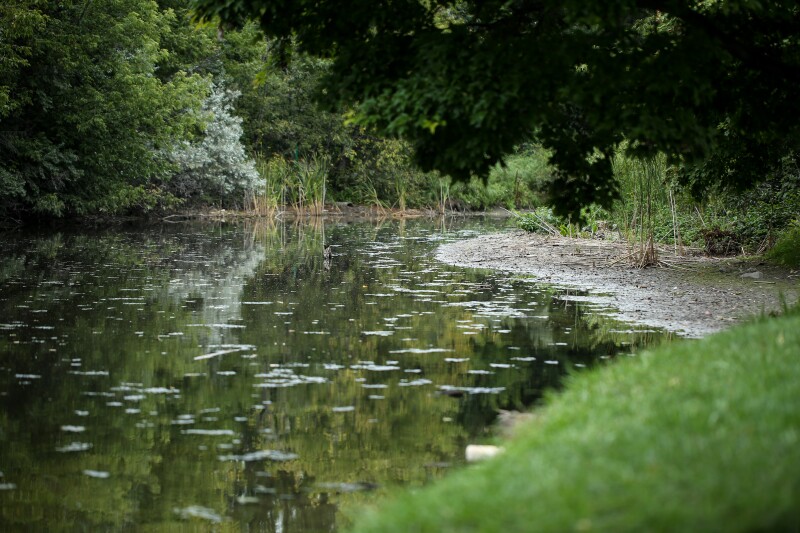
The English Coulee serves as a natural waterway that traverses western Grand Forks, flowing from near Columbia Mall through residential areas and the University of North Dakota campus before emptying into the Red River. The study highlighted regions not physically connected to the coulee that are still vulnerable to flooding through the storm sewer system. Grasser indicated a need to explore the installation of small pump stations to manage high water levels effectively.
The Engineering Department has outlined its immediate priorities for early 2024, which include establishing and adopting ditch and pond storage requirements west of the interstate. The department plans to engage with the Army Corps of Engineers to evaluate new flow introductions to the English Coulee Diversion. Upgrades to pump stations around the coulee and the installation of monitoring sites on major waterways also feature prominently in the agenda.
“There were numerous monitoring sites that tracked flow rates against rainfall events,” Grasser stated. “Maintaining a few of these sites allows us to better understand how these drainage features operate.”
The city stands to gain financial support through cost-share programs with the North Dakota Department of Water Resources. Initiatives like the Rural Flood Control Program, which Grand Forks currently utilizes, offer cost-sharing of between 45% and 60%. Additionally, the Flood Protection Program can provide up to 60% in cost shares, with the city currently holding a 52% cost share for flood-related projects.
By implementing these measures, Grand Forks aims to enhance its resilience against flooding, ensuring the safety of its residents and infrastructure in the face of increasingly unpredictable weather patterns.