
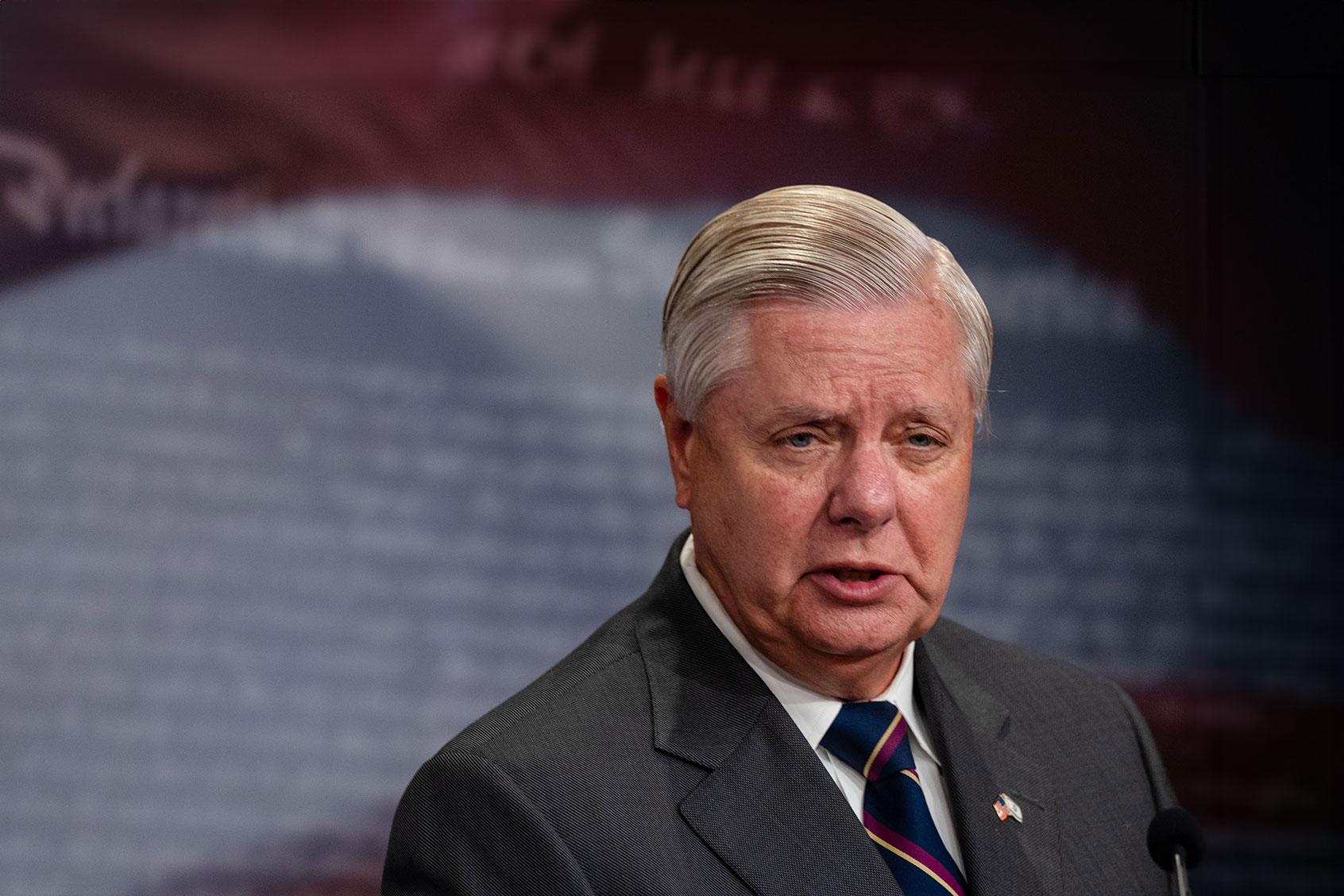
Senator Lindsey Graham of South Carolina has issued a stark warning to the Cuban government, suggesting they should be preparing for significant changes amid escalating tensions in the Caribbean. His comments follow a recent U.S. military intervention in Venezuela, raising concerns about potential actions against Cuba, a nation closely tied to its neighbor.
In a post on social media, Graham advised the Cuban leadership to “start house-hunting,” referencing the possibility of needing to relocate due to the political climate. He wrote, “My advice to the commies running Cuba and oppressing its people: Call Maduro and ask him what to do… If you can get through, that is. If I were you, I’d be looking for a new place to live.” This statement reflects a growing sentiment among some U.S. lawmakers regarding Cuba’s longstanding governance.
Graham’s remarks were made in reaction to a post from former President Donald Trump on Truth Social. In his message, Trump indicated that oil imports from Venezuela would cease if Cuba did not negotiate with the United States. He emphasized, “Cuba lived, for many years, on large amounts of OIL and MONEY from Venezuela… BUT NOT ANYMORE! THERE WILL BE NO MORE OIL OR MONEY GOING TO CUBA – ZERO! I strongly suggest they make a deal, BEFORE IT IS TOO LATE.”
U.S. Military Action in the Region
Following the U.S. intervention in Venezuela, the rhetoric regarding Cuba has intensified. Military action against various nations in the region, including not only Cuba but also Mexico, Colombia, and Greenland, has been discussed among several prominent Republicans. This reflects a strategic shift in U.S. foreign policy under the previous administration, characterized by aggressive posturing against perceived threats in the hemisphere.
During a recent appearance on “Meet the Press,” Marco Rubio, the U.S. Secretary of State and a long-time critic of the Cuban government, was questioned about the possibility of a military invasion of Cuba. While he acknowledged the challenges posed by the Cuban regime, he refrained from specifying future U.S. actions. “The Cuban government is a huge problem,” Rubio stated. “I think they’re in a lot of trouble, yes. I’m not going to talk to you about what our future steps are going to be or what our policies are going to be. I don’t think it’s any mystery that we are not big fans of the Cuban regime.”
As the situation evolves, concerns about the humanitarian conditions in Cuba remain a priority for many observers. The economic crisis, exacerbated by the loss of Venezuelan support, has left many Cubans struggling. The U.S. response to Cuba’s internal challenges continues to be a topic of significant debate, with implications for regional stability.
Implications for U.S.-Cuba Relations
The escalating rhetoric from U.S. officials underscores a potential shift in how the U.S. may approach its relationship with Cuba. The calls for action reflect a broader strategy aimed at countering influence from nations like Venezuela, which has historically provided support to the Cuban government. The combination of military threats and economic sanctions could result in significant changes to the political landscape in the Caribbean.
As the U.S. navigates its foreign policy, the implications of these comments extend beyond mere rhetoric. The humanitarian impact on the Cuban population, alongside the geopolitical ramifications, will likely be closely monitored by international observers.
In summary, the warning from Graham, coupled with Trump’s strong statements, signals a potentially harsh approach toward Cuba as the U.S. continues to reassess its strategies in the region. The Cuban government, facing internal strife and external pressure, must now confront an uncertain future.