
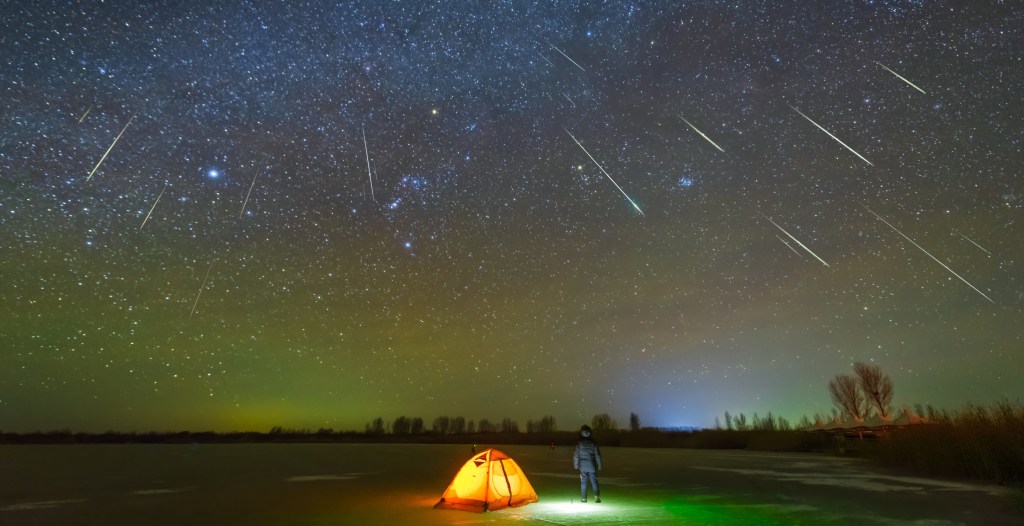
URGENT UPDATE: The highly anticipated Geminids meteor shower is set to peak on the night of December 13 into the early hours of December 14, 2025, promising a breathtaking display of up to 150 meteors per hour across the Northern Hemisphere. This year’s conditions are nearly perfect for stargazers, with a waning crescent moon providing optimal darkness.
The Geminids, renowned for their vibrant colors and unique origins from the asteroid 3200 Phaethon, will provide a spectacular cosmic show. The meteor shower kicks off on December 4 and remains active until December 17, but the peak night is when the magic truly happens. According to the American Meteor Society, the best viewing time starts after 10 p.m. local time, with the radiant point near the stars Castor and Pollux climbing higher in the sky as the night progresses.
What makes this year extraordinary? The moon will not rise until about 2:30 a.m., allowing for hours of uninterrupted darkness—perfect for spotting these celestial wonders. The Geminids are particularly special because they originate from a rocky asteroid, resulting in slower, brilliantly colored meteors that can appear in hues of yellow, green, and even violet.
To catch this incredible display, seek an area away from city lights and allow your eyes to adjust to the darkness for about twenty minutes. Remember, you don’t need to focus solely on the constellation Gemini; meteors can appear anywhere in the sky.
After the Geminids fade, stargazers can look forward to the Ursids meteor shower, which begins on December 21 and peaks late on the 21st and early morning of the 22nd, delivering about ten meteors per hour. This will coincide with a new moon, ensuring dark skies for optimal viewing.
With two meteor showers in quick succession, December is shaping up to be a stellar month for astronomy enthusiasts. Don’t miss out on this chance to witness the wonders of the universe—step outside, look up, and enjoy the free entertainment that nature has to offer!