
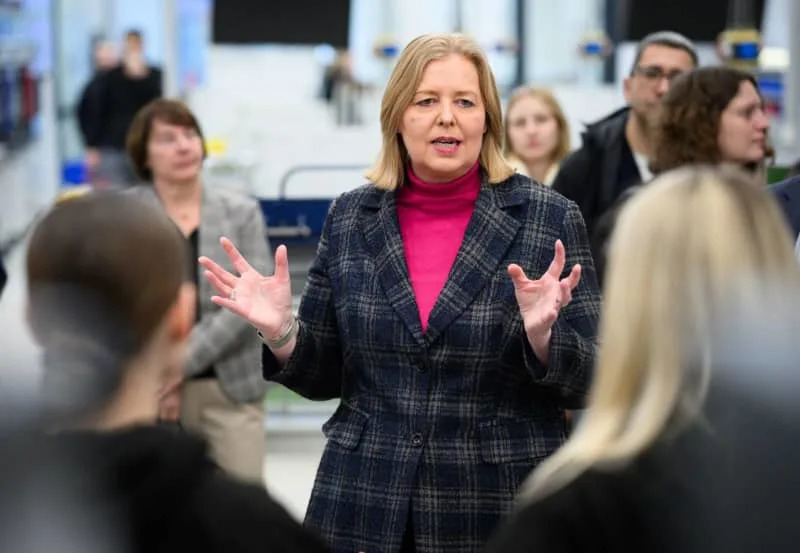
Germany’s Labour Minister Bärbel Bas emphasized the urgent need for foreign workers to address the country’s significant job vacancies during a conference on migration and work held in Berlin. She stated that the German economy requires “people who develop new ideas, operate diggers, or work in production,” highlighting the critical shortage of qualified employees across various sectors and regions.
Minister Bas warned that even if all domestic skilled labour potential is utilized, it will not suffice to fill the gaps. “The unemployed welder in Kiel cannot simply replace the nursing professional in Konstanz,” she explained, underscoring the mismatch between available workers and job requirements.
As Germany faces fierce international competition for skilled labour, Bas stressed the importance of attracting talent from non-European Union countries. She noted that approximately 3 million individuals are currently unemployed in Germany, yet they cannot meet the demands of the labour market.
The Federal Employment Agency’s data reveals a notable increase in the foreign workforce in Germany. In 2015, just under one in ten employees was foreign; by 2023, that figure had risen to one in six, or 17%. Currently, there are 2.54 million EU citizens working in Germany, a decrease of 30,000 from previous figures. In contrast, the number of workers from non-EU countries surged from 2.74 million to 3.29 million during the same period.
Agency expert Daniel Terzenbach reinforced the idea that migration is essential for maintaining the country’s economic performance and social stability. He warned that failing to embrace immigration would lead to diminished prosperity, stating, “You can’t run away from this reality.”
Germany’s demographic challenges, coupled with the growing need for skilled workers, have led to increased discussions around immigration policies. As the country navigates these complex issues, the call for a more significant foreign workforce may shape the future of its economy and workforce dynamics.