
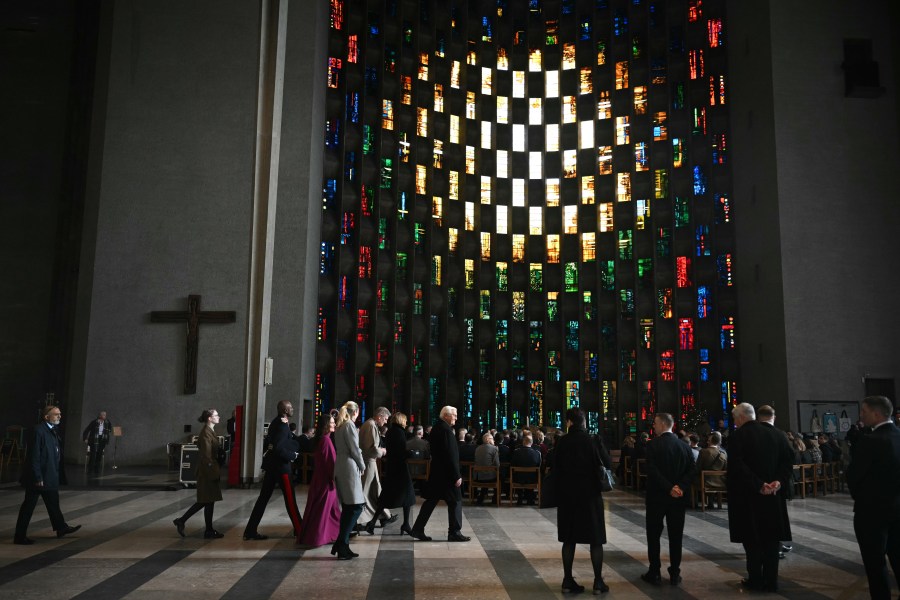
Germany’s President, Frank-Walter Steinmeier, commemorated the victims of World War II on October 27, 2023, by laying a wreath at Coventry Cathedral in central England. This visit is part of a broader effort by Germany and the United Kingdom to strengthen their alliance in response to the ongoing conflict in Europe, particularly the war in Ukraine.
Steinmeier’s visit to Coventry is steeped in historical significance. The cathedral was largely destroyed during a bombing raid by Nazi Germany in 1940, which resulted in the deaths of approximately 600 people and left a lasting scar on the city. The act of laying a wreath serves not only as a symbol of remembrance but also as an acknowledgment of the atrocities committed during the war.
Strengthening European Alliances
The trip comes at a critical juncture as both Germany and the UK seek to present a united front against Russia’s military actions. The ongoing war in Ukraine has heightened security concerns across Europe, prompting renewed discussions about defense and cooperation among European nations. Steinmeier’s actions reflect a commitment to acknowledging the past while focusing on the future.
During his visit, Steinmeier emphasized the importance of remembrance as a foundation for cooperation. “We must never forget the lessons of history,” he stated. “Only through remembrance can we build a peaceful future together.” His sentiments resonate with the ongoing dialogue regarding Europe’s security landscape, particularly in light of escalating tensions in Eastern Europe.
Historical Context and Modern Implications
Coventry Cathedral, rebuilt after the war, stands as a powerful symbol of resilience and reconciliation. The new structure, completed in 1962, features a striking modern design that contrasts with the ruins of the original cathedral, which have been preserved as a memorial. This juxtaposition serves as a reminder of the destructive power of conflict and the hope for peace.
The ceremony also included local dignitaries and representatives from various organizations, illustrating the collaborative spirit that both countries are fostering. The collective remembrance serves not only to honor those who lost their lives but also to reinforce the ties that bind nations together in the face of adversity.
Steinmeier’s visit underscores the ongoing efforts to strengthen diplomatic relations in a time of uncertainty. As Europe grapples with the implications of the war in Ukraine, leaders are seeking to foster unity among NATO allies and other partners. The act of remembrance at Coventry Cathedral is a poignant reminder of the importance of solidarity in confronting contemporary challenges.
In summary, Frank-Walter Steinmeier’s wreath-laying at Coventry Cathedral symbolizes both a recognition of past atrocities and a commitment to future cooperation between Germany and the United Kingdom. In a time when European security is paramount, such acts of remembrance and reconciliation are crucial in forging a united front against the threats facing the continent.